
Blog
Construction Site Spill Kit Requirements Explained
Aug
A ruptured hydraulic hose beside a stormwater pit can turn a routine plant repair into a costly clean-up within minutes. Construction site spill kit requirements are not about putting one small bag in the site shed and hoping for the best. They are about placing the right absorbents, containment gear and disposal supplies where crews can reach them before oil, fuel, paint or chemicals spread across the ground or into a drain.
For site supervisors, the practical question is simple: what could spill here, how much could escape, and where will it travel? Answer those three questions before ordering. Your spill kit capacity, media type and location should follow the real risks on your job, not a generic checklist.
Construction site spill kit requirements start with risk
There is no single Australia-wide rule that says every construction project must carry one exact spill kit size. Requirements can come from your environmental management plan, principal contractor rules, state or territory safety obligations, council conditions, client specifications and the safety data sheets for products used on site.
What stays consistent is the expectation that spills are contained quickly, prevented from reaching waterways or drains, and cleaned up safely. A kit must be suitable for the substances on site, readily accessible, maintained and understood by the people expected to use it.
Start with a site spill risk assessment. Walk the work area and identify fuel bowsers, mobile plant parking, chemical storage, wash-down areas, generators, refuelling points, concrete works, paint storage and stormwater entry points. Also consider temporary risks. A civil site may need extra fuel response gear while excavators are active, then more sediment and drain protection during wet-weather works.
Record the likely spill source and the largest credible release. For example, a 20L drum of solvent presents a different response need to a 205L diesel drum, a leaking IBC, or a plant fuel tank damaged on uneven ground. The kit does not always need to absorb the entire vessel volume, but it must be sized for the credible release under your controls and escalation plan.
Select the right spill kit for the liquid
Choosing by colour alone is risky. Match absorbents to the substance first, then choose the container and capacity.
| Spill type | Best-fit response media | Typical construction uses |
|---|---|---|
| Oil and fuel | Hydrophobic polypropylene pads, socks and pillows that repel water | Diesel, petrol, hydraulic oil, lubricants and oily water |
| Chemical/Hazchem | Chemical-rated absorbents suitable for aggressive liquids | Acids, caustics, coolants, solvents and unknown chemicals |
| General purpose | Multi-purpose absorbents for non-aggressive workshop liquids | Water-based fluids, mild coolants, minor maintenance spills |
Oil and fuel kits are a strong fit around diesel-powered plant, fuel storage and hydraulic equipment. Hydrophobic polypropylene media absorbs hydrocarbons while repelling water, making it useful where a diesel sheen is sitting on rainwater. It is not the automatic answer for every liquid. If crews handle corrosives, solvents or unidentified substances, use chemical-rated equipment and follow the relevant safety data sheet.
A general purpose kit can help with everyday workshop leaks, but it should not be treated as a chemical spill solution. Unknown liquids need a cautious approach. Isolate the area, check labels and safety data sheets, wear suitable PPE and escalate where the substance, vapour or volume exceeds your site’s response capability.
Capacity: size for the credible spill, not the cupboard
A 15L or 30L bag can be useful in a ute, site vehicle or small maintenance area. It is compact, quick to carry and gives workers immediate control over a hose leak or dropped container. It is not enough as the sole response point on a site with bulk fuel, multiple machines or chemical drums.
As a practical guide, use a 120L to 240L wheelie-bin kit for active compounds, refuelling areas, workshops and plant yards where a larger release is credible. Position smaller kits at the point of risk, then back them up with a larger central kit. This layered approach gets absorbents into a crew’s hands quickly without forcing them to run across site during a spill.
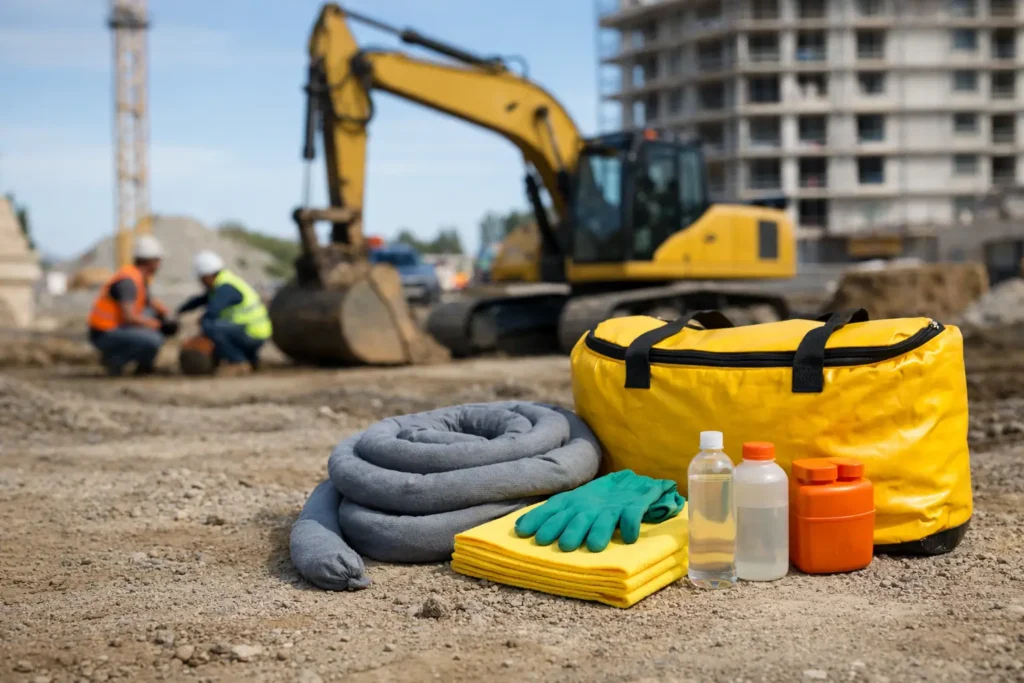
For higher-risk locations, account for containment as well as absorption. Socks stop flow and form temporary barriers. Pads lift liquid from hard surfaces. Pillows handle pooled fluid near leaking machinery. Disposal bags, ties and labels help crews secure contaminated waste once the area is safe.
What every ready-to-deploy kit should contain
The exact contents vary by kit type and capacity, but a useful construction spill kit needs more than loose pads. It should let the first responder protect themselves, stop the spill travelling, recover the liquid and manage the used material.
- absorbent pads or rolls for surface recovery
- absorbent socks or booms to surround leaks and protect flow paths
- pillows for pooled liquid or persistent drips
- suitable gloves and other PPE required by the product risk
- disposal bags, ties and labels for contaminated absorbents
- a clear instruction sheet or response guide
- a durable, labelled container that stays visible and accessible.
Keep drain protection nearby where runoff could enter pits, gutters or channels. A drain cover can be placed over a clean, dry drain before liquid reaches it, buying valuable time while the team controls the source and surrounds the spill with socks. It does not replace a spill kit, and it must be used safely. Never place workers in danger to protect a drain.
For large fuel or chemical storage, consider whether bunding, drum spill pallets and dedicated drain protection are needed as preventative controls. Spill kits respond after a release. Good storage and containment reduce the chance of needing them at all.
Place kits where the spill will happen
A locked site office is not a practical spill response location if the excavators, diesel tank and stormwater pits are 300 metres away. Place kits at the risk point and make them visible with clear signage.
On a typical construction site, this means a vehicle kit in each service ute or fuel truck (15L or 30L), a larger kit at the refuelling point (120L), another near the plant parking or maintenance zone (120L or 240L), and appropriate response gear near chemical storage. If the site is spread out, add satellite kits rather than relying on one central bin.
Check access after every site layout change. Temporary fencing, stacked materials and parked plant can easily block a kit that was accessible last week. Wheelie-bin kits need a clear path so they can be moved quickly, while portable bags should be mounted or stored where drivers and operators can reach them without searching.
Keep spill kits compliant through inspection and refills
A spill kit with missing socks, soaked pads or perished gloves is not ready. Make spill kit checks part of the normal site inspection routine, particularly after rain, major deliveries, refuelling activity or a site relocation.
Inspect the kit container, label, stock level and condition of each component. Replace used or damaged absorbents immediately. Check that PPE is intact and suitable for the substances currently used on site. If the project changes from standard earthworks to coating, waterproofing or concrete remediation, reassess the kit contents rather than assuming last month’s setup still applies.
Assign ownership to a named role, such as the site supervisor or environmental representative. The person does not need to conduct complex audits, but they should know who orders refills and where to find the site spill procedure. A simple inspection tag with the date, checker and action taken gives the team a visible record of readiness.
Train for the first five minutes
Workers do not need to be spill-response specialists to manage a minor release, but they do need a simple sequence they can remember under pressure: stop the source if safe, protect drains, contain the spread, absorb the liquid, bag the waste and report the incident.
Run a short toolbox talk when kits arrive and whenever new crew members start. Open one kit, show where the socks, pads and disposal bags are, and explain when to stop and escalate. This is especially useful for labour hire workers and operators moving between projects, where kit locations and chemical risks can vary sharply.
For fuel or hydraulic leaks, crews may be able to isolate equipment and use oil-only absorbents. For chemical releases, fumes, fire risk, unknown substances or spills entering water, isolate the area and follow your emergency and notification procedure. Fast action matters, but safe action matters more.
Order for site readiness, not just compliance
The best setup is usually a combination: vehicle bags for mobile crews (15L or 30L), medium kits where maintenance happens (50L or 80L), larger wheelie-bin kits at high-volume risk points (120L or 240L), and spare absorbents held as refills. This avoids the common failure of using the only kit on a minor leak, then discovering there is nothing left for the next incident.
When selecting equipment, confirm the absorbency capacity, media compatibility, container type, included PPE and disposal components. Check whether the kit can be moved by one person and whether it will fit in the available vehicle compartment, site shed or plant room. A 240L kit has excellent capacity, but it is only useful if it can reach the incident quickly.
Spillkits.com.au helps crews select ready-to-deploy oil and fuel, chemical and general purpose kits, along with replacement pads, socks, drain covers and disposal supplies. Keep refills on hand, position kits before work starts and give every crew a clear response plan. When a line lets go or a drum tips, the right equipment should already be within reach.