
Blog
Chemical Absorbents: Choose the Right Type
Aug
A leaking 20L drum can turn a clear workshop aisle into a slip, exposure and downtime problem in minutes. The right chemical absorbents help your crew contain the liquid before it reaches a drain, doorway, forklift lane or neighbouring stock. The wrong media can leave liquid behind, react badly with the product or give staff false confidence that the spill is under control.
For workshops, depots, warehouses and transport operations, selection starts with one question: what could leak here? A chemical absorbent is not simply a pad that soaks up liquid. It is part of a response system that needs to match the substance, likely spill volume, location and disposal requirements.
What chemical absorbents are designed to handle
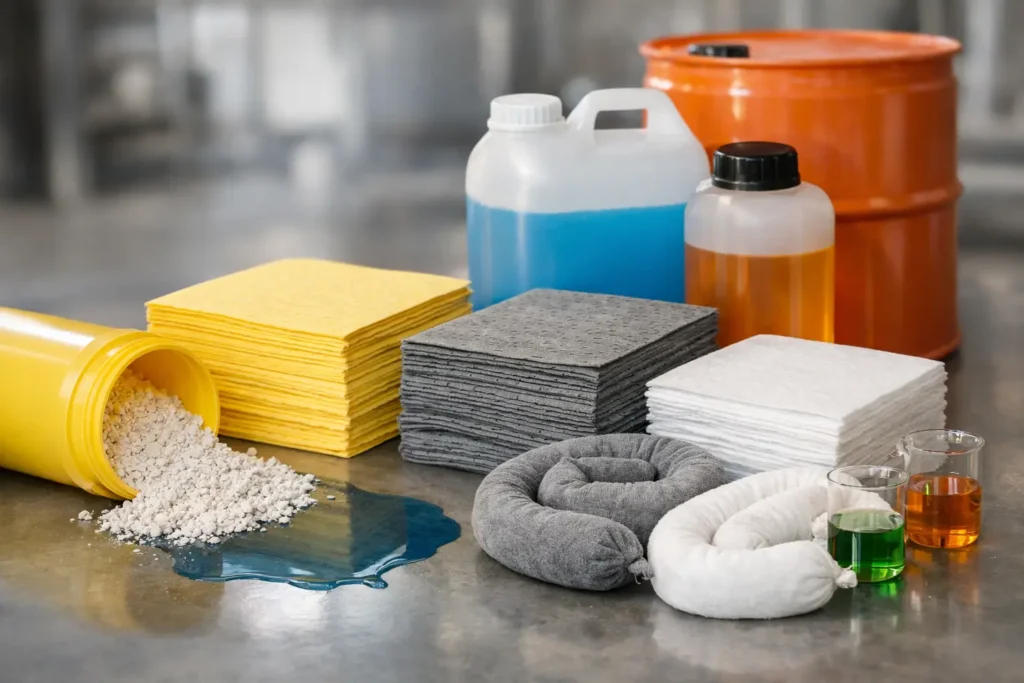
Chemical or hazchem absorbents are made for aggressive and unknown liquids, including acids, caustics, solvents, coolants, pesticides and many hazardous chemicals. They are commonly yellow for quick identification, helping workers avoid confusing them with white oil-only media or grey general-purpose absorbents during a fast response.
Most pads, rolls, socks and pillows use polypropylene, a lightweight synthetic material that draws in liquid quickly. The material alone does not make every product suitable for every chemical. Strong oxidisers, highly reactive substances and products with specific handling instructions may require a specialised response method. Check the product Safety Data Sheet before cleanup, use the listed personal protective equipment and follow your site procedure.
Chemical absorbents are useful because they give a crew flexible control at the spill edge and at the source. Socks stop spread across a concrete floor, pads lift pooled liquid, and pillows sit under a dripping valve or damaged container. Granular absorbent can suit rough, uneven surfaces, but it is usually slower to deploy and creates more waste to collect afterwards.
Match the absorbent to the spill, not the shelf
A site that handles oils, fuels and lubricants does not automatically need chemical media for every leak. Oil and fuel absorbents are hydrophobic – they repel water and selectively absorb hydrocarbons. That makes them a practical choice around wet workshops, wash bays and outdoor areas where a diesel or hydraulic-oil spill may meet rainwater.
General-purpose absorbents suit many non-aggressive workplace liquids, such as water-based coolants, mild chemicals and maintenance fluids. They are often economical for everyday drips and housekeeping, but they are not the default answer for corrosive or unknown products.
Chemical absorbents are the safer selection when the substance is corrosive, hazardous or unidentified. If staff cannot confidently confirm what has spilled, isolate the area, keep people away and refer to the Safety Data Sheet or emergency procedure before choosing a response method. Do not send someone in with a handful of pads simply because the spill looks small.
| Spill scenario | Practical absorbent choice | Key operational point |
|---|---|---|
| Battery acid or acidic cleaner | Chemical pads, socks and pillows | Contain first and use chemical-resistant PPE |
| Caustic wash-down product | Chemical absorbents | Check the SDS for neutralisation and disposal instructions |
| Diesel, petrol or hydraulic oil near water | Oil and fuel absorbents | Use hydrophobic media that will not load up with water |
| Coolant or routine maintenance fluid | General-purpose pads or socks | Confirm it is non-aggressive before deployment |
| Unidentified drum leak | Chemical absorbents and site emergency process | Treat as hazardous until identified |
Choose the right format for the job
Pads are the everyday workhorse. Keep them beneath pumps, decanting points, batteries and small containers where drips can be caught before they become a floor spill. They are quick to place, easy to remove and useful for wiping down contaminated surfaces after the bulk liquid is recovered.
Socks are for containment. Place them around a leaking drum, across a roller-door opening or in a shallow channel to stop liquid travelling. They are especially useful on smooth concrete, where a spill can spread further than staff expect. Join multiple socks to create a larger barrier, but do not assume they will hold back a deep, fast-moving volume on their own.
Pillows hold more liquid in a compact footprint. Use them under a leaking tap, hose coupling, palletised chemical container or machinery point where the source is still dripping. Replace a saturated pillow promptly rather than letting it sit and overflow.
Rolls make sense where the same task happens repeatedly, such as long maintenance benches, chemical dosing areas or production lines. Tear off only what is needed and keep a dispenser or covered storage point close to the risk area. Loose rolls left near a wet floor can become contaminated before they are needed.
For uneven ground, yards and rough concrete, loose granular media can be practical. It can be worked into cracks where a pad cannot sit flat. The trade-off is cleanup time: workers need to sweep up every contaminated granule, and the resulting waste can be bulky. Use it where surface conditions justify it, not as the automatic option for every spill.
Size your supply around the credible spill
Do not size chemical absorbents around the smallest bottle in the cupboard. Base stock levels on the largest realistic loss of containment before help arrives. For a vehicle carrying small chemical containers, a 20L to 30L response bag may be suitable for a minor leak, provided the driver also has clear instructions and the load is controlled. For a workshop with 20L drums and regular decanting, allow enough media to contain and recover at least one full container.
A 120L or 240L chemical spill kit suits larger storage areas, wash bays, maintenance facilities and loading zones where several containers are present. Capacity is not only about how much liquid the kit can absorb. You also need enough socks to surround the spill, waste bags for used media, PPE for responders and labels or ties to secure contaminated waste.
Consider these four questions before ordering:
- What is the largest container that could realistically fail at this location?
- Could the spill reach a drain, stormwater grate, pit or public area?
- Is the liquid corrosive, toxic, flammable, unknown or subject to a specific SDS instruction?
- Will the kit be used by a trained crew, a driver working alone or a busy workshop team?
If a 205L drum is handled on site, a small bag of pads is a useful top-up but not a credible primary response. Equip the area with a kit that matches the drum capacity and place drain protection nearby where runoff is possible. A drain cover works best when it is stored within a few steps of the drain, not on the other side of the building.
Set up chemical absorbents where the leak starts
Response time is often decided by storage location. Put absorbents at decanting stations, chemical stores, battery charging areas, wash bays, loading docks and service vehicles. A kit in the office may satisfy a checklist, but it will not help a technician facing a leaking container at the far end of the workshop.
Keep chemical media separate and clearly marked. Yellow chemical pads mixed loosely with grey general-purpose pads create hesitation at exactly the wrong time. Staff should be able to open a kit and immediately find containment socks, absorbent pads, PPE, waste bags and basic instructions.
For fleet operations, stock each vehicle according to what it carries and where it travels. A ute servicing plant equipment may need pads, socks and a compact bag for hydraulic oil or coolant. A vehicle carrying chemicals needs chemical-compatible media, gloves, disposal bags and a process for escalating a spill that exceeds the driver’s capability. Equip your fleet for the actual job, not a generic checklist.
Deploy safely: contain, recover, dispose
When a spill occurs, stop work and assess it before touching the liquid. If it is safe to do so, stop the source by closing a valve, standing a container upright or placing a drip tray under the leak. Keep ignition sources away from flammable liquids and prevent people from walking through the area.
Contain the outer edge with socks before placing pads or pillows into the pooled liquid. Protect nearby drains early. Once the liquid is absorbed, collect used media with the required PPE, place it in compatible waste bags or containers and label it for disposal. Absorbent that has contacted a hazardous chemical must be managed according to the chemical, local waste requirements and your site procedure – it does not become ordinary rubbish because it looks dry.
Restock immediately after any response. A half-empty kit is not ready for the next shift, and minor incidents are exactly how critical pads, socks and bags disappear. Keep refill absorbents on hand so your team can restore kit capacity without waiting for a full replacement.
Chemical spill readiness is straightforward when the media matches the hazard, the capacity matches the credible leak and the kit sits where workers can reach it fast. Set up those three basics before the next drum, hose or container fails.