
Blog
How to Seal Stormwater Drains Before a Spill
Aug
A hose splits, a drum valve leaks or a vehicle drops diesel in the loading bay. If that liquid reaches a grated inlet, it can leave your site through the stormwater system within minutes. Knowing how to seal stormwater drains is a frontline response task – one that protects waterways, limits clean-up costs and keeps a small incident from becoming a reportable headache.
For workshops, depots, warehouses and civil sites, the aim is not to permanently block drainage. It is to temporarily isolate the nearest stormwater entry point, control the source and recover the spill before rainwater or wash-down pushes contamination further.
Seal stormwater drains before liquid reaches them
The fastest response starts before anyone grabs an absorbent pad. Identify whether the liquid is heading towards a stormwater drain, then stop it at the source where safe to do so. Upright a container, close the valve, plug a puncture or position a drip tray. At the same time, assign another crew member to protect the drain.
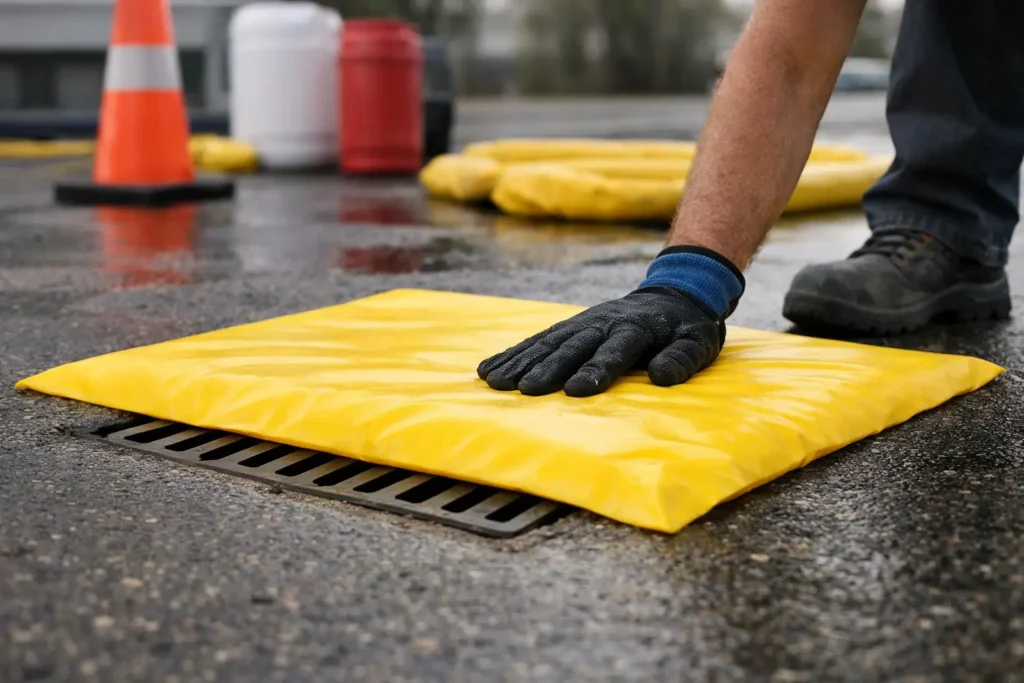
A drain cover is usually the quickest first barrier for a flat, reasonably clean surface. These flexible mats sit over grates and form a temporary seal, preventing oil, fuel, coolant, chemicals or dirty wash water from entering the opening. Place the cover carefully from one edge to the other rather than throwing it down, as trapped grit, loose stones and uneven concrete can create channels underneath.
Drain covers are designed for emergency containment, not routine traffic. Keep forklifts, utes and pedestrian traffic off the cover while the incident is managed. If the spill is flowing hard or the surface is uneven, back up the cover with absorbent socks placed around the perimeter.
Know which drain you are protecting
Not every grate leads to the same place. Some drains connect to sewer, trade waste treatment, an interceptor or an onsite collection system. Others discharge to the kerb, creek, wetland or coastal waterway. Your site drainage plan should identify each inlet clearly, but do not delay action while checking it during a live spill. Treat unknown drains as stormwater drains until confirmed otherwise.
Walk your work areas during dry weather and mark the following on a simple response map: drain locations, flow direction, low points, isolation points and the location of spill equipment. Put a copy near the spill kit, fuel storage area and loading dock. For larger sites, include this map in induction material and vehicle contractor instructions.
The closest drain is not always the only drain at risk. A sloped workshop floor can send liquid under roller doors or across the yard. Rain can also move residue after the immediate clean-up appears complete. Protect the nearest inlet first, then inspect downstream drains and low points.
Choose the right drain-sealing equipment
The best product depends on the drain shape, surface condition and likely spill. A rectangular polymer drain cover is a practical all-round choice for standard grated pits in workshops, service stations and loading areas. Choose a cover larger than the grate so there is enough overlap to seal against surrounding concrete.
For pipe openings, damaged drains or deeper access points, a tapered plug or pneumatic drain plug can be more suitable. These create a seal inside the opening rather than across the surface. They are useful where a flat cover cannot sit properly, although they require staff to know the pipe size and safe fitting method.
Absorbent socks are not a substitute for a drain cover, but they are valuable secondary protection. They can be shaped around an inlet, across a doorway or along a kerb to divert and slow a spreading spill. Use oil and fuel absorbents for diesel, petrol, lubricants and hydraulic oil. For acids, solvents, coolants or unknown liquids, use chemical/hazchem absorbents that are compatible with the substance.
| Site situation | First choice | Add this backup |
|---|---|---|
| Flat grated drain in a workshop | Flexible drain cover | Absorbent socks around edges |
| Loading bay with fuel or hydraulic leak | Drain cover sized beyond grate | Oil and fuel pads and socks |
| Uneven concrete or pavers | Cover with wide overlap | Socks, sand-filled barriers or bunding |
| Open pipe or access point | Tapered or inflatable drain plug | Spill pads at the surface |
| Civil site with sediment-laden runoff | Sediment controls suited to the work | Silt socks and temporary diversion measures |
Avoid relying on loose rags, cardboard or a handful of pads pushed into a grate. They may slow flow, but they do not reliably seal the drain and can be drawn into the system. A purpose-made drain protection device is faster to deploy and easier to inspect during an incident.
Set up your drain response in the right order
A clear response sequence reduces confusion when a spill happens. Train crews to work through these actions:
- Raise the alarm and assess hazards. Keep people away from ignition sources, moving vehicles and vapours. Wear suitable gloves, eyewear and other required PPE.
- Stop the source if safe. Shut a valve, stand up a container, isolate equipment or use a plug for a leaking drum.
- Seal the threatened drain. Place the cover or plug first, particularly if the spill is moving downhill or rain is expected.
- Contain and recover the liquid. Use socks to form a barrier, then lay pads or rolls over the contained spill. Select compatible absorbents for the liquid involved.
- Bag waste and restock immediately. Used absorbents, contaminated soil and disposable PPE need to be managed under your site waste process. Replace every used item before the next shift.
This order matters. Crews often start soaking up liquid before protecting the drain, only to find the spill has already travelled beyond the work area. Put drain protection at the front of the response, not at the bottom of the kit where it is forgotten.
Size equipment for your actual site risks
One small drain cover in a 240L spill kit may not be enough for a busy depot with multiple stormwater pits. Count the drains within likely spill paths around fuel tanks, wash bays, chemical stores, workshop doors and loading areas. Keep protection close enough to reach quickly, especially where a spill kit is separated from outdoor drains by locked gates or a large warehouse floor.
For a service ute or maintenance van, a compact vehicle spill kit with a foldable drain cover, absorbent pads, socks, disposal bags and PPE is often the practical minimum. The kit needs to fit behind the driver’s seat or in a side compartment, not sit back at the depot while the crew works on the road.
For a workshop, match spill kit capacity to the largest credible leak rather than the average drip. A 20L kit can handle a small hose failure or container knock-over. A 120L or 240L kit is more appropriate around bulk fluids, drum storage, major plant or high-traffic loading zones. Add separate drain covers where several inlets could be affected at once.
Keep refill pads and socks beside the main kit. Minor clean-ups consume stock quickly, and an apparently full kit can be useless if its absorbents were used last month and never replaced.
Test the plan when conditions are calm
A five-minute drill tells you more than a laminated procedure. Ask a team member to locate the nearest drain protection equipment, identify the correct cover and place it over a nominated grate. Time the response. If they need to search a storeroom, move pallets or ask three people for a key, the setup needs work.
Inspect drain covers after use and during routine kit checks. Remove dirt and residue, check for tears, curling edges or hardening, and ensure the mat remains flexible enough to form a seal. Store covers flat where possible. Folding one tightly into a crowded cabinet can leave creases that compromise contact with the ground.
Also check for changes to the site itself. New racking, a relocated fuel cage, altered vehicle routes or resurfacing can change where liquid flows. Update the drainage map and reposition equipment accordingly.
When a leak occurs, speed beats improvisation. Keep the right drain cover beside compatible absorbents, make sure every crew member knows the nearest inlet, and restock straight after use. That practical preparation gives your team the best chance to stop contamination at the grate – before it becomes someone else’s problem downstream.