
Blog
How to Clean Hydraulic Leaks Without Spreading Oil
Sep
A failed hose fitting can put several litres of hydraulic oil across a workshop floor in minutes. Leave it to travel and it reaches walkways, tyres, stormwater drains and loading areas – creating a slip hazard, an environmental incident and avoidable downtime. Knowing how to clean hydraulic leaks is not just a housekeeping task. It is a site-readiness requirement.
Act before the oil spreads. Isolate the machinery, stop the source where it is safe to do so, protect drainage immediately and deploy oil-specific absorbents. The right response keeps your crew moving, protects your compliance position and limits the cost of a mechanical failure.
Make the area safe before cleanup starts
Do not send anyone into a hydraulic spill with a mop and bucket. Hydraulic fluid creates a highly slippery surface, and pressurised systems can inject oil through skin or release more fluid unexpectedly. Shut down the affected plant, apply isolation procedures and make sure the pressure is relieved by an authorised person before repairs begin.
Keep forklifts, vehicles and foot traffic out of the area. Use cones, barrier tape or temporary barricades to define the exclusion zone. If the spill is near a doorway, roller door or traffic route, extend the boundary beyond the visible oil. Tyres and boots can track a thin film much further than most teams expect.
Put on suitable PPE for the fluid and task. At minimum, this commonly means chemical-resistant gloves, safety glasses and slip-resistant footwear. Check the hydraulic fluid safety data sheet where available. Some fluids and additives may require additional protection, particularly in hot environments or enclosed workshops.
If oil is moving towards a drain, act there first. Place a drain cover over the opening or build a barrier around it using absorbent socks. Preventing discharge is faster, cheaper and far easier than recovering oil after it enters drainage infrastructure.
How to clean hydraulic leaks step by step
1. Stop and contain the source
Close a valve, stand a leaking drum upright, fit a temporary clamp where approved, or position a drip tray under the leak. Do not attempt a repair on energised or pressurised equipment. A temporary containment tray, drip pan or portable bund gives maintenance personnel time to repair the fault without allowing more oil onto the floor.
For leaks from plant operating outdoors, use absorbent socks or booms to form a perimeter downhill from the spill. On sloping hardstand, contain from the lowest point first. On soil or gravel, work quickly because hydraulic oil can migrate below the surface rather than remaining visible.
2. Choose absorbents made for oil
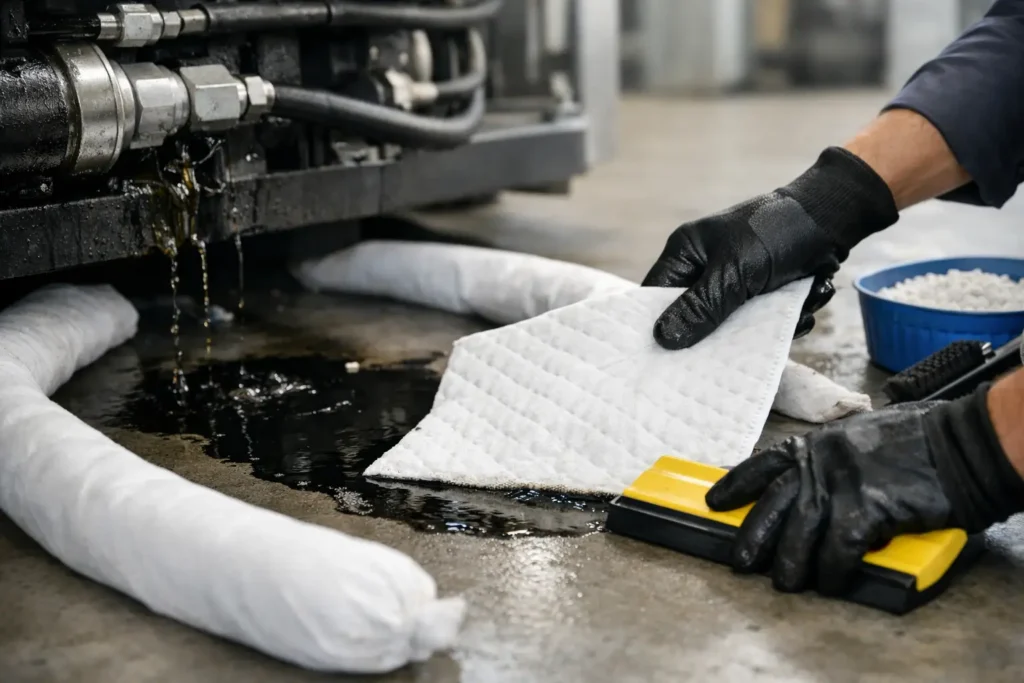
Hydraulic oil is generally best recovered with oil and fuel absorbents. Polypropylene pads, rolls, socks and pillows are hydrophobic, meaning they repel water while attracting hydrocarbons. That makes them particularly useful around wash bays, drains, wet yards and outdoor equipment.
Use pads for thin films and final wiping. Use loose absorbent for rough concrete, expansion joints and uneven surfaces. Use socks to stop migration and pillows for pooled oil or ongoing drips. General-purpose absorbents can work on hydraulic fluid, but oil-specific media is usually the better operational choice where water is present or likely.
Avoid using rags as the primary control method. They spread oil, deliver inconsistent absorption and create a messy waste stream. Purpose-built absorbents give your crew predictable capacity and faster deployment.
3. Recover pooled oil, then work from the outside in
Start by placing pillows or loose absorbent directly on the heaviest pool. Once the bulk fluid is absorbed, lay pads around the outer edge and move towards the centre. This approach prevents the spill being pushed into clean areas.
Do not grind absorbent into the floor with boots or broom heads. Let the media draw in the oil, then use a non-sparking scoop, scraper or suitable tools to collect saturated material. Replace pads as they become loaded. A glossy surface still has enough oil to cause a slip, even if it no longer looks like a major spill.
For grates, cracks and floor joints, press pads firmly into the affected area or apply loose absorbent where suitable. Check underneath pallets, machinery guards, tyre tracks and nearby racking legs. The visible pool is rarely the entire cleanup area.
4. Clean the remaining film without washing it away
Once absorbents have removed the free liquid, treat any remaining residue with a compatible degreaser and minimal water. The goal is to lift the film for controlled recovery, not to hose hydraulic oil towards a drain. Collect wash water and residue with pads, a wet vacuum approved for the task, or other controlled recovery equipment.
Never pressure-wash a hydraulic leak into stormwater. A clean-looking floor is not a compliant result if the contamination has simply been moved off-site. If the spill has entered a drain, soil, waterway or uncontained area, escalate immediately under your site incident process and seek specialist advice where required.
5. Dispose of saturated materials correctly
Used pads, socks, loose absorbent, contaminated PPE and collected sludge must be treated according to the hydraulic fluid, contamination level and your state or territory waste requirements. Bag or place waste in a sealed, labelled container so it cannot leak during handling or transport.
Do not put saturated absorbents in general rubbish unless your waste contractor and local requirements explicitly allow it. Keep records of significant spills, disposal arrangements and replenishment actions. This protects your organisation during audits and makes recurring equipment faults easier to identify.
Select the right response equipment before a hose fails
The best cleanup happens when the equipment is already within reach. Match capacity to the credible worst-case spill, not the small drip you hope will occur. A 20L vehicle spill kit may suit a service ute or mobile technician, while a 120L or 240L wheeled kit is more appropriate for workshops, depots and high-volume plant areas.
| Site or task | Practical response equipment | Why it works |
|---|---|---|
| Service ute or field crew | 20L–30L oil and fuel vehicle kit, pads and disposal bags | Fits behind the driver’s seat and responds to hose failures fast |
| Workshop bay | 50L–120L oil and fuel kit, drain cover, socks and loose absorbent | Controls pooled oil and protects nearby drains |
| Fleet depot or plant yard | 120L–240L wheeled spill kit, extra booms and portable bunding | Supports larger releases and allows rapid movement across site |
| Hydraulic drum or oil storage point | Spill pallet or bund, drip trays, pads and refill stock | Provides secondary containment before a leak reaches the floor |
For hydraulic maintenance areas, keep absorbent pads at each service bay rather than locking every item in a central store. Place drain protection beside drains, not across the workshop. Seconds matter when oil begins flowing, and a drain cover stored 100 metres away is not practical control.
Secondary containment also matters. Drums, reservoirs and transfer points should sit within suitable bunding sized for the stored volume and site conditions. Check that rainwater, incompatible fluids and damaged containers do not compromise available bund capacity. Containment is not a substitute for maintenance, but it buys your team the time needed to respond properly.
Reopen the area only after verification
Before removing barriers, inspect the floor under bright light. Check for sheen, tacky residue and slip risk. Walk the surrounding route and inspect wheel paths, doorway thresholds and drain approaches. If plant or footwear travelled through the spill, clean those surfaces before they spread oil into another work zone.
Restock immediately after every incident. A spill kit missing socks, pads or disposal bags is not ready for the next release. Keep refill components matched to the kit type so an oil and fuel kit is replenished with oil-specific media, rather than whatever absorbent happens to be left in the storeroom.
For procurement teams, standardising kit locations and refill quantities reduces panic buying and makes inspections faster. Spillkits.com.au supports rapid nationwide dispatch, purchase order acceptance and itemised GST on products and freight, helping commercial and government buyers restore site readiness without adding admin friction.
A hydraulic leak may begin as a maintenance issue, but its outcome is decided by the first response. Put drain protection, oil-specific absorbents and correctly sized containment where your crews can reach them now – before the next hose, seal or fitting gives way.