
Blog
Best Oil Absorbents for Industrial Spill Response
Sep
A diesel trail from a leaking plant fitting can reach a drain before a worker has found the right clean-up gear. The best oil absorbents give your crew an immediate, oil-specific response: they repel water, pull in hydrocarbons and keep the spill contained while operations stay under control. For workshops, depots, civil sites and fleet operators, selecting the right media is not a minor consumables decision. It protects people, waterways, uptime and your site’s spill-response readiness.
What Makes the Best Oil Absorbents?
For petroleum-based spills, start with oil-only polypropylene absorbents. This hydrophobic material attracts oils and fuels while repelling water, making it the practical choice for diesel, petrol, hydraulic oil, lubricants, kerosene and many other hydrocarbons. It is particularly effective around wash bays, outdoor storage areas, loading zones and marine-adjacent work where rainwater or surface water is present.
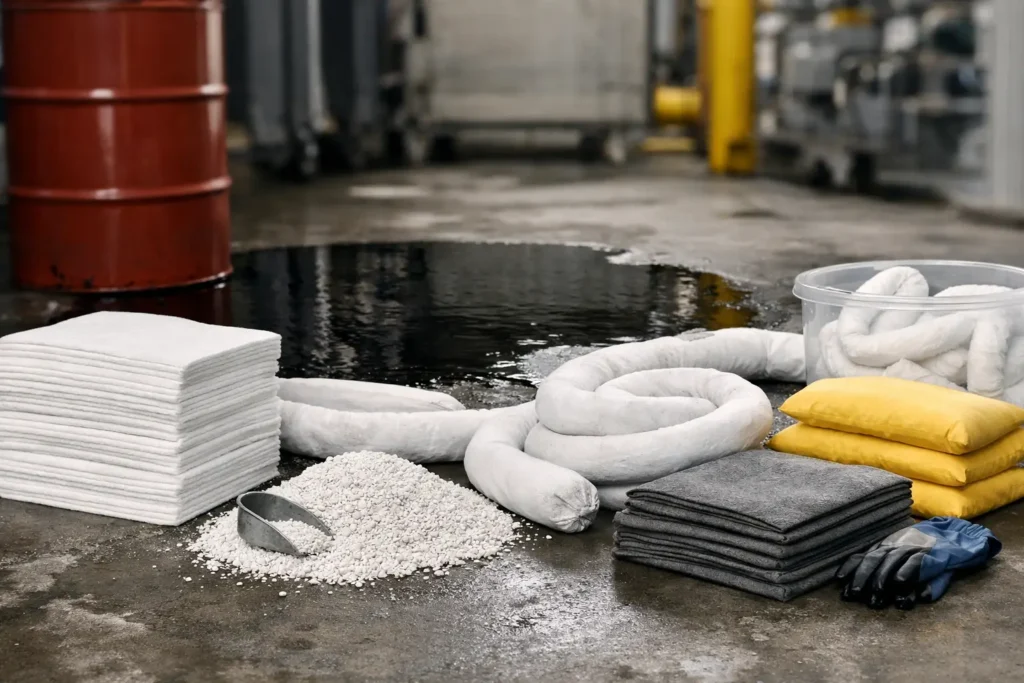
The material alone does not solve the whole problem. The best product is the one that matches the spill’s location, likely volume and direction of travel. A pad handles a small puddle beneath a forklift. A sock stops a leak from spreading across a workshop floor. A boom provides a containment line on water or around a drain inlet. Stock each format where the risk occurs, rather than expecting one bag of loose absorbent to cover every incident.
Oil-only absorbents are not a substitute for chemical spill media. If the unknown liquid could be corrosive, solvent-based or otherwise hazardous, isolate the area and use the product specified in your site procedure and Safety Data Sheet. Do not assume an oil absorbent is suitable simply because the liquid looks dark or slick.
Select the Right Oil Absorbent Format
Pads and rolls for fast surface cleanup
Oil absorbent pads are the everyday workhorse for service bays, machinery rooms and maintenance benches. Place them under weeping hose connections, drum taps and hydraulic equipment before a spill starts. When a leak occurs, lay pads from the outside edge inward to avoid spreading the liquid under boots, tyres or pallet jacks.
Rolls suit larger floor areas and repeated use. They can be cut to length for long leak paths, placed under machinery, or used as a protective layer when transferring oils. Pads offer speed and portability; rolls reduce waste where your team needs custom lengths. Keep both in high-risk maintenance areas if oil handling is routine.
Socks for containment and drain protection
Absorbent socks are designed to contain and absorb liquid at the same time. Position them around leaking equipment, along roller-door thresholds, across workshop entries and in a ring around a spill. Their job is to stop migration while pads or pillows remove the pooled liquid inside the contained area.
For any site with stormwater drains, socks should work alongside purpose-built drain protection. A sock can slow a spill, but it may not create a complete seal over a drain grate. Secure drain covers at fuel transfer points, wash bays, loading docks and outdoor drum storage zones. This is a direct control against environmental release, not an optional accessory to buy after an incident.
Pillows for leaks beneath equipment
Oil absorbent pillows hold more liquid than standard pads in a compact footprint. Put them beneath leaking pumps, generators, forklifts, plant, 205L drums and small tanks. They are ideal when a drip point is concentrated and a flat pad would need constant replacement.
Pillows are also a smart refill item for fleet maintenance vehicles. They fit into tight spaces and provide quick capacity when a technician finds a failed hydraulic hose or sump leak away from the workshop.
Booms for water and larger outdoor spills
Oil-only booms are built for containing hydrocarbons on water and for protecting exposed edges outdoors. Use them around vessel work, retention ponds, shoreline-sensitive areas or where fuel could enter a watercourse. Deploy them before recovery begins, then use compatible pads, skimmers or other recovery equipment according to your spill plan.
Booms are specialised equipment. They are not the first choice for an ordinary indoor oil leak, and they require enough storage space, trained handling and disposal planning. Where water exposure is credible, however, they are a critical line of defence.
Oil-Only Absorbents vs General Purpose Media
The selection is straightforward once the spill environment is clear. Oil-only polypropylene media is usually white and hydrophobic. It absorbs oils and fuels while floating on water, which makes it the preferred choice for outdoor hydrocarbon response.
General purpose absorbents are typically suitable for a broad range of non-aggressive workshop liquids, including water-based fluids, coolants and oils. They absorb water as well as oil. That versatility is useful indoors, but it is a disadvantage in wet conditions because rainwater can use up capacity before the fuel is recovered.
Choose oil-only absorbents when the risk is known hydrocarbons and water is present or likely. Choose general purpose media for mixed, non-hazardous workshop spills in dry areas. For acids, alkalis and unknown hazardous liquids, maintain dedicated chemical absorbents and follow site-specific response procedures. Equip the actual risk, not the cheapest-looking kit.
Size Your Stock to the Spill Risk
Absorbent capacity should be planned around credible worst-case spills, not the smallest drip your team has seen recently. Consider the largest mobile container or vessel that could fail, the amount that can escape before isolation, and whether drains or water are nearby. Your spill kits, containment equipment and refill stock should support that assessment.
A practical setup might include a compact vehicle oil and fuel kit for a ute or service truck, a 120L or 240L mobile kit for a workshop or depot, plus separate pad, sock and pillow refills at known leak points. A 20L vehicle bag may be enough for minor roadside leaks, but it is not a substitute for a site kit where drums, plant or bulk fuel handling are present.
Use this quick selection guide when ordering:
| Site risk | Best oil absorbent setup | Operational purpose |
|---|---|---|
| Forklift bay or workshop | Pads, socks and pillows | Control drips and small hydraulic leaks |
| Fuel transfer point | Socks, pads, drain cover and oil/fuel kit | Stop migration and protect stormwater |
| Service ute or field crew | Compact oil/fuel spill kit and refill pads | Respond before a leak spreads roadside |
| Outdoor drum storage | Rolls, socks, pillows and secondary containment | Manage rain-exposed hydrocarbon leaks |
| Water-adjacent work | Oil booms, pads and recovery equipment | Contain floating hydrocarbons |
Secondary containment remains essential. Absorbents manage the release after it occurs; bunding reduces the chance of a release travelling beyond the storage area. Use suitable spill bunds for drums, plant servicing and temporary liquid handling, and verify their capacity against the containers stored and your applicable site requirements. Keep absorbents within immediate reach of the bund, not locked in a remote storeroom.
Deploy Oil Absorbents in the Right Order
Fast response is about sequence. First, stop the source if it is safe to do so. Shut a valve, upright a container, isolate equipment or use a temporary leak-control measure. Next, protect drains and place socks around the spill’s outer edge. Only then start absorbing the pooled liquid with pads, rolls or pillows.
Do not walk through the spill to collect more gear. That carries contamination into clean areas and makes recovery harder. Keep disposable gloves, waste bags, goggles and clear response instructions with the absorbents. Once clean-up is complete, bag used media for disposal according to the absorbed substance, local requirements and your waste contractor’s instructions. Used fuel-soaked absorbents are contaminated waste, not ordinary rubbish.
After every use, replenish the kit immediately. An empty spill kit creates a false sense of security and leaves the next shift exposed. Assign a nominated person to check kit contents, expiry-sensitive PPE and refill levels during routine safety inspections.
Buy for Readiness, Not Just Unit Price
Low-cost absorbents can become expensive when they tear, shed material, absorb too slowly or run out halfway through a release. Compare format, capacity, durability and the type of liquid the product is designed to manage. For regular oil handling, standardise your pads, socks and pillows across sites so crews know exactly what to reach for and procurement can reorder quickly.
For multi-site businesses and government operations, simplify purchasing with a clear itemised order trail, GST documentation and purchase order acceptance. Keep approved oil absorbent refills on your procurement list, then order before stock reaches the last sleeve of pads or final containment sock. Rapid nationwide dispatch helps restore readiness, but pre-positioned stock is what protects the site in the first minutes.
Secure oil-specific media at the point of risk, protect every exposed drain and give crews a kit they can deploy without hesitation. The right absorbent is the one already on site when the leak starts.