
Blog
Best Flammable Cabinets for Workshops in Australia
Oct
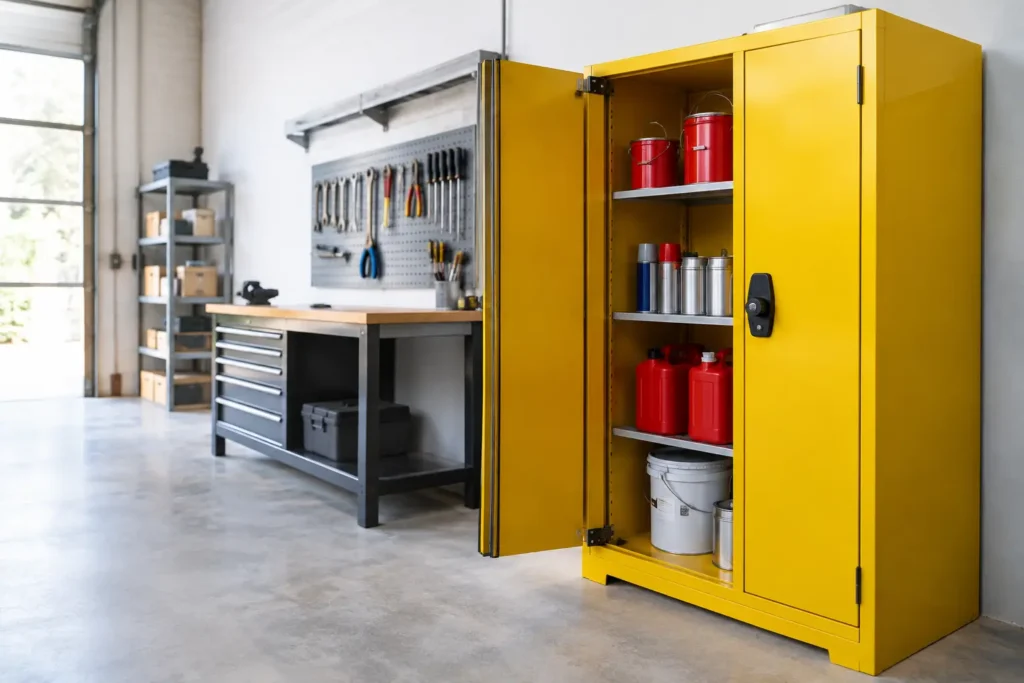
A few tins of thinners beside a bench can become a serious compliance and fire-risk problem fast. The best flammable cabinets for workshops do more than tidy up aerosols, solvents and fuels: they separate ignition-prone liquids from everyday work, contain minor leaks and give your team a controlled storage point that is easy to inspect.
For workshop managers, depot supervisors and procurement teams, the decision is not about buying the biggest yellow cabinet available. It is about matching cabinet capacity, shelf configuration and location to the volume and type of flammable liquid actually held on site. Select the right unit now, then keep spill response equipment beside the risk – not in a storeroom at the other end of the facility.
Start with the storage risk, not the cabinet size
Flammable liquid storage is commonly assessed against AS 1940, the Australian standard for storage and handling of flammable and combustible liquids. Your cabinet is only one part of the control system. Site layout, quantities held, ventilation, ignition sources, segregation, signage and emergency procedures all affect compliance.
That distinction matters. A cabinet can help reduce exposure to a localised fire and keep incompatible materials apart, but it does not make an unsuitable storage location acceptable. Never treat it as a licence to place solvents beside welding bays, battery-charging areas, heaters or grinding stations.
Before ordering, walk the workshop floor and identify every liquid that needs controlled storage. Include paint thinners, acetone, degreasers, methylated spirits, petrol, solvent-based paints, aerosol cans and cleaning chemicals. Check the safety data sheet for each product. It tells you the dangerous goods class, packing group, flash point and incompatibilities that should shape your storage plan.
How to choose the best flammable cabinets for workshops
The right cabinet is the one that comfortably holds your operational stock without becoming a dumping ground. A crowded cabinet makes labels hard to read, creates poor access during an emergency and encourages containers to sit outside the unit.
Match capacity to the working quantity
Small workshops often need a compact under-bench or low-profile cabinet for daily-use containers. These suit a controlled selection of tins, bottles and aerosol products where space is tight. They are practical for maintenance bays, fabrication areas and mobile service workshops, provided the location remains clear of heat and traffic hazards.
Medium-capacity cabinets suit most trade workshops, fleet depots and maintenance sheds. They provide enough shelf space to separate common products while keeping frequently used items within reach. For many sites, this is the sensible starting point because it prevents the gradual overflow of chemicals onto benches and floors.
Large vertical cabinets are better for central chemical stores, high-throughput maintenance operations and facilities holding several product lines. They reduce the need for multiple small cabinets, but only if the site has suitable floor space and the cabinet is positioned so doors can open freely. Do not choose a large unit simply because it is available. Oversizing can encourage uncontrolled accumulation of chemicals that should have been used, returned or disposed of.
For procurement planning, calculate the total litres of flammable liquids kept on hand, then allow headroom for delivery cycles and seasonal demand. Count the actual container footprint as well as litres. Twenty small aerosol cans can consume more usable shelf area than several larger drums.
Check construction features that control leaks and fire exposure
A workshop-grade flammable cabinet should be purpose-built for dangerous goods storage, not a repurposed tool locker. Look for a compliant design suited to the liquids and quantities you store, with a liquid-tight sump at the base to capture leaks or drips from damaged containers.
Shelves should be adjustable and designed to support the intended load. This lets you keep smaller containers upright and avoids stacking tins in a way that damages lids or labels. Self-closing doors can be valuable in busy areas where people may walk away with a cabinet open, while sequential door-closing systems help ensure both doors shut correctly on larger units.
A secure locking arrangement limits unauthorised access, particularly in shared workshops, schools, councils and public works depots. High-visibility dangerous goods signage makes the hazard clear to contractors and emergency responders. Earthing points may also be required for certain transfer activities, but do not assume a cabinet itself replaces safe decanting procedures.
Select shelves and door style around daily access
Single-door cabinets work well in confined spaces where one person accesses products at a time. Double-door units can make large containers easier to handle, but they need more clear space in front. If forklifts, pallet jacks or vehicles pass nearby, protect the cabinet from impact or relocate it out of the traffic path.
Consider the products your crew reaches for every shift. Put daily-use containers on middle shelves, keep heavier containers low, and reserve upper shelves for light items only. That simple arrangement reduces manual handling injuries as well as spill risk.
Keep incompatible chemicals out of the same cabinet
A flammable cabinet is not a universal chemical cupboard. Flammable liquids should not be stored with oxidising agents, corrosives or other incompatible substances unless the relevant safety data sheets and your site assessment specifically allow it. Pool chlorine, acids, alkalis and oxidisers need their own compatible storage controls.
This is where workshop storage often fails. A team starts with a solvent cabinet, then adds a cleaning acid because there is spare shelf space. The result is a mixed hazard that complicates fire response, spill cleanup and compliance inspections.
Use clearly separated storage zones. Label the cabinet, label every container and remove unidentified decanted products from service until they are properly identified. If your operation handles fuels, oils and solvents in different areas, place suitable absorbents close to each risk so a small leak is controlled before it reaches a drain.
Cabinet sizing guide for common workshop operations
| Workshop environment | Typical storage need | Practical cabinet approach | | — | — | — | | Automotive repair bay | Brake cleaner, solvents, paints, aerosol products | Compact or medium cabinet near the work area, away from ignition sources | | Fleet maintenance depot | Degreasers, thinners, fuels and paint products | Medium to large cabinet with clear product segregation and spill response nearby | | Fabrication workshop | Solvents, coatings and cleaning fluids | Cabinet positioned outside welding and grinding exposure zones | | Council or government depot | Mixed maintenance chemicals across several crews | Separate cabinets by chemical class, with controlled access and stock checks | | Civil contractor compound | Mobile plant fluids and maintenance products | Fixed cabinet in the service area plus vehicle spill kits for field response |
The table is a starting point, not a substitute for a site-specific dangerous goods assessment. Quantities, building layout and the materials stored determine whether additional controls, fire separation or a dedicated store are needed.
Position the cabinet to protect people and operations
A correctly selected cabinet can still become a weak point if it is placed badly. Keep it on a stable, level surface where it is protected from vehicle strikes, direct sun, flooding and heat sources. Maintain clear access to the doors. Your team must be able to retrieve a product without climbing over stock, hoses or equipment.
Avoid blocking emergency exits, walkways, electrical switchboards and fire equipment. Where a workshop has floor drains nearby, place drain protection and absorbent materials within immediate reach. A cabinet sump contains only the leak that stays inside the cabinet. Once a container is carried out, decanted or knocked over, your response equipment becomes the next line of defence.
Equip the area with absorbent pads or socks suited to the liquid likely to spill, disposal bags and clear response instructions. Oil and fuel products may require hydrophobic polypropylene absorbents, while chemical spills need compatible materials selected for the specific hazard. Do not use a general-purpose kit as a blanket answer for unknown or aggressive chemicals.
Build cabinet checks into normal workshop routines
The cabinet only works if it remains usable. Add it to weekly or monthly workplace inspections. Check for leaking containers, damaged labels, rust, overloaded shelves, blocked doors and liquids stored on top of the cabinet. Verify that the sump is clean and that no one has placed incompatible products inside.
Keep an inventory that reflects what is actually stored, not what was ordered six months ago. Rotate stock so ageing products do not become forgotten waste. Once containers are empty or no longer needed, remove them promptly through your approved waste process.
For larger sites, assign a cabinet owner. This may be the workshop supervisor, safety coordinator or stores controller. Their role is simple: maintain access, control stock and escalate any storage issue before it becomes a spill, fire incident or audit finding.
Order for compliance without slowing the job down
When a cabinet is required, avoid delayed purchasing caused by vague specifications. Confirm the liquid class, expected storage volume, required footprint, shelf load and door configuration before raising the order. Include any accompanying spill control items in the same procurement request so the storage area is ready when the cabinet arrives.
Commercial and government buyers should also specify purchase order requirements upfront and request itemised GST details for products and freight. That keeps approvals moving and gives finance teams a clean record. Fast nationwide dispatch matters when a site has an identified gap, but correct selection matters more than rushing a cabinet that will not suit the job.
A flammable cabinet should give your workshop a clear answer to a simple question: where are the solvents, who can access them, and what happens if one leaks? Secure that answer before the next delivery arrives.