
Blog
Collapsible Spill Bunds for Fast Site Containment
Aug
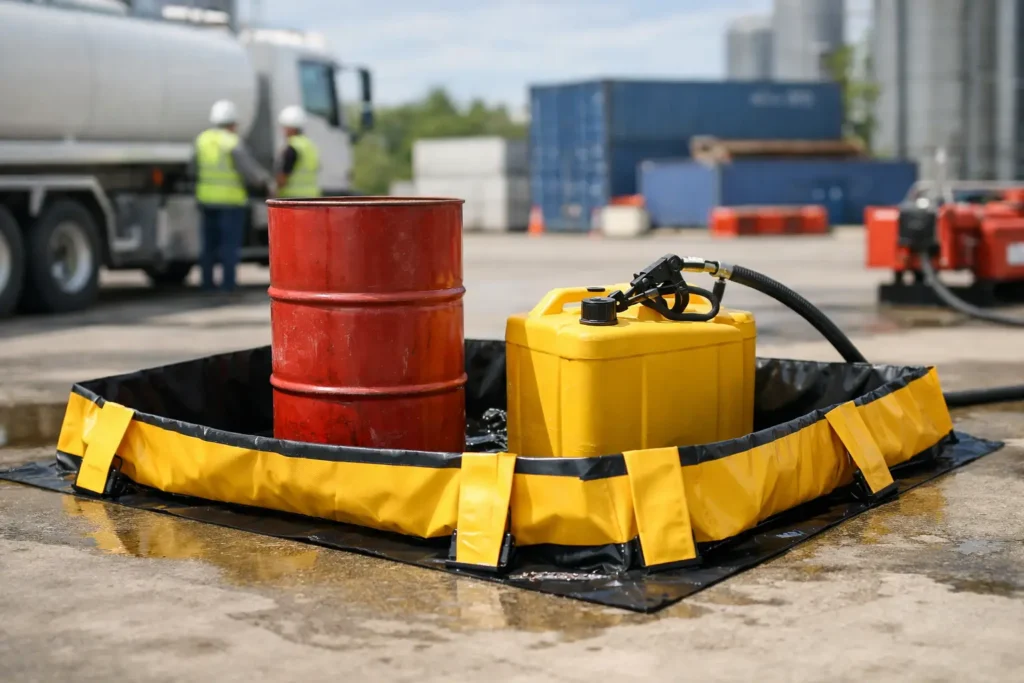
A leaking drum, plant hose, or fuel container can turn a clean loading area into a shutdown zone within minutes. Collapsible spill bunds give crews a fast way to contain leaks at the source before liquid reaches drains, soil, traffic areas, or neighboring work zones. They are particularly useful where fixed bunding is impractical, such as fleet yards, mobile maintenance jobs, civil sites, temporary storage areas, and transport operations.
The key benefit is simple: a collapsible bund stays compact until it is needed, then deploys around a vehicle, drum, or work area to create a contained floor space. For busy supervisors, that means less time building temporary barriers and more control when a leak appears. But the right bund is not simply the largest one available. You need to match its capacity, footprint, wall design, and chemical compatibility to the job.
Where Collapsible Spill Bunds Make Sense
Collapsible bunding is designed for temporary or mobile containment. Unlike a permanent concrete or steel bund, it can be folded, stored in a service vehicle, moved between work areas, and set up when spill risk is present.
This makes it a practical choice for refueling plant, servicing trucks, storing leaking drums while waiting for collection, and placing beneath mobile equipment with known hydraulic or oil leaks. It can also create a controlled work zone when transferring oils, coolants, chemicals, or fuel from one container to another.
A bund does not replace good handling practices or a suitable spill kit. It gives the spill somewhere to stay while your crew stops the source and recovers the liquid. Keep appropriate absorbents nearby. For diesel, oils, lubricants, and hydraulic fluid, use oil and fuel absorbents that repel water and target hydrocarbons. For unknown liquids or chemical handling areas, select absorbents and personal protective equipment that suit the specific substance.
Choose the Bund by Risk, Not Storage Size
The most common buying mistake is choosing a bund based only on how much room it takes up when folded. Compact storage matters, especially in vehicles, but containment capacity is what protects the site.
Start with the maximum liquid volume that could reasonably escape. For a single 205-liter drum, the bund should be sized to contain the full drum volume where site procedures or risk assessments require it. For multiple drums, transfer activities, or plant servicing, calculate the likely release volume and allow room for equipment, hoses, and staff access.
The usable capacity depends on the bund’s internal length, width, and wall height. Do not assume the advertised footprint tells you how much it will hold. A large floor area with low walls may suit a slow drip from machinery but may not be appropriate for a major container failure.
| Typical use | What to prioritize | Common setup consideration |
|---|---|---|
| Vehicle servicing | Low profile walls and enough room for the vehicle | Confirm tire weight and entry method |
| Drum storage | Capacity and chemical compatibility | Allow space around drums for safe handling |
| Fuel or oil transfer | Room for containers, pumps, and hoses | Position away from drains and traffic |
| Mobile plant repairs | Fast deployment and puncture resistance | Clear sharp debris before setup |
| Emergency leak isolation | Compact packed size and quick access | Store with absorbents and drain protection |
It depends on the task. A shallow-drive-over bund may suit a ute or service truck, while a higher-wall model is better for static drums and transfer stations. If vehicles must enter the bund, check whether it uses foam walls, collapsible brackets, or another drive-over design. A bund intended for static containment can be damaged or displaced by tires.
Check Material Compatibility Before Deployment
Most collapsible bunds are built from heavy-duty coated fabrics or flexible chemical-resistant materials. That does not mean every model is suitable for every liquid. Oils, fuels, coolants, acids, solvents, and corrosive chemicals can have very different compatibility requirements.
For oil and fuel work, focus on a bund that is suitable for hydrocarbons and the conditions on your site. For chemical or hazardous goods operations, confirm the bund material is compatible with the liquid being handled. If the product is unknown, treat it as a higher-risk spill. Isolate the area, use general-purpose or chemical-rated response equipment as required, and follow your site emergency procedures.
The ground beneath the bund matters as well. Gravel, metal swarf, sharp stones, exposed bolts, and broken pallets can puncture flexible containment. Before setting up, sweep or clear the area. On rough or uneven ground, place a protective underlay if the job and product design call for one.
Set Up a Collapsible Bund Before the Leak Starts
A bund works best when it is already in place before a high-risk task begins. Do not wait until a drum has failed or a hydraulic hose has burst. During planned transfers, mobile maintenance, and refueling, deploy containment first.
- Select level ground away from stormwater drains, doorways, and vehicle traffic where possible.
- Clear sharp objects and sweep away loose debris that could damage the base.
- Unfold the bund fully and check that walls, supports, brackets, or foam edges are correctly positioned.
- Place drums, equipment, or vehicles inside without dragging sharp edges across the floor.
- Keep a suitable spill kit, waste bags, and drain protection at the edge of the work area.
- Inspect the bund during the job, especially when transferring liquid or working on equipment under pressure.
For fleet operations, pack the bund where drivers and technicians can reach it without unloading half the vehicle. A compact unit buried behind tools is unlikely to be deployed quickly. Store it with the equipment used for the same task, such as fuel transfer gear, maintenance supplies, or a vehicle spill response kit.
Pair Bunding With the Right Spill Response Gear
Containment is only one part of the response. Once liquid is inside the bund, crews still need to stop the source, recover the spill, and manage contaminated waste. Stock the area accordingly.
Oil and fuel spills generally call for hydrophobic pads, rolls, socks, and pillows. Socks can be placed around a leak or inside the bund to control spread, while pads and pillows recover pooled liquid. Chemical spills may require general-purpose or chemical-rated absorbents, depending on the substance. Make sure staff understand that absorbent color alone is not a substitute for checking the product label and site procedure.
Drain protection is also critical where spill migration is possible. A bund should be placed away from drains where practical, but site layouts are not always ideal. Keep drain covers or other suitable drain protection close to loading bays, workshops, wash areas, and fuel points. Fast containment at the surface is far easier than recovering contamination from a stormwater system.
After use, inspect the bund carefully. Remove recovered liquid and used absorbents using the waste process approved for your site. Clean the bund with a method compatible with both the material and the spilled substance, then allow it to dry before folding and returning it to service. Do not pack a contaminated or wet bund back into a vehicle and assume it is ready for the next incident.
Common Mistakes That Reduce Containment
The first mistake is undersizing. A small bund may catch drips, but it will not provide meaningful protection during a larger failure. The second is selecting a static bund for vehicle access. If trucks, forklifts, or plant need to cross the wall, choose a model designed for that movement.
Another issue is treating a bund as a permanent storage solution. Flexible bunding is ideal for temporary deployment, but long-term outdoor exposure, repeated abrasion, standing liquid, and poor housekeeping can shorten its service life. Inspect it regularly for tears, damaged seams, weakened wall supports, and signs of chemical attack.
Finally, do not overlook crew readiness. A high-capacity bund is of little value if no one knows where it is stored, how it opens, or what absorbents to use after containment. Include bund deployment in toolbox talks for workshop teams, drivers, maintenance personnel, and contractors who handle liquids on site.
Equip the Work Area Before the Next Transfer
For mobile and temporary spill risks, collapsible bunding is one of the most practical controls you can keep ready. Select a model that fits the largest credible spill, the equipment entering the area, and the liquids your team handles. Then store it where the job happens, alongside the absorbents and drain protection needed to finish the response. A bund deployed before work begins keeps a small leak from becoming a costly cleanup.