
Blog
Spill Bund Deployment for Fast Leak Control
Aug
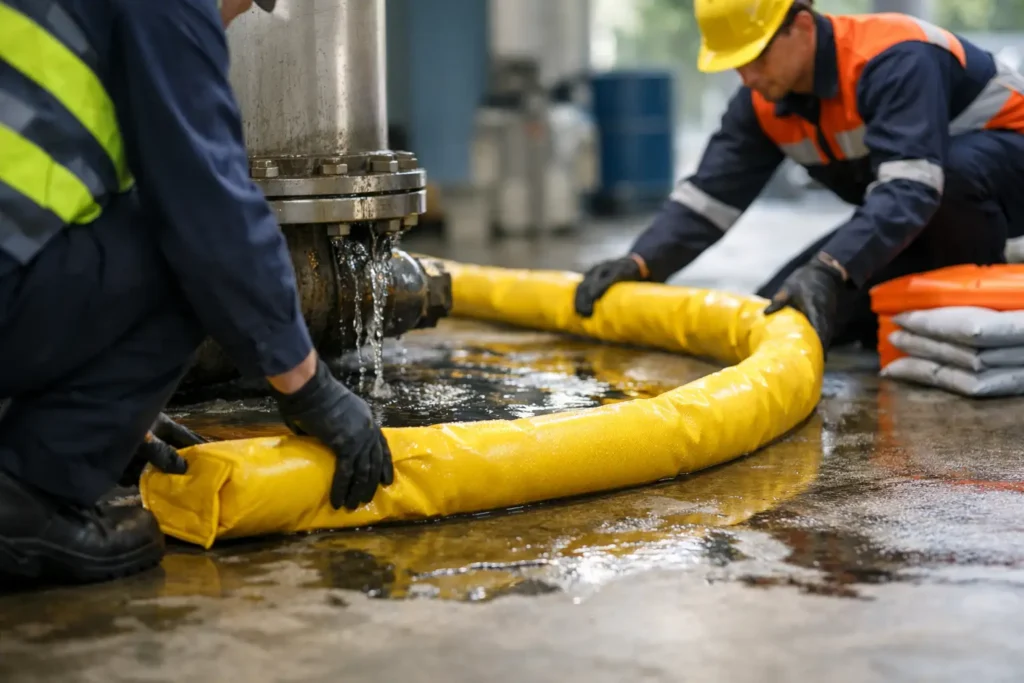
A leaking drum, damaged IBC or split hydraulic hose can turn a clear workshop floor into a shutdown zone within minutes. Effective spill bund deployment gives the leak somewhere to go before it reaches a drain, loading area or neighbouring work zone. The goal is simple: contain the liquid at the source, keep people moving safely, and give your crew time to use the right absorbents.
For workshop managers, depot supervisors and fleet operators, bunding is not equipment to leave wrapped in a storeroom. It needs to be selected for the liquid and container it protects, positioned where leaks are most likely, and checked often enough that it will work when needed.
Start With the Spill Risk, Not the Bund Size
The first question is not, “Which bund fits in this corner?” It is, “What could leak here, and how much could escape?” A small under-bench tray may suit oil filters and 20-litre containers. It is not enough for a 205-litre drum, a decanting station or an IBC holding fuel, coolant or chemicals.
Identify the largest single container in the area, then consider whether more than one container could leak at once. Also consider rainwater if the bund is outdoors. Water takes up containment capacity quickly, and an overflowing outdoor bund does not protect your site.
As a practical starting point, match the bund capacity to the largest credible spill from the containers stored or handled there. Where your workplace has specific environmental, dangerous goods or site requirements, check the applicable rules and your site procedures before ordering. Capacity is only one part of the decision. Chemical compatibility, traffic exposure and access for forklifts or pallet jacks also matter.
Choose the Right Bund for the Job
Different work areas call for different styles of containment. Selecting the wrong format creates handling issues, slows down access, or leaves the spill pathway unprotected.
Drum and IBC storage areas
Rigid polyethylene bunds are a practical choice for drums, smaller containers and many chemical storage applications. They provide a defined containment area and are suited to fixed locations such as chemical stores, wash bays and maintenance rooms. Use drum bunds where containers remain in one position and staff need straightforward access for dispensing or inspection.
For IBCs, use a purpose-built IBC bund with enough capacity for the stored volume and suitable access for the equipment used on site. Check whether the IBC will be loaded by forklift, whether a dispensing tap needs clearance, and whether the bund can be positioned without forcing staff to step over hoses or pallets.
Workshops and maintenance bays
Drip trays, low-profile bunds and portable containment trays suit areas where oil, coolant, grease or hydraulic fluid may drip during servicing. They are useful beneath parts washers, waste-oil collection points, pumps and parked plant undergoing repair.
Low walls make access easier, but they also reduce total containment capacity. Choose a profile that suits the task. A tray used for an occasional small leak can be low and simple. A location beneath a high-risk transfer point needs more capacity and stronger protection from vehicle traffic.
Mobile jobs and temporary worksites
Portable spill bunds are designed for fast deployment around leaking plant, generators, pumps or service vehicles. Foam-wall and collapsible options are particularly useful where a rigid bund would be too bulky to transport. They can be carried in a ute, stored on a service truck, or kept near a mobile fuel or maintenance operation.
Portable containment involves a trade-off. It is quick to set up and easy to move, but it needs a clear, reasonably level surface and staff who know how to position it before the spill spreads. Keep compatible absorbent pads and socks with the bund. Containment stops the spread; absorbents remove the liquid.
Drive-over and traffic areas
Where equipment must enter the bunded area, select a drive-over solution designed for that load and traffic pattern. Do not expect a lightweight portable bund to withstand regular forklift, truck or plant movement unless it is specifically rated for it. Repeated wheel contact can damage walls, create gaps or force liquid out of the containment area.
Position Bunds Where They Can Actually Work
A bund placed close to the hazard is more useful than a larger one stored across the yard. Position fixed bunds under storage containers, transfer points and known leak sources. Keep them away from drains where possible, and make sure a leak cannot bypass the bund through a gap, slope or hose route.
Look closely at the floor. Even a slight fall can direct liquid underneath pallets, through roller doors or towards stormwater pits. If a spill could reach a drain before the crew can deploy a portable bund, keep drain protection at that point as well. Drain covers and drain wardens are a practical second line of defence, especially around workshops, loading docks and wash-down areas.
Allow space for normal work. Staff still need to inspect labels, operate pumps, use a drum trolley and access emergency equipment without climbing over bund walls. If the area is cramped, reassess the layout rather than squeezing a bund into an unsuitable gap.
A Fast Spill Bund Deployment Process
When a leak occurs, speed matters, but so does control. Your crew should not be deciding where the bund is stored or which way it unfolds while liquid is moving across the floor. Set a simple process and practise it during toolbox talks.
- Stop work and assess the liquid from a safe distance. Check labels, safety information and obvious ignition risks before approaching.
- Stop the source if it can be done safely. Upright a damaged container, close a valve, isolate a pump or place the leak point over containment.
- Deploy the bund or tray around the source. For portable bunds, choose the lowest practical point and ensure the walls are fully raised and supported.
- Block pathways with absorbent socks or compatible barriers, particularly near doorways, ramps and drains.
- Use the correct absorbents inside the contained area. Oil and fuel spills need hydrophobic media where water may be present; chemical spills need suitable chemical absorbents and appropriate PPE.
- Collect used materials, label waste where required, and arrange disposal according to the liquid involved and site procedures.
The right spill kit should sit close enough to support this sequence. A 20-litre vehicle bag can deal with a minor roadside or mobile-service leak, but it is not a substitute for a properly sized site kit beside drum storage or a transfer point. Keep refill pads, socks and disposal bags available. Most everyday spills do not empty a whole kit, but repeated small leaks quickly leave a kit understocked.
Inspect Before the Leak Happens
Bunding is only reliable when it is clean, intact and available. Add it to routine site checks, particularly in busy workshops where containers are moved often. Look for cracks, split seams, warped walls, damage from forklift tynes, and pooled rainwater or product residue.
Check that containers are sitting fully within the bunded footprint. A drum perched half on and half off a pallet bund is not properly protected. Inspect taps, bungs, hoses and fittings as well. Reducing the chance of a leak is always easier than responding to one.
For portable bunds, unfold and inspect them regularly. Confirm that wall supports, foam sections, valves and carrying bags are complete. A collapsed bund tucked behind a cabinet is not ready-to-deploy equipment.
Build Bunding Into Your Ordering Plan
When ordering containment equipment, buy for the operating area rather than the catalogue description alone. Measure the footprint, identify the containers, note the liquid type and think through how staff move around the space. Then pair the bund with the absorbents, drain protection and spill kit capacity needed for the same hazard.
For a workshop, that may mean low-profile drip containment at service bays, a drum bund in the lubricant store, and oil and fuel spill kits near waste-oil points. For a transport depot, it may mean portable bunds and vehicle spill kits in fleet vehicles, plus drain protection around loading and refuelling areas. Civil and mobile crews often need lightweight portable containment that can travel with pumps, generators and field-service equipment.
Spillkits.com.au helps simplify that selection with ready-to-deploy containment, absorbents and spill response equipment suited to everyday Australian worksites. Select gear that matches the actual leak risk, keep it accessible, and make deployment part of the crew’s normal response routine.
A spill does not wait for the next procurement cycle. Set up containment where the leak is likely to happen, keep the matching response gear beside it, and give your crew a clear first move when liquid hits the floor.