
Blog
Best Drain Protectors for Australian Worksites
Aug
A few litres of oil, coolant or wash-down water can reach a stormwater drain before a crew has finished locating the spill kit. The best drain protectors create an immediate physical barrier at the drain, buying your team time to contain and recover the spill properly. For workshops, transport depots, warehouses and civil sites, that simple action can prevent a minor leak becoming an environmental incident, site clean-up and operational delay.
Drain protection is not a substitute for absorbents or a spill response plan. It is the first control when liquid is moving towards a drain. Select the right style for your drain layout, likely spill type and the speed at which your crew needs to deploy it.
What makes the best drain protectors?
The best option is the one that seals the drain quickly, stays in place on your surface and is stored close enough for staff to reach without leaving the spill unattended. A high-performance cover kept in a locked store at the other end of the yard is less useful than a correctly sized cover mounted beside the wash bay.
Start with the drain itself. Measure the grate or pit opening, including the flat surface around it. Most flexible drain covers need clean, reasonably smooth concrete to form a seal. Rough bitumen, uneven pavers, damaged concrete and heavily crowned surfaces may require a different approach, such as a drain plug, drain warden or containment berm.
Also consider traffic. Some drain covers are intended for temporary emergency use only and should not be driven over. If a loading area, workshop lane or vehicle wash bay remains active, isolate the area with cones and signage as soon as the cover is in place.
Flexible drain covers
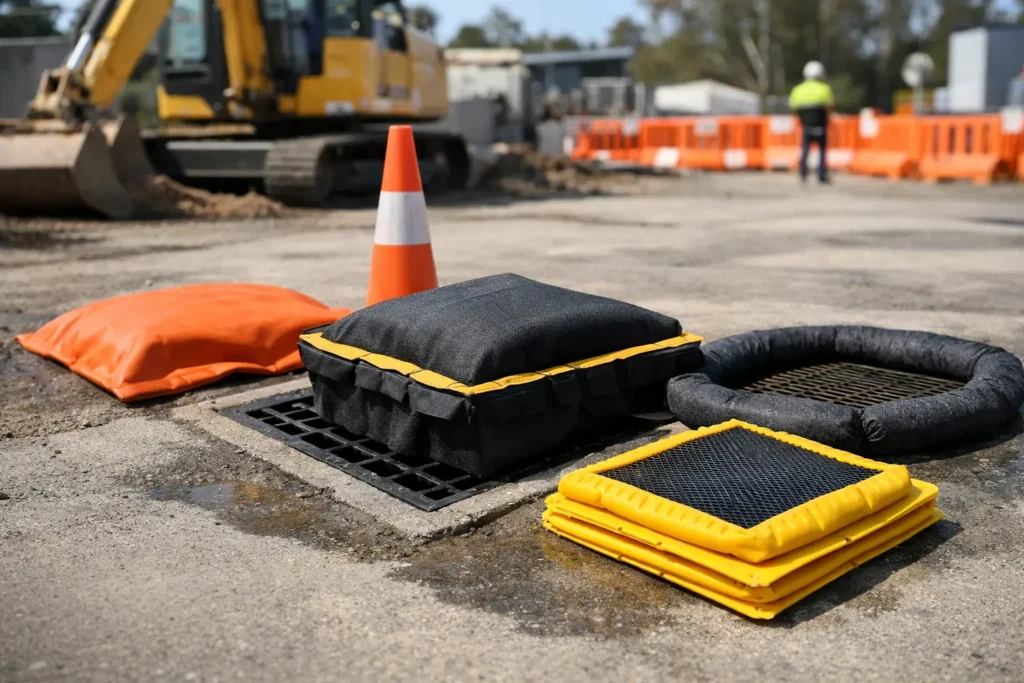
Flexible drain covers are a practical first-choice option for flat grates on concrete. Typically made from a tacky polyurethane or similar flexible material, they conform to the surface around the grate and help stop liquid entering underneath. They deploy in seconds: place the cover directly over the drain, press down around the edges and begin building containment with absorbent socks.
They are especially useful near workshop floor drains, fuel dispensing points, bunded transfer areas and loading docks. Keep a cover larger than the grate, not merely the same size. That extra overlap provides a better sealing area and allows for small measurement errors.
The trade-off is surface condition. Dust, standing water, loose gravel and deeply textured concrete can reduce the seal. Inspect and clean reusable covers after use, then return them to a labelled drain protection station or spill kit.
Drain plugs and inflatable plugs
Drain plugs seal from inside the drain pipe rather than across the surface. They suit pits, channels and drains where a cover cannot sit flat, or where liquid may bypass a surface cover through damaged edges. Mechanical plugs can be tightened in position, while inflatable versions expand inside the pipe.
These products require accurate drain dimensions and a crew member who understands where the drain leads. A plug that is too small may not hold back liquid. One that is too large may not fit or may be difficult to remove under pressure. For sites with known high-risk drains, record the drain diameter and keep the correct plug with the relevant response equipment.
Plugs are a strong secondary control for fuel areas and wash bays, but they are not always the fastest option for an unknown spill. For immediate action, a surface cover is usually easier for frontline staff to deploy.
Drain wardens and silt protection
Drain wardens are designed to sit beneath or around a grate to capture sediment, debris and contaminated runoff before it enters the drainage system. They are useful where regular dirt, metal filings, leaves or sediment are expected, such as maintenance yards, construction access points and external work areas.
They are not an emergency seal. If oil, chemicals or wash-down water are heading towards a drain, place a cover over the top first. Use drain wardens as part of everyday preventative maintenance, and inspect them after heavy rain or high-debris work. Once full, they cannot perform as intended.
For civil and outdoor works, silt socks and sediment barriers can slow dirty runoff and direct it away from stormwater entries. They work best as a planned site control, not as the only response to a fast-moving liquid spill.
Match drain protection to the spill risk
A mechanical workshop dealing mainly with engine oil, diesel and coolant needs different readiness from a facility receiving acids, solvents or unknown liquids. The drain protector blocks the path, but your absorbents and personal protective equipment must suit the material being contained.
| Site area | Common risk | Practical drain protection setup |
|---|---|---|
| Workshop service bay | Oil, coolant, brake fluid | Flexible drain cover, absorbent socks and general purpose pads |
| Fuel depot or fleet yard | Diesel, petrol, hydraulic oil | Oversized cover near drains, oil-only absorbents and a larger spill kit |
| Wash bay | Detergent, oily wash water, sediment | Covers for emergency use, drain wardens and silt controls for routine runoff |
| Chemical store or process area | Acids, alkalis, solvents | Chemical-resistant drain cover, chemical absorbents and suitable PPE |
| Civil or outdoor worksite | Sediment, concrete washout, fuel | Silt socks, inlet protection and portable drain covers in site vehicles |
For oil and fuel spills, use hydrophobic oil-only absorbents where possible. They repel water and are well suited to hydrocarbons around outdoor drains. For chemicals or unknown liquids, select chemical absorbents and check compatibility before sending staff into the area. General purpose pads work for many workshop liquids, but they are not the right answer for every hazardous substance.
Size and position your equipment before a spill
Do not wait for a leak to map the drains. Walk the site and mark every stormwater grate, pit, channel and wash-bay entry. Identify drains near vehicle parking, drum handling, decanting, battery charging, maintenance bays and delivery zones. These are the points most likely to receive contaminated liquid.
For each high-risk drain, record the grate dimensions and choose a protector with enough overlap. A 600 mm square grate should generally have a cover substantially larger than 600 mm square. Where drains are long and narrow, use a strip-style cover, several overlapping covers or absorbent socks positioned to divert the flow.
Position equipment where it can be grabbed immediately. A useful setup may include a drain protection station near the wash bay, a compact response bag in each service ute, and a larger wheelie-bin spill kit near bulk fluids or loading areas. Stock replacement pads, socks and disposal bags alongside the cover. A drain protector stops the escape route, but you still need enough absorbent capacity to recover the spill.
A fast drain protection response sequence
When liquid is moving towards a drain, keep the response simple and repeatable:
- Stop the source if it is safe to do so. Upright the container, close the valve, shut down the pump or move the leaking item into containment.
- Protect the drain first. Place the cover over the grate or install the correct plug before the spill reaches it.
- Build a containment line. Use absorbent socks, booms or compatible barriers to stop the spill spreading around the cover.
- Recover the liquid with the correct pads, rolls or granules. Work from the outside of the spill towards the centre where practical.
- Bag contaminated materials, inspect the drain edge and restock the kit immediately after the incident.
Train crews to treat drains as priority points. A two-minute toolbox talk using the actual covers and socks on site is more effective than expecting staff to interpret equipment during an emergency.
Common buying mistakes to avoid
The most common mistake is buying one small drain cover for an entire site. Multiple drains can be exposed at once, especially during rain, wash-down or a vehicle incident. Equip the areas with the highest consequence first, then add portable units to fleet vehicles and maintenance trolleys.
Another mistake is selecting only by price. Thin or undersized covers may be difficult to position and can leave gaps around the grate. Choose material and dimensions suited to the surface, then store the product flat and protected from damage.
Finally, do not overlook replacement stock. Absorbent socks used to divert one coolant leak may leave your response kit underprepared for the next event. Include drain protection checks in monthly spill kit inspections and replace used or degraded items without delay.
Equip your highest-risk drains before the next delivery, wash-down or workshop service rush. A correctly sized drain cover, compatible absorbents and a crew that knows the first three actions can keep a contained spill from leaving your site.