
Blog
Hydraulic Leak Response for Workshops and Fleets
Aug
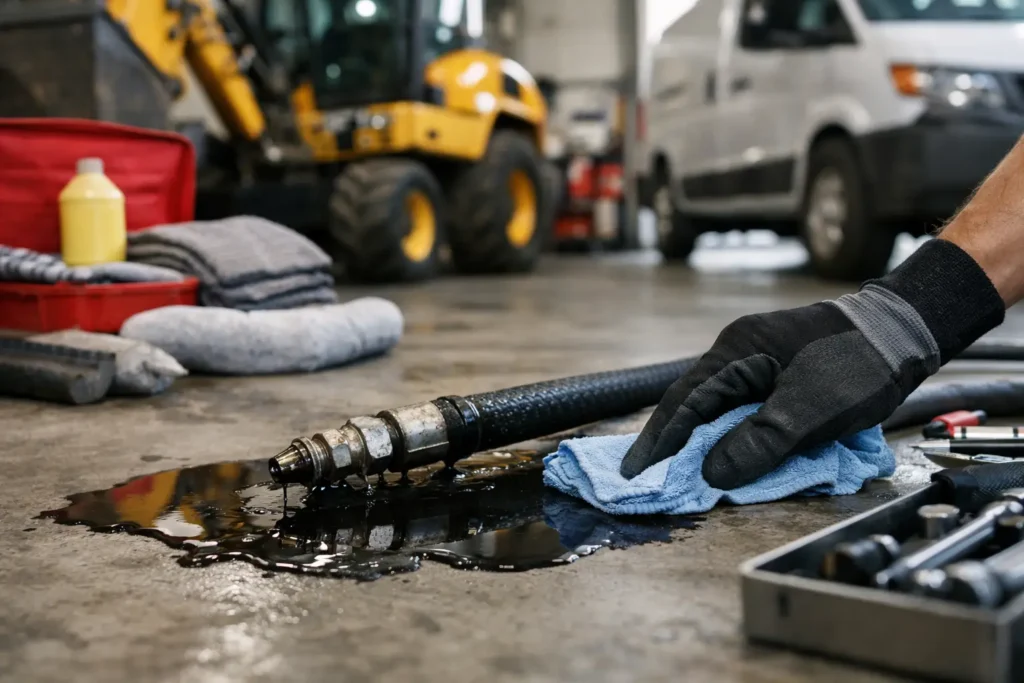
A burst hose under a parked excavator, a leaking ram in the workshop or a drip from a hydraulic fitting on a ute can spread faster than it first appears. Effective hydraulic leak response is about stopping the spread before oil reaches a drain, traffic area, soil or work bay – while keeping people clear of pressurised equipment.
For fleet, workshop and site managers, the priority is simple: isolate the risk, contain the oil, protect drainage and recover the spill with the right absorbents. The job is easier when the kit is close to the leak, clearly marked and fully stocked.
Hydraulic leak response: the first five minutes
Do not rush straight to the puddle. Hydraulic systems can hold dangerous pressure even after plant has stopped. A fine hydraulic fluid spray may be difficult to see, and fluid injection injuries require urgent medical attention. Never use a hand, rag or body part to search for a pressurised leak.
First, stop work and keep vehicles, pedestrians and ignition sources away from the area. Shut down the machine or vehicle if it is safe to do so, then isolate the energy source in line with your site procedure. If the leak is still active, position a drip tray, portable bund or compatible containment device under the source where possible. Only attempt a repair once pressure has been safely relieved by a competent person.
Next, stop the spill travelling. Place absorbent socks around the perimeter first, especially downhill from the leak. Socks act as a barrier and give your crew time to put pads on the pooled oil. Starting with pads alone often means the fluid continues moving underneath or around the cleanup area.
Protect drains before cleaning the floor
A workshop floor can look controlled while oil is already moving towards a grated drain. Check nearby drains, pits, wash bays and doorways as soon as containment begins. If there is any chance of flow towards stormwater, cover the drain immediately with a drain cover or drain warden, then build a secondary barrier with absorbent socks.
For outdoor work, account for slope, rain and vehicle movement. A small leak on concrete can become a larger environmental incident once a forklift tyre carries oil across the yard or rainwater pushes it into a channel. Keep vehicles away until the surface has been cleaned and made safe.
If hydraulic fluid has entered a drain, waterway or soil, escalate it under your site incident process and notify the relevant authority or emergency contact where required. Absorbents are for immediate control, not a substitute for reporting and proper remediation.
Choose absorbents for the hydraulic fluid involved
Most conventional hydraulic oils are petroleum-based, so Oil & Fuel absorbents are often the right starting point. These polypropylene absorbents are hydrophobic, meaning they repel water and preferentially take up oil. They suit hydraulic oil on workshop floors, hardstands, roadsides and wet outdoor areas.
However, do not assume every hydraulic fluid is the same. Some systems use water glycol, synthetic ester or other specialist fluids. Check the safety data sheet and confirm compatibility before assigning absorbents and disposal arrangements. Where the fluid is unknown, or where chemical hazards are present, a Chemical/Hazchem kit may be the safer choice.
General Purpose absorbents are useful for mixed maintenance spills and non-aggressive liquids, but they can absorb water as well as oil. That makes them less efficient for an oil spill in wet conditions. Select the kit based on the liquid, not simply the colour of the container.
| Spill situation | Practical first choice | Why it works |
|---|---|---|
| Hydraulic oil on a dry workshop floor | Oil & Fuel pads and socks | Fast pickup and clear perimeter control |
| Hydraulic oil outdoors or near rainwater | Oil & Fuel absorbents plus drain protection | Repels water and targets the oil |
| Unknown hydraulic fluid or specialist fluid | Check the SDS, then use Chemical/Hazchem equipment if required | Helps manage compatibility and worker safety |
| Small recurring fitting drip | Drip tray, pads and a maintenance repair | Controls the immediate leak while repairs are arranged |
Size the kit for the likely spill, not the smallest leak
A 20L vehicle spill kit can be a practical minimum for service utes, field vans and mobile plant. It gives operators enough pads, socks and disposal bags to manage a hose seep, fitting failure or small reservoir overflow before it spreads. Store it where the driver can reach it without unloading tools – behind the seat, in a side locker or in an accessible toolbox.
For a workshop, depot or plant area, step up to a 120L or 240L wheelie bin kit when there are multiple hydraulic assets, large reservoirs, frequent maintenance tasks or drains nearby. The larger format carries more socks for perimeter control, more pads for recovery and space for contaminated waste. It also remains visible and easy to move to the incident.
Absorbency capacity is a planning figure, not a promise that every drop can be recovered under every condition. Rough surfaces, rain, flowing liquid and poor access all increase consumption. If a machine can release 80 litres before isolation, a kit rated near 80 litres leaves little margin for a spreading spill, drain protection and cleanup. Build in capacity for the realistic worst case, then keep refill packs on site.
A sensible setup for a busy maintenance operation usually includes a vehicle kit in each field unit, a larger central spill kit in the workshop, drain protection at exposed grates and spare pads and socks near the service area. This avoids stripping the main kit after every minor drip.
Keep the response gear ready to deploy
A sealed kit is only useful if staff can reach it quickly and know what is inside. Position kits near hydraulic plant, fuel storage, loading zones, wash bays and workshop exits. Do not hide them behind pallets, parts racks or parked equipment.
Check kit contents after every use and as part of routine site inspections. Replace used pads, socks, gloves, disposal bags and drain covers straight away. A kit with an empty sock pack is not ready for the next hose failure, even if the bin or bag is still in place.
Use this quick readiness check at least monthly:
- Confirm each kit is visible, accessible and labelled for its intended spill type.
- Check absorbent pads, socks, PPE and disposal bags are dry, complete and within reach.
- Inspect drain covers and portable bunding for tears, folds or contamination.
- Record used stock and order refill components before minimum levels are reached.
- Brief new drivers, fitters and contractors on kit locations and the site escalation process.
Spillkits.com.au supplies ready-to-deploy options for vehicles, workshops and larger depot areas, making it easier to match kit capacity to the way your team actually works.
A practical cleanup sequence for crews
Once the source is isolated and drainage is protected, work from the outside in. Place socks around the spill, then use pads to absorb the pooled hydraulic oil. Replace saturated pads before they are dragged across the floor or allowed to drip. For uneven ground, use loose absorbent where it can reach cracks and textured surfaces, then collect it with suitable tools.
Bag or contain used absorbents and contaminated PPE in the supplied disposal bags or compatible waste containers. Label and store the waste securely until it can be disposed of through an approved waste provider. Disposal requirements depend on the fluid, contamination and local rules, so check the safety data sheet and your waste contractor’s instructions.
Before reopening the area, inspect for residual slickness, oil tracking and fluid beneath machinery guards or tyres. Repair the failed hose, seal, fitting or component before restarting plant. Cleaning the floor without fixing the cause only guarantees another response job later in the shift.
Equip your fleet with accessible vehicle kits, keep larger spill equipment where hydraulic work happens, and hold refill stock before the next breakdown tests your preparation. A fast response starts well before the first drop reaches the ground.