
Blog
What Absorbs Battery Acid Safely on Site?
Aug
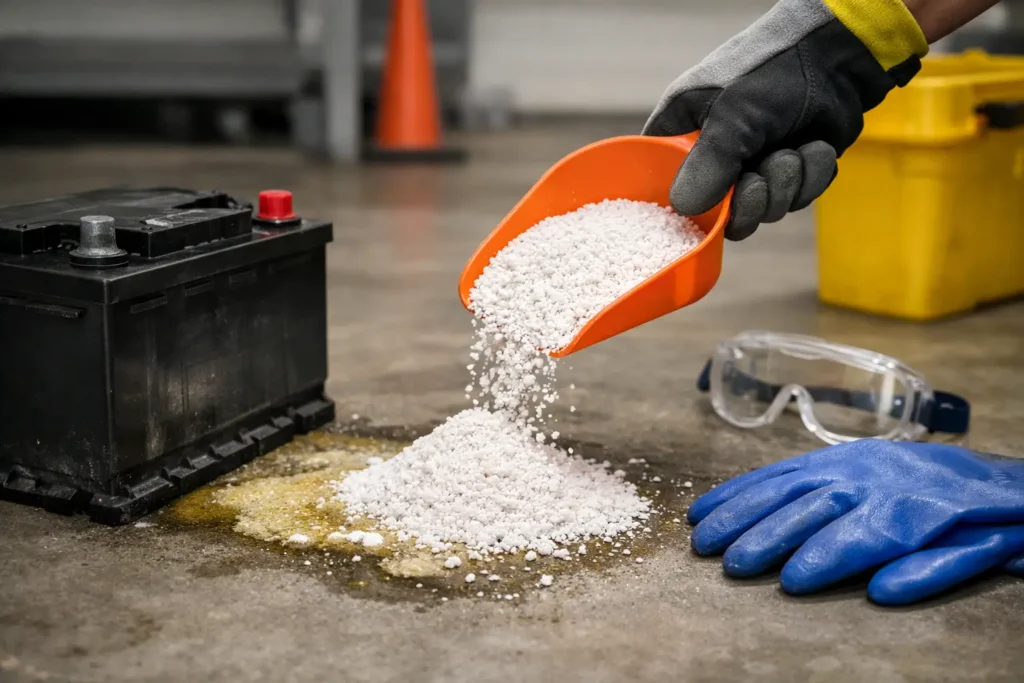
A cracked forklift battery, a leaking battery bank or an overturned vehicle battery can put corrosive electrolyte on your floor in seconds. If you are asking what absorbs battery acid, the operational answer is not simply ‘anything absorbent’. Neutralise the acid first where your procedure and safety data sheet permit it, then recover the residue with chemical-compatible absorbent and contain it for correct disposal.
For lead-acid batteries, the spill is generally dilute sulphuric acid. It can burn skin and eyes, attack concrete and metal, and move rapidly towards drains. Delaying the response creates a bigger clean-up, potential environmental release and avoidable downtime. Equip the work area before the next battery change, not after the floor starts fizzing.
What absorbs battery acid after neutralisation?
A purpose-made acid neutraliser is the first material to reach for when handling a lead-acid battery spill. These products are formulated to react with acid, often changing colour to show when the area has been treated. Once the reaction has settled, use chemical absorbent pads, particulate absorbent or compatible socks to collect the neutralised liquid and residue.
Bicarbonate of soda can neutralise small lead-acid battery spills in some workplace procedures. It is familiar, readily available and effective when used correctly. However, it is not a substitute for a stocked chemical spill response system in a warehouse, workshop, depot or battery charging room. You need enough material for the credible spill volume, clear PPE instructions and a secure means of containing the waste.
Do not treat battery acid like an oil spill. Standard oil-only polypropylene pads are hydrophobic — they repel water and are designed for hydrocarbons such as diesel, petrol and lubricating oil. They are not the right primary choice for aqueous acid. Select chemical or hazchem absorbents that are suitable for aggressive liquids and check the product compatibility information before ordering.
Select the right material for the spill
The correct response depends on the battery type, spill volume, surface and whether acid has reached a drain or soil. For conventional lead-acid batteries, use a chemical response approach. For lithium-ion batteries, do not assume the leaking material is sulphuric acid. Lithium battery incidents can involve flammable electrolyte, toxic decomposition products and thermal runaway risk. Isolate the area, follow the battery manufacturer’s safety data sheet and emergency plan, and escalate to emergency services where fire, heat, smoke or damaged cells are involved.
Use this practical selection guide for lead-acid battery electrolyte:
| Site condition | First response material | Recovery material | Operational priority |
|---|---|---|---|
| Small bench or floor spill | Acid neutraliser | Chemical pads and disposal bag | Stop spread and protect staff |
| Battery charging station leak | Acid neutraliser and chemical socks | Chemical pads or granular absorbent | Keep liquid out of walkways and drains |
| Forklift battery spill | Chemical spill kit with neutraliser | Chemical pads, socks and scoop | Isolate traffic and contain the full volume |
| Outdoor spill near stormwater | Drain cover, socks and neutraliser | Chemical absorbent and sealed waste drum | Protect stormwater immediately |
| Large release or unknown liquid | Site emergency procedure | Specialist response equipment | Keep people clear and escalate fast |
Granular mineral absorbent can help recover neutralised residues on rough concrete, damaged surfaces or outdoor hardstand. Its trade-off is volume and handling: saturated granules are heavier, dustier and create more waste than pads. Chemical pads are faster for a contained spill and easier to place around battery racks, while chemical socks are best for building a barrier around the release.
Stop the spill from reaching drains
The highest-cost battery acid spill is often not the one on the floor. It is the one that enters a stormwater drain, crosses a loading bay or escapes beyond your boundary. Put drain protection into place before spreading neutraliser if the liquid is moving towards drainage points. A compatible drain cover creates an immediate temporary seal, while chemical socks can divert and contain the flow.
Keep spill bunds at battery handling areas, loading zones and maintenance bays where a leak could travel. Secondary containment does not replace rapid clean-up, but it gives your team valuable time to control the release without shutting down an entire site. For fixed battery charging or storage locations, bunding beneath the equipment can prevent a small defect becoming an environmental incident.
Never hose battery acid towards a drain. Do not use a wet vacuum unless it is specifically approved for corrosive chemical recovery. Water can spread the contamination, increase the volume of waste and expose workers to splash hazards.
Use the right PPE before clean-up
Battery acid response is a chemical task, not a housekeeping job. Restrict access and ensure the responder is trained under your site procedure. At a minimum, assess the need for chemical-resistant gloves, splash goggles or a face shield, protective clothing and enclosed chemical-resistant footwear. The safety data sheet for the specific battery and your risk assessment should determine the final PPE selection.
If acid contacts skin or eyes, use the emergency eyewash or safety shower immediately and seek medical assistance according to your first-aid process. Do not wait to finish the clean-up. A spill kit protects the site, but prompt decontamination protects the person.
A fast battery acid spill response sequence
For a manageable lead-acid spill, direct your team to follow a simple, repeatable sequence:
- Stop work, isolate the area and identify the battery type and liquid where safe to do so.
- Put on the required PPE and protect nearby drains with a cover or chemical socks.
- Stop the source if it can be done safely — upright the battery only where manual handling and electrical risks are controlled.
- Apply acid neutraliser from the outside of the spill inward. Allow the reaction to finish and confirm the material has been treated as required by the product instructions.
- Recover the neutralised residue using chemical pads or compatible particulate absorbent, a scoop and a suitable waste container.
- Clean the affected surface in line with your procedure, label the waste and arrange disposal through an approved waste pathway.
- Restock every component used. A half-empty kit is not a compliant response capability.
Document the incident, even when the release is small. A pattern of battery leaks can point to damaged housings, poor charging practices, unsuitable storage or a fleet maintenance issue that needs attention.
Size your chemical spill kit to the credible release
A small vehicle battery may only require a compact response bag, but a forklift battery, battery bank or charging station needs more capacity. Select the kit for the largest realistic spill your team may face, not the average drip. A 20L vehicle kit can support mobile crews and service utes, while a 120L or 240L chemical spill kit is often a more practical choice for workshops, warehouses and depots handling larger batteries or multiple units.
Your battery acid response kit should include more than pads. Stock acid neutraliser, chemical absorbent pads, chemical socks, disposal bags, ties, a scoop, PPE and clear instructions. Keep it visible and unobstructed near the risk area, but not so close that a spill blocks access to it.
For transport operations, equip each vehicle carrying lead-acid batteries or servicing plant with a vehicle-ready chemical kit. For fixed sites, position larger heavy-duty spill kits at charging rooms, maintenance workshops and loading areas. This gives frontline crews immediate control while procurement teams maintain a consistent response standard across locations.
Do not use the wrong absorbent
Avoid sawdust, rags, cardboard and general rubbish as a battery acid clean-up method. They do not neutralise the acid, may break down, can spread contamination and make waste handling harder. Cat litter and general-purpose granular products may absorb liquid, but suitability varies. If the product is not specified for corrosive chemicals, do not make it your planned control.
Also avoid mixing unknown chemicals into the spill. Battery electrolyte can vary, and damaged equipment may release oil, coolant or other contaminants alongside acid. Where the liquid is unknown, treat it as a hazardous chemical release, isolate the area and use a chemical-compatible kit while seeking technical advice.
Keep your response gear ready to deploy
Battery spills are predictable risks in workshops, warehouses, fleet depots, telecom facilities and government assets. The fastest response comes from matching the kit to the hazard now, then replacing used stock immediately after every incident or drill.
Spillkits.com.au supports purchase order procurement, itemised GST for products and freight, and rapid nationwide dispatch for commercial and government buyers. Set a reorder point for neutraliser, chemical pads and drain protection so depleted refills never leave your site exposed.
A prepared battery area has a clear response procedure, suitable PPE, drain protection and enough chemical absorbent to manage the credible spill. Select the right kit, position it within reach and give your crew the confidence to act before a small leak becomes a costly shutdown.