
Blog
Absorbent Pads Comparison for Industrial Spills
Sep
A leaking 205L drum, a failed hydraulic hose or a tipped chemical container can turn a clear workshop floor into a slip, fire and environmental exposure within minutes. This absorbent pads comparison gives site teams a fast way to match pad type, absorption capacity and pack format to the liquid in front of them. Select the wrong media and your crew may waste critical response time while the spill reaches a drain, vehicle bay or loading area.
For procurement teams, the decision is not simply about the cheapest pad per pack. The right absorbent reduces clean-up labour, protects drainage points, maintains spill response readiness and helps keep your site prepared for audit scrutiny. Stock the correct pad category before an incident, then keep refills close to every active spill kit.
Absorbent Pads Comparison: Choose by Liquid First
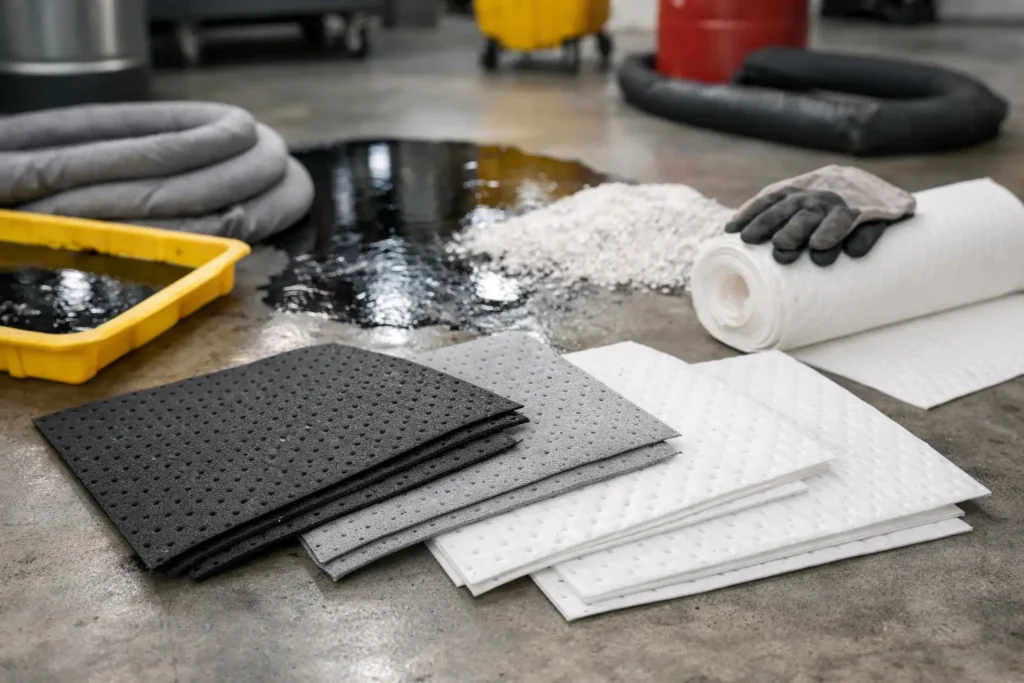
The first selection rule is non-negotiable: identify what may spill at your site. Absorbent pads are manufactured with different material properties for oils, fuels, coolants, chemicals and mixed workshop liquids. Colour coding helps crews make the right call under pressure, but the liquid compatibility must always lead the purchase decision.
| Pad type | Typical colour | Best for | Do not use as the default choice for |
|---|---|---|---|
| Oil-only pads | White | Diesel, petrol, oils, hydraulic fluid and other hydrocarbons | Acids, caustics and unknown hazardous chemicals |
| General purpose pads | Grey | Water-based fluids, coolants, oils, solvents and routine workshop leaks | Strong acids, oxidisers and aggressive hazardous substances |
| Chemical/hazchem pads | Yellow | Acids, alkalis, solvents and many hazardous liquids | Use only after checking compatibility for the specific substance |
Oil-only pads for fuel and hydrocarbon spills
Oil-only pads use hydrophobic polypropylene media. They repel water while attracting hydrocarbons, making them the practical choice around marine areas, wash bays, outdoor plant and fuel storage. If a diesel leak reaches a wet surface or puddle, an oil-only pad can absorb the fuel without becoming saturated by rainwater first.
Use white oil-only pads for fleets, plant workshops, service vehicles and fuel handling points. Pair them with oil-only socks to stop spread around machinery or across a doorway. Where a substantial spill is possible, secure oil and fuel spill kits with enough capacity to control the likely loss from a hose, tank connection or drum transfer point.
The trade-off is clear. Oil-only pads are highly effective for hydrocarbons, but they are not a universal emergency absorbent. A workshop that handles battery acid, degreasers or chemical additives still needs chemical-rated media available.
General purpose pads for mixed workshop liquids
Grey general purpose pads are the workhorse for warehouses, maintenance bays and production floors where the common spills are coolant, water, lubricants, mild solvents and oils. They are usually the most flexible choice for routine housekeeping and minor maintenance leaks.
For sites with diverse day-to-day fluids, general purpose pads reduce the chance that crews reach for nothing at all. Keep packs at hydraulic presses, near waste oil stations, beside parts washers and inside site spill kits. They suit the practical reality of many operations, where a small coolant drip needs immediate attention but does not justify opening a full response kit.
Do not treat general purpose as chemical-safe by default. If the product label, safety data sheet or site register identifies corrosive, toxic or reactive substances, upgrade to suitable chemical absorbents and follow your documented response procedure.
Chemical pads for hazardous liquid response
Yellow chemical pads are built for hazardous liquid response, including many acids, caustics and solvents. They give personnel a clear visual signal that the material is reserved for hazchem incidents rather than routine oily leaks. This matters when several staff members may access the same storage point.
Chemical pads should be positioned wherever chemicals are decanted, stored, used or transported through the facility. Include them near laboratory areas, chemical dosing systems, battery maintenance stations, wash-down chemical stores and hazardous goods loading zones. If a chemical spill can migrate beyond the immediate work area, add drain protection and secondary containment rather than relying on pads alone.
Compatibility remains essential. No absorbent category replaces a review of the substance safety data sheet. For unknown liquids, isolate the area, prevent drain entry and escalate to trained responders rather than assuming a yellow pad solves every exposure risk.
Capacity, Weight and Construction Matter
Two packs can look similar on a shelf yet perform very differently during a response. Compare absorption capacity, pad size, thickness and construction before ordering. Capacity figures are useful planning tools, but actual uptake changes with liquid viscosity, surface condition, temperature and how long the spill has spread.
A thin single-weight pad is economical for wipe-down work, light drips and frequent replacement. It is a sensible consumable beside a bench or under a minor leak point. Heavyweight pads hold more liquid per sheet and stand up better to rough concrete, repeated handling and larger releases. They cost more upfront, but they can reduce the number of pads used during an active spill.
Choose perforated pads when crews need flexibility. They can be torn into smaller pieces for tight spaces, placed under fittings or used as wipes. Non-perforated sheets are useful when you want maximum continuous coverage under a broad leak area. Roll format suits long walkways, production lines and large work zones, while loose pads are faster to deploy around machinery and inside vehicle kits.
Do not confuse absorbent pad capacity with your whole-site spill response capacity. Pads collect liquid, but they do not stop it travelling. Use socks to contain the perimeter, drain covers to protect stormwater and sewer entry points, and spill bunds under drums, IBCs and transfer areas to capture leaks before they reach the floor.
Match Pad Stock to Your Spill Risk
A small automotive workshop does not need the same stock profile as a freight depot, council works yard or chemical manufacturing facility. Size your pad inventory around credible spill scenarios, not a generic shopping list.
For a mobile fleet, keep a compact supply of oil-only or general purpose pads in each vehicle, based on the fluids carried and serviced. A 20L vehicle spill kit can handle minor roadside leaks, but it will not contain a major diesel release from a damaged tank. Fleet managers should place larger kits and refill packs at depots where vehicles return, refuel and receive maintenance.
For workshops and warehouses, position pads at likely release points and make replacement stock easy to find. A locked storeroom at the far end of the building is not an effective response system. Keep clearly labelled absorbents near work areas, but protect stock from weather, contamination and unauthorised use.
For chemical stores and high-volume liquid handling, use pads as one layer of control. Drum bunding, IBC bunding and collapsible containment systems provide the secondary containment needed to manage a larger loss. Pads then support the clean-up once the liquid is stopped and contained.
Avoid These Costly Pad Selection Errors
The most common failure is buying one type of pad for every spill. It looks efficient on a purchase order but creates a response gap when fuel, water-based coolant and corrosive chemicals are all present on site. Build your inventory around actual substances and work areas.
The next mistake is underestimating quantity. A single 100-pack may be sufficient for routine drips, yet disappear quickly during a sustained hydraulic leak. Review incident history, the largest container handled, transfer volumes and the distance to drains. Then keep enough pads, socks and disposal bags to respond without stripping other spill kits bare.
Finally, do not allow depleted kits to remain in service. A kit that has been opened after a minor incident must be inspected and refilled immediately. Assign this task to a role, set a stock check interval and keep refill components on the same procurement schedule as PPE and first-aid supplies.
Order Pads Without Delaying Site Readiness
Make ordering simple by standardising pad types across each site. For example, allocate white oil-only pads to fuel and plant areas, grey general purpose pads to maintenance zones, and yellow chemical pads to hazardous goods locations. Clear allocation improves response speed and prevents stock from being moved to the wrong area.
For multi-site operators, record the pad type, pack size, location and minimum stock level in your safety equipment register. This gives procurement teams a clean reorder process and helps supervisors identify gaps before an inspection or incident. Order with a purchase order where required, request itemised GST for products and freight, and keep dispatch requirements visible for urgent replenishment.
Spillkits.com.au supports fast nationwide dispatch for commercial, industrial and government buyers who need spill control equipment without procurement friction. Equip your fleet, restock active response stations and keep the right pads at the point of risk. The best time to decide between white, grey and yellow absorbents is before liquid reaches the drain.