Blog
Drain Cover Sizing for Fast Spill Protection
Oct
A drain cover that misses the grate by 20 mm can turn a contained workshop leak into a reportable environmental incident. Correct drain cover sizing is not a minor purchasing detail. It determines whether oil, coolant, chemicals or contaminated wash-down water stays on your site or enters stormwater infrastructure.
For depot crews, workshop managers and procurement teams, the priority is clear: measure the drain, allow for real-world site conditions and keep the right cover within immediate reach. Select the wrong size and the cover may lift, curl at the edges or leave a pathway around the grate when liquid starts moving.
Why drain size is only the starting point
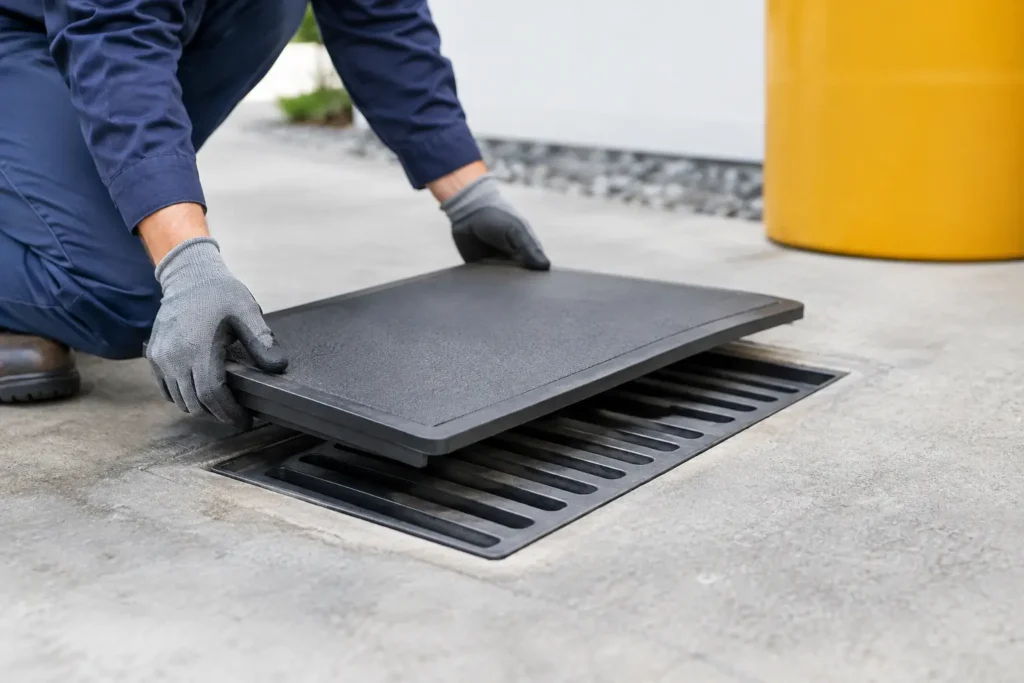
A temporary drain cover works by creating a seal against the surrounding surface, not by dropping neatly into the drain opening. That means the external dimensions of the grate are only one measurement in the selection process. You also need enough cover material extending beyond every edge to maintain contact with the concrete, asphalt or sealed floor.
A cover that is exactly the same size as a 600 mm square grate has no sealing margin. Any uneven concrete, grate frame, cracked surface or moving liquid can compromise its hold. A larger cover gives the material room to conform to the surface and creates a more dependable barrier while your team stops the source and begins clean-up. For rough or uneven ground, consider a gel-filled drain cover with a conforming weighted perimeter.
This matters most where drainage connects to stormwater. A small diesel spill at a refuelling bay, a leaking hydraulic hose in a loading area or a tipped chemical container can move quickly with rain or wash-down water. Keep drain protection at the point of risk, alongside absorbents and spill response equipment, rather than stored in a distant maintenance cage.
Drain cover sizing: measure these four points first
Send a supervisor out with a tape measure before placing an order. Photos are useful for internal records, but measurements make selection fast and defensible.
Record the drain opening or grate length and width, then measure the full outside edge including the frame where relevant. For circular drains, measure the diameter across the widest point. Also inspect the available flat surface around the drain. A cover cannot seal effectively over deep channels, severe cracks, raised bolts or an uneven grate edge without additional containment measures.
Use these practical checks:
- Measure the largest external dimension, not just the visible slots in the grate.
- Allow a generous overlap around all sides so the cover seals to clean, reasonably flat ground.
- Check whether the drain sits in a channel, spoon drain or kerb profile that needs a different protection method.
- Confirm where spills can travel from the likely release point, including falls in the pavement and vehicle traffic routes.
As a working rule, select a cover that is materially larger than the drain footprint. The required margin depends on surface condition and fluid movement. Smooth, level sealed concrete may need less allowance than worn asphalt in an outdoor truck yard. If the consequence of a release is high, size up rather than trying to make a close-fitting cover work.
Common drain profiles and what they need
Square and rectangular grated drains are the most straightforward. Measure length and width, then choose a square or rectangular cover that extends past the grate in every direction. Do not rotate a rectangular cover over a square grate if doing so reduces overlap on one side.
Circular drains need a round cover with enough diameter to pass the entire frame. If the frame is irregular or sits in damaged concrete, a larger square cover can provide more contact area than a round option.
Long trench drains and channel drains require a different approach. One small cover may block only part of the run, allowing contaminated liquid to bypass it. Use multiple overlapping covers, polyurethane drain seals for channels, absorbent socks to divert flow, or temporary bunding to isolate the affected section. Assess the complete drainage path before choosing equipment.
Match the cover material to the surface and hazard
Sizing alone does not guarantee performance. Drain covers are commonly made from flexible polyurethane or similar non-absorbent materials that mould to the ground surface. Their effectiveness relies on direct contact, so remove loose grit, leaves and pooled water where safe to do so before deployment.
For a brief emergency response on smooth concrete, a flexible cover can be deployed in seconds. For longer-duration work, active wash-down tasks or irregular external surfaces, strengthen the control with absorbent socks, temporary bunding and a nearby spill kit. Covers are a first containment action, not a substitute for repairing the leak or managing the liquid already on the ground.
Oil and fuel spills often require hydrophobic polypropylene absorbents after the drain is secured. These absorb oil-based liquids while resisting water, making them practical around outdoor refuelling points and stormwater risks. Chemical spills need media compatible with the substance involved. Check the safety data sheet, site procedure and chemical compatibility before responding.
Where flammable liquids are handled, drain protection should sit within a broader containment plan that includes suitable storage, decanting controls and ignition management. A cover may protect the drain, but it does not remove vapour, fire or exposure risks.
Build a drain protection station around the actual risk
The best-sized drain cover is ineffective if it is locked in a store while a spill reaches the pit. Position equipment where crews can grab it without seeking approval or walking across the facility. In a workshop, that may be beside the service bays and wash area. In a transport depot, locate equipment near fuel points, loading zones and stormwater inlets. On civil sites, keep mobile equipment close to plant refuelling and chemical storage activities.
A practical drain protection station should include the correctly sized cover, general-purpose absorbent booms for diversion, pads or rolls for recovery, disposal bags and clear instructions for escalation. For fleet operations, pair fixed-site equipment with vehicle spill kits sized for the credible spill volume. A 20 L vehicle bag supports immediate response behind the driver’s seat, while a larger wheelie-bin kit supports recurring workshop or depot exposure.
Do not rely on general-purpose absorbents alone where oil and fuel are the main hazards. Match the absorbent type to the liquid and make sure replenishment stock is available after every use. Depleted kits create a false sense of readiness and leave the next shift exposed.
Avoid the sizing mistakes that cause drain bypass
The most common error is buying to the nominal grate size. A 450 mm x 450 mm drain does not automatically call for a 450 mm x 450 mm cover. That selection leaves no sealing area and assumes a perfectly clean, flat surface that rarely exists in working environments.
Another mistake is protecting only the nearest drain. During rainfall, wash-down or a large release, liquid follows gradients that may lead to several pits. Walk the area after rain if possible, identify the direction of flow and stage protection at each vulnerable inlet.
Teams also underestimate vehicle movement. A cover placed in a live forklift lane or drive-through bay can shift or be damaged. Isolate the area, redirect traffic and use cones or barriers. If the drain cannot be safely accessed during operations, revise the response plan before an emergency forces the issue.
Finally, avoid treating temporary drain covers as permanent drain management. They are designed for rapid deployment during a spill, maintenance task or high-risk activity. Ongoing compliance requires source control, appropriate storage, secondary containment and inspection routines.
Make ordering simple for site and procurement teams
Standardise your drain cover sizes across sites where practical. Record drain dimensions in the spill response plan, assign a stock location and identify the product code or description purchasing staff should reorder. This removes guesswork when equipment is used after hours or when a new supervisor takes over.
For larger facilities, create a simple drain register listing each drain location, dimensions, drainage destination, cover size and supporting absorbents. Procurement can then order against known requirements rather than responding to vague requests for a “drain mat”. It also helps safety teams verify that response equipment aligns with the hazards at each work area.
Spillkits.com.au supports commercial and government purchasing with purchase order acceptance, itemised GST for products and freight, and rapid nationwide dispatch. Supply your drain measurements, intended application and surface type to make selection quicker and reduce the risk of ordering a cover that is too small.
Before the next delivery, rain event or maintenance shutdown, inspect every exposed drain and confirm the right-sized cover is on hand. Secure the seal first, then contain, recover and dispose of the spill with confidence.