
Diesel Spill Kit vs General Purpose Spill Kit: Which One Does Your Fleet Workshop Really Need?
Direct Answer: A General Purpose Spill Kit is the versatile choice for indoor workshops handling
To ensure full compliance with the 2026 WHS regulations, Australian businesses must provide specialized spill containment systems that are matched to specific chemical hazards, located within 15 to 30 metres of risk areas, and supported by documented maintenance and training protocols. Failure to maintain a ready-to-use spill kit tailored to your site’s liquid volumes and chemical types can result in significant regulatory fines, environmental remediation costs, and workplace safety breaches.
The Australian regulatory landscape for workplace safety and environmental protection has reached a critical turning point in 2026. With the introduction of stricter Workplace Exposure Limits (WELs) and intensified EPA scrutiny, "having a spill kit" is no longer enough; your spill response strategy must now be demonstrably effective, documented, and precisely matched to your operational risks.
For facility managers, workshop owners, and safety officers, navigating these updates is essential to avoid the high costs of non-compliance. This guide outlines the five mandatory steps to ensure your workplace meets the latest Australian WHS and EPA standards.
Compliance begins with a comprehensive audit of every hazardous liquid on your premises. Under the 2026 WHS framework, a PCBU (Person Conducting a Business or Undertaking) is legally obligated to provide a spill containment system wherever hazardous chemicals are used, stored, or handled. This includes everything from bulk diesel tanks to small decanting stations for cleaning solvents.
You must identify the maximum potential spill volume in each area. A common compliance failure is deploying a kit with insufficient capacity for the largest container in the vicinity. If you store 200L drums, a 30L portable kit is insufficient as a primary containment solution; you require a larger mobile unit or secondary containment measures like portable spill bunds.

The 2026 regulations emphasize chemical compatibility. Using the wrong absorbent, such as using a general-purpose pad for a concentrated acid, is not only ineffective but can be hazardous. You must demonstrate that your Spill Kits are specifically rated for the substances present on your site.
The following table outlines the three primary categories of spill kits required for Australian compliance:
| Kit Type | Primary Application | Compliance Identification | Recommended Sorbent Materials |
|---|---|---|---|
| General Purpose | Coolants, water-based chemicals, mild detergents, and non-hazardous liquids. | Often Grey or White branding | Universal pads, floor sweeps, and grey absorbent socks. |
| Oil & Fuel | Hydrocarbons, diesel, petrol, and oil-based lubricants. Repels water. | High-visibility Red bins/bags | White hydrophobic pads and booms that float on water. |
| Hazchem | Acids, alkalis, aggressive chemicals, and unidentified hazardous liquids. | High-visibility Blue or Yellow bins | Inert chemical-rated absorbents (e.g., HazSorb) and yellow socks. |
Selecting the wrong kit for your specific hazard is a direct breach of the duty of care under the WHS Act. Ensure your Hazchem spill kits are clearly distinguished from your Oil & Fuel kits to prevent confusion during an emergency.
A recommended industry best practice benchmark for high-hazard areas under WHS site risk assessments is the "15-metre / 30-second rule." In environments where highly volatile or corrosive chemicals are handled, this means positioning a spill kit so it can typically be reached within 15 metres or approximately 30 seconds of the hazard. For lower-risk warehouses, this distance may extend to 30 metres, but visibility remains mandatory.

Your kits should be placed at "strike points": locations where spills are most likely to occur, such as:
Kits must remain unobstructed at all times. Placing equipment or pallets in front of a spill kit is a common point of failure during EPA and WHS inspections.
One of the most significant shifts this year is the enforcement of stricter Workplace Exposure Limits (WELs). Even a minor spill of a volatile substance can now push airborne contaminant levels above legal thresholds. This means your Spill Kits must now often include high-specification respiratory PPE, such as half-face masks with appropriate gas filters, in addition to standard gloves and goggles.
Maintenance is the cornerstone of due diligence. A kit with missing pads or a saturated boom is a non-compliant kit. Establish a monthly inspection schedule to verify:

Keeping a stock of replacement absorbents ensures that your site remains compliant immediately after a spill has been cleaned up.
WHS focuses on worker safety, but EPA compliance focuses on containment. In 2026, the legal expectation is that a workplace spill must never reach the stormwater system. If a spill exits your site and enters a waterway, the resulting fines and remediation orders can be catastrophic for a business.
Secondary containment measures, such as drain wardens and storm-water filter inserts, are now considered essential equipment for any site with outdoor chemical handling. These devices act as a last line of defense, capturing oils and sediments before they enter the drainage infrastructure.

Finally, ensure all staff are trained in the "Stop, Contain, Clean, Report" protocol. Training must be documented, as auditors will often ask to see training registers to verify that staff are competent in using the specific Spill Kits provided on-site.
The 2026 WHS regulations have raised the bar for industrial safety in Australia. Transitioning from a reactive to a proactive spill response strategy is no longer optional; it is a fundamental requirement of modern business operations. By following these five steps: assessment, selection, placement, maintenance, and environmental protection: you protect your workers, your local environment, and your bottom line.
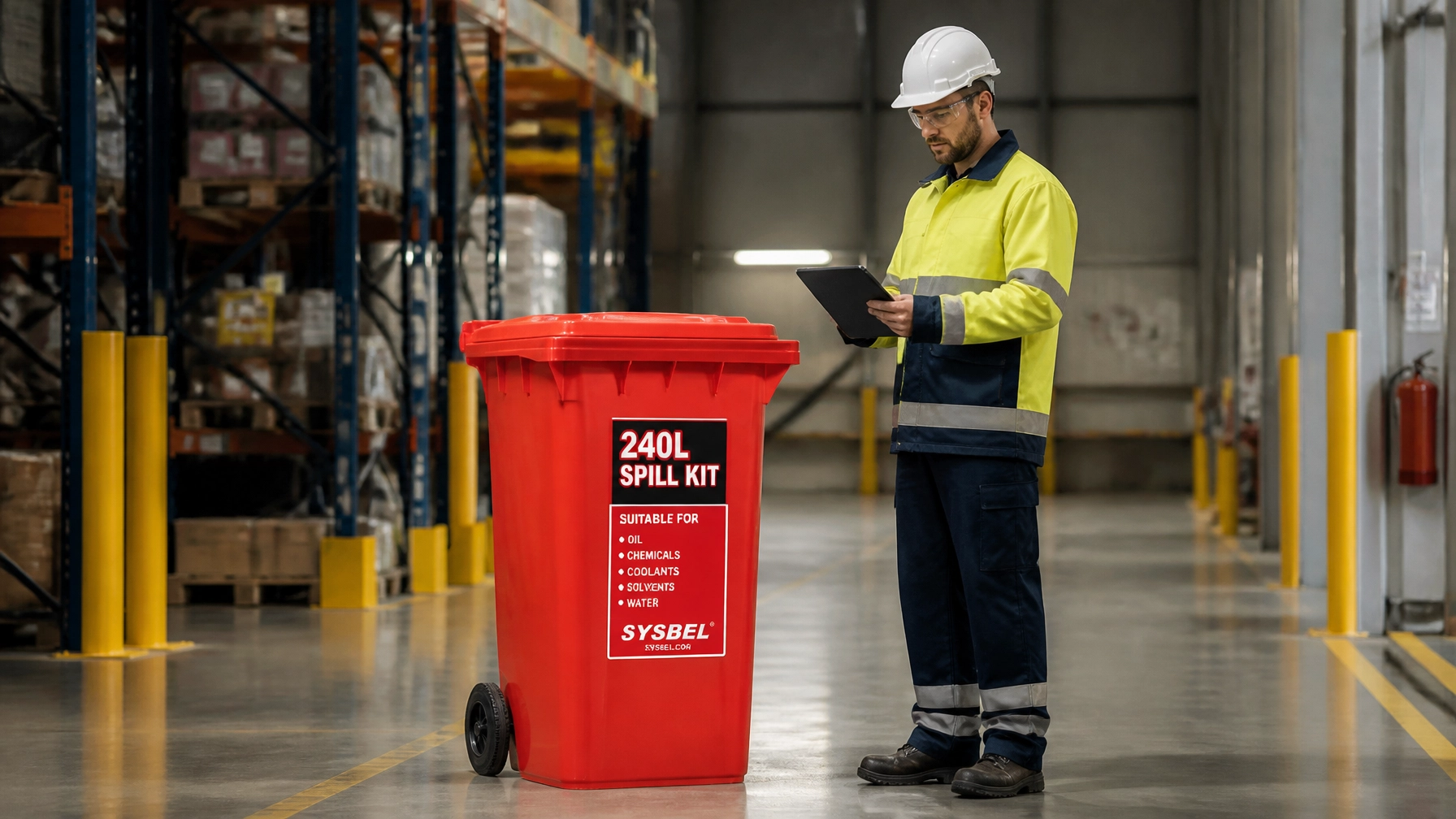
At Spill Kits Australia, we specialize in providing the high-quality, Australian-standard equipment needed to meet these rigorous requirements. Whether you require a 240L mobile kit for a transport depot or compact 30L portable bags for a fleet of service vehicles, our team is here to ensure your business remains compliant and ready for the challenges of 2026.
Direct Answer: A General Purpose Spill Kit is the versatile choice for indoor workshops handling
To ensure full compliance with the 2026 WHS regulations, Australian businesses must provide specialized spill