
Diesel Spill Kit vs General Purpose Spill Kit: Which One Does Your Fleet Workshop Really Need?
Direct Answer: A General Purpose Spill Kit is the versatile choice for indoor workshops handling
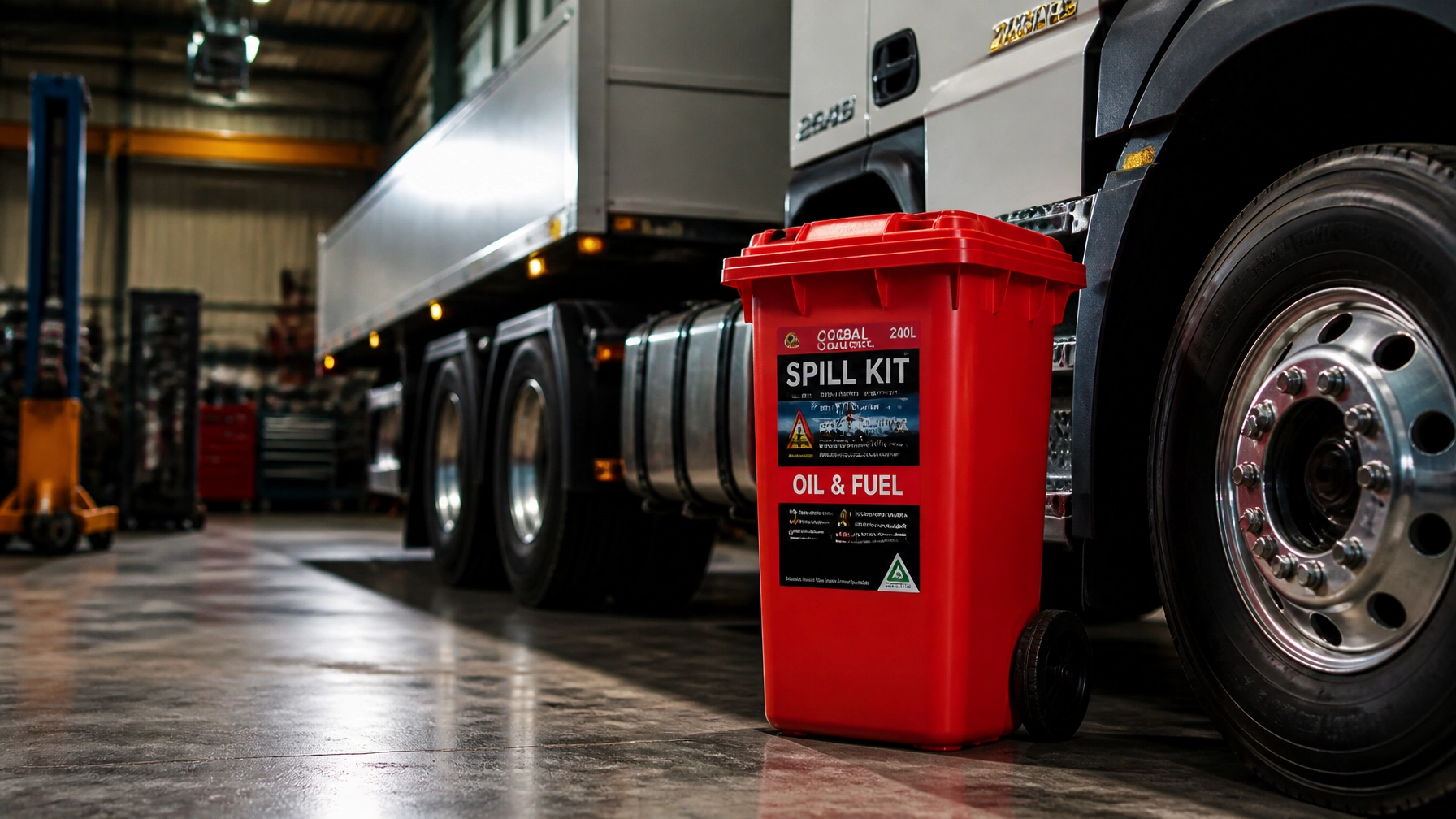
Direct Answer: A General Purpose Spill Kit is the versatile choice for indoor workshops handling mixed liquids like coolants and oils, whereas a Diesel (Oil & Fuel) Spill Kit is essential for outdoor areas or sites near drains because it uses hydrophobic technology to absorb fuel while repelling water. For comprehensive WHS compliance, most fleet workshops require a strategic combination of both to manage internal maintenance leaks and external refuelling risks.
Managing a fleet workshop involves navigating a constant stream of hazardous liquids. From the diesel powering your heavy vehicles to the coolants, hydraulic oils, and degreasers used in daily maintenance, the risk of a spill is not just a safety concern: it is a significant regulatory and environmental liability. For site managers and safety officers, the choice between a General Purpose (GP) kit and a Diesel (Oil & Fuel) kit is often misunderstood as a matter of preference. In reality, it is a technical decision based on the specific chemistry of the liquids you handle and the environment where a spill is most likely to occur.
Understanding the distinction between these two systems is critical for ensuring that your primary response equipment functions as intended during an emergency. Selecting the wrong kit can lead to inefficient cleanups, increased waste disposal costs, and, in high-stakes scenarios, the failure to contain hydrocarbons before they reach local stormwater systems.
The fundamental difference between these kits lies in the "thirsty" nature of the internal absorbents.
General Purpose Spill Kits utilize universal absorbents. These materials are designed to be non-selective, meaning they will soak up almost any non-aggressive liquid they contact. This includes water, glycols (coolants), detergents, and hydrocarbons. In a controlled workshop environment where a spill might be a mix of leaked coolant and engine oil on a dry floor, the GP kit is the most effective tool for the job.
Diesel (Oil & Fuel) Spill Kits, however, are engineered with hydrophobic technology. These absorbents are specifically formulated to repel water while aggressively attracting hydrocarbons. This unique property is essential when dealing with spills in wet environments: such as a wash bay, a rainy loading dock, or a fuel terminal. Because the absorbent does not waste its capacity on water, it remains dedicated to capturing the diesel or oil, allowing for more efficient recovery and preventing the contaminated liquid from spreading further.

The General Purpose kit is the "workhorse" of the internal workshop. It is the go-to solution for the "everyday" spills that occur during routine servicing.
In a typical fleet maintenance bay, you are rarely dealing with a pure substance. A mechanic might crack a hose that releases a mixture of radiator fluid and oil. A General Purpose Spill Kit is the only option here, as an Oil & Fuel kit would leave the water-based coolant behind, creating a slip hazard and an incomplete cleanup.
Key environments for GP Kits:
While the GP kit is versatile, it has a critical weakness: it cannot distinguish between diesel and water. If you use a GP absorbent on a fuel spill in a rainy yard, the material will quickly become waterlogged, rendering it useless for capturing the actual hazard.
This is where the Oil & Fuel Spill Kit becomes an essential investment. By using hydrophobic pads, socks, and pillows, you can "skim" diesel off the top of puddles or standing water. This is particularly crucial for EPA compliance in Australia. If fuel enters a drain, the environmental fines can be astronomical. Having a kit that can stop oil while letting clean water pass through is a vital line of defense for any site with outdoor fuel storage or refuelling activities.

| Feature | General Purpose (GP) Kit | Diesel (Oil & Fuel) Kit |
|---|---|---|
| Primary Use | Universal indoor spill response | Hydrocarbon-only (Diesel, Oil, Fuel) |
| Absorbent Type | Universal (absorbs water and oil) | Hydrophobic (repels water, absorbs oil) |
| Environment | Indoor, dry workshops, warehouses | Outdoor, wet areas, near drains, marine |
| Common Liquids | Coolants, oils, fuels, mild chemicals | Diesel, petrol, hydraulic fluid, solvents |
| WHS Role | Everyday safety and slip prevention | Environmental protection and EPA compliance |
| Colour Coding | Varies (often Blue or Grey) | Typically Red bins or bags |
For most professional fleet operations, the question isn't "one or the other," but rather "where do we place each?" A comprehensive WHS risk assessment usually dictates a dual-kit strategy:

Under Australian WHS site risk assessments, the placement of your spill response equipment is just as important as the type of kit you choose. A common industry benchmark for high-hazard zones is to ensure a kit is reachable within a 15-metre or 30-second walking distance. While this is a recommendation for best practice rather than a rigid statutory requirement, it provides a clear framework for ensuring your team can react before a small leak becomes a major incident.
Furthermore, compliance is not a "set and forget" task. Regular audits are essential to ensure that kits haven't been raided for unrelated cleaning tasks. A kit with missing pads or empty bags is no longer a compliance tool: it is a liability.
A spill kit is your reactive tool, but Australian standards often require proactive measures as well. For fleet workshops storing bulk drums of oil or diesel, spill bunding and secondary containment are mandatory.
If you are operating near stormwater infrastructure, consider the addition of a Drain Warden. These inserts sit beneath your drain grates and provide a final fail-safe, capturing silt and hydrocarbons that might have escaped your initial spill response efforts.

Selecting the correct spill kit is a pragmatic business decision that balances employee safety with environmental responsibility. For the fleet workshop, the General Purpose kit provides the necessary versatility for indoor maintenance, while the Diesel (Oil & Fuel) kit offers the specialised technical capability required to protect your site: and the environment: from hydrocarbon contamination in outdoor or wet conditions.
By understanding these technical differences and implementing a clear, location-based deployment strategy, you ensure your facility remains compliant with Australian WHS and EPA standards while providing your team with the right tools for a dangerous job.
Are your workshop spill kits ready for an inspection? Browse our range of Australian-compliant Spill Kits or contact our team for a site-specific recommendation.
Direct Answer: A General Purpose Spill Kit is the versatile choice for indoor workshops handling
To ensure full compliance with the 2026 WHS regulations, Australian businesses must provide specialized spill