
Blog
Secondary Containment for Fuel Drums at Work
Aug
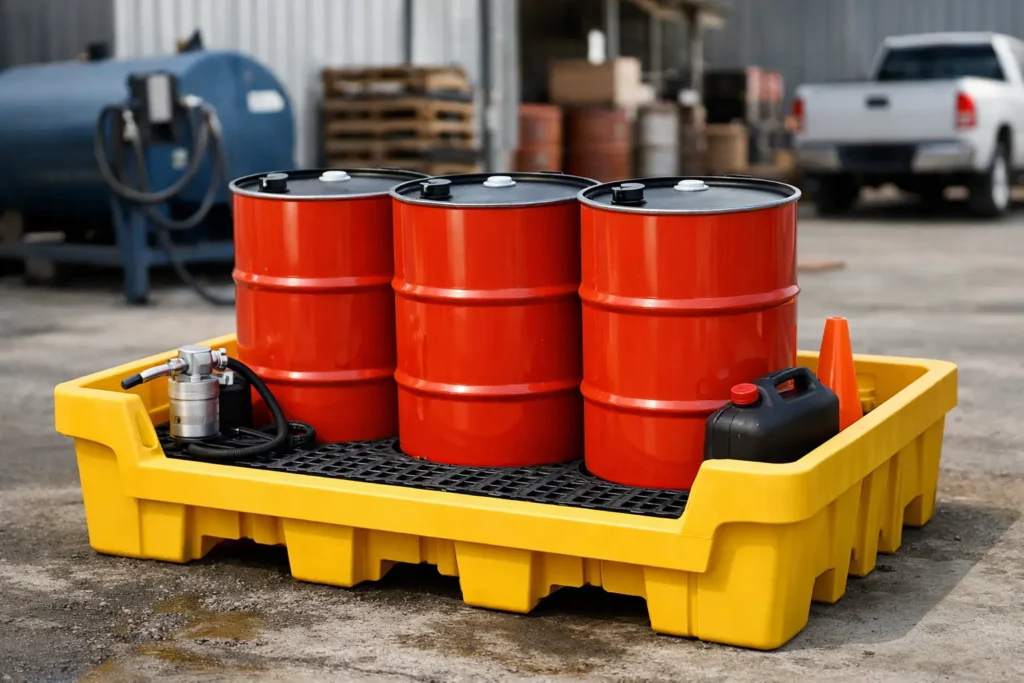
A 205L fuel drum can look secure right up until a damaged bung, split hose or forklift strike puts diesel across the workshop floor. Secondary containment for fuel drums gives that leak somewhere controlled to go, rather than letting it reach a drain, traffic area, soil or neighbouring tenancy. It is a straightforward control that protects people, keeps cleanup manageable and helps prevent a small equipment failure becoming a site shutdown.
For workshops, depots, civil crews and transport operators, the right setup is usually less complicated than it sounds. Start with the number of drums, where they sit, how fuel is decanted and the largest credible spill. Then choose bunding that contains the volume, suits the location and remains easy for your team to use every day.
What secondary containment actually does
Primary containment is the drum itself. Secondary containment is the tray, pallet, bund or enclosed storage area underneath and around it. Its job is to capture fuel if the primary container leaks, overflows or is knocked over.
This is different from a spill kit. Bunding holds the liquid in one place. Absorbents, socks and pads are used to stop spread and recover the fuel once it is safe to do so. You need both. A site that relies only on absorbent pads may be caught short if a drum fails overnight or while no one is nearby.
Fuel containment also needs to account for how liquid moves. Diesel and petrol can run quickly across smooth concrete, under roller doors and towards drainage points. Outdoors, rainwater can fill open bunding and reduce its available capacity. Place drums away from stormwater drains where possible, and protect nearby drains when decanting or dealing with a leak.
Size secondary containment for fuel drums properly
The first sizing rule is simple: base containment on the largest possible release, not the amount of fuel you expect to spill during normal handling. In many workplace arrangements, containment is sized to hold at least 110% of the largest container. Requirements can vary with the fuel type, storage quantity, location and your state or territory obligations, so confirm the applicable dangerous goods, fire safety and environmental requirements for your site.
For a single 205L drum, a containment capacity of at least 225.5L meets that common 110% benchmark. In practical buying terms, select a bunded drum pallet or low-profile bund with capacity above that figure, not one that is merely labelled for a single drum.
With several drums, the calculation depends on your storage arrangement and applicable requirements. As a practical starting point, calculate 110% of the largest drum, then consider the total stored volume, whether containers are connected, and whether a spill from one drum could enter the same bunded area as others. Do not assume a four-drum pallet has enough capacity simply because it physically holds four drums.
A quick site check should cover four details:
- the capacity of the largest drum or container
- the number of drums sharing the containment area
- rainwater, washdown or other liquids that may occupy the bund
- the realistic chance of a drum being punctured, overfilled or tipped during handling
Keep usable capacity available. If an outdoor bund has filled with rainwater, it is no longer ready to catch a fuel release. Check it after wet weather and manage collected liquid as potentially contaminated until assessed. Never empty oily water or fuel from bunding into a stormwater drain.
A practical 205L drum example
A maintenance workshop stores two 205L diesel drums near a service bay. Staff use a hand pump to fill small equipment and jerry cans. The highest risk is not necessarily a full drum rupture. It may be a failed pump fitting during refuelling, a drum moved by pallet jack, or a slow leak that goes unnoticed over a weekend.
A two-drum bunded pallet with suitable containment capacity keeps both drums off the floor and captures leaks at the source. Add a dispensing tray beneath the pump area if it sits outside the pallet footprint, and position oil and fuel absorbents within easy reach. If the drums are moved frequently, make sure the containment unit is rated and designed for the handling method rather than improvising with a loose tray.
Choose the containment format to suit the job
The best containment option depends on where the drums are used and whether they remain in one position. Fixed storage needs a different setup to a mobile maintenance crew carrying fuel on a ute or service truck.
Bunded pallets for stored drums
Bunded pallets are the practical choice for one, two or four 205L drums stored in a workshop, warehouse or covered yard. They raise drums above the floor, contain leaks and often allow drums to be moved when empty or handled with suitable equipment. Polyethylene options suit many fuel and oil applications because they resist corrosion and are easy to clean. Steel may be appropriate for particular site conditions, but confirm compatibility, load rating and corrosion exposure before ordering.
Check the pallet footprint as well as capacity. It must fit the storage space without blocking access ways, fire equipment, exits or forklift routes. Leave enough room for staff to inspect labels, operate pumps and place a drip tray during dispensing.
Low-profile trays for dispensing points
A drip tray or low-profile bund works well under a single drum tap, small day tank or transfer point. It is not always a substitute for full drum containment, particularly if the whole drum is stored above it and the tray cannot hold the required volume. Use it to catch drips and minor overfills where they happen most often.
This is a useful addition at workshops where drums are sound but taps and pumps get daily use. It also makes housekeeping easier: crews can see a small leak before it becomes a larger loss of fuel and a slip hazard.
Portable bunds for changing work areas
Portable, collapsible bunding suits field servicing, temporary fuel storage and civil works where the location changes. These systems can be quick to deploy, but they need a flat, prepared surface and protection from vehicle traffic, sharp objects and poorly placed equipment. A portable bund is only effective when it is set up before the drum or plant is positioned inside it.
For fleet work, containment should be paired with a vehicle-ready oil and fuel spill kit. Keep it accessible from the side door or tray, rather than buried behind tools. A small leak can be controlled faster when pads, socks, disposal bags and PPE are immediately available.
Set up fuel drum storage so crews will use it
The most capable bund will not prevent a spill if the drum is left beside it during a busy delivery. Make the safe setup the easiest setup. Position containment where fuel is actually received, stored and dispensed, not in an inconvenient corner of the site.
Keep drums upright, clearly labelled and protected from impact. Use suitable drum handling equipment, and inspect bungs, taps, pumps and hoses regularly. If drums are decanted, provide a stable work area and keep ignition sources controlled. Petrol presents a higher vapour and ignition risk than diesel, so storage and transfer controls must reflect the product being handled.
During transfer, use a drip tray and have absorbent socks ready to protect drains or doorways. If there is a leak, stop the source if safe, keep people away from the area, prevent the fuel reaching drainage and deploy absorbents around the edge of the spill. Used pads and contaminated contents of bunding need to be managed as waste in line with your site procedures and local requirements.
Do not overlook inspection and refill readiness
Secondary containment is not a fit-and-forget purchase. Add it to routine site checks. Look for cracks, warping, corrosion, damaged grates, pooled liquid and drums that have been placed outside the bund. Confirm that capacity has not been reduced by rainwater, tools, empty containers or rubbish stored in the sump.
Check spill response supplies at the same time. Oil and fuel absorbents are designed to recover hydrocarbons while repelling water, making them the practical choice for diesel, petrol, hydraulic oil and similar spills. Replace used pads, socks, gloves and disposal bags promptly. A partly used kit is not ready for the next incident.
If your operation stores fuel near a drain, keep drain protection available as an extra control. Containment at the drum is the first barrier. Drain protection gives the crew a second chance if fuel escapes during delivery, transfer or equipment movement.
Select the right setup before the next delivery
Walk the fuel storage area with one question in mind: if this drum failed now, where would the fuel go? The answer will quickly show whether you need a bunded pallet, dispensing tray, portable bund, drain protection or a better-positioned spill kit.
Equip the storage point before the next drum arrives, not after a leak tests your response plan. A correctly sized containment unit, a clear inspection routine and ready-to-use fuel spill supplies give your crew a practical way to contain the problem fast and keep work moving.