
Blog
Choosing a Drain Cover for Chemical Spills
Aug
A chemical leak can reach a stormwater drain in minutes, particularly on wash bays, loading areas and workshop floors that slope towards grates. A drain cover for chemical spills gives your crew a fast first barrier: place it over the drain, stop liquid entering the system, then contain and recover the spill. It is simple equipment, but selecting the wrong size, material or storage location can leave a drain exposed when the pressure is on.
Why drain protection comes first
Once a chemical reaches a drain, the response becomes more difficult, costly and disruptive. Liquid may travel through site plumbing or into stormwater infrastructure before anyone can isolate it. Clean-up crews, reporting requirements and operational delays can follow.
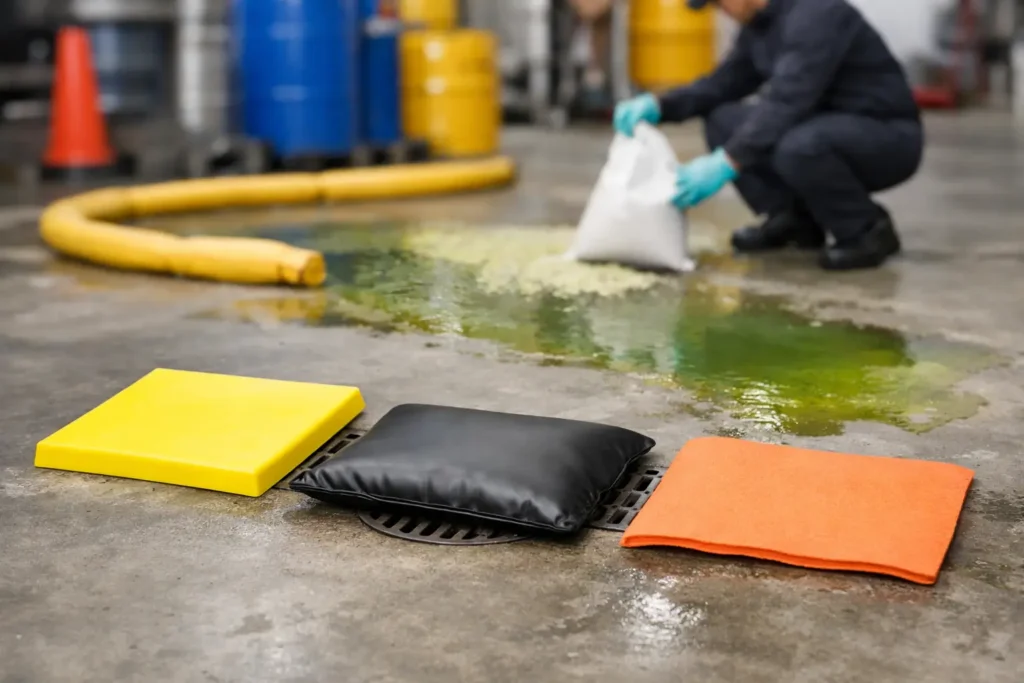
A drain cover buys time. It creates a temporary seal over a grate, inlet or pit so staff can work outward from the source using absorbent socks, pads and loose absorbent. For a small leak from a container, drum or vehicle, that sequence can prevent a manageable incident becoming an environmental release.
Drain covers are not designed to replace good storage, bunding or a suitable chemical spill kit. They are a first-response tool. Keep one close to likely spill points, not locked in a distant store room with equipment that takes ten minutes to find.
How a drain cover for chemical spills works
Most emergency drain covers are flexible mats made from a non-absorbent, tacky polymer. The material conforms to concrete, asphalt and uneven surfaces, creating a temporary liquid barrier around the drain opening. There is no adhesive backing to peel off and no permanent installation required.
In practice, the cover needs a clean enough surface to contact the ground. Heavy grit, loose stones, deep cracks and active flowing liquid can reduce the seal. That does not make the cover useless, but it changes how it should be deployed. Clear loose debris where safe, lay the cover flat and use absorbent socks or sand-free containment around its edges if the spill is moving quickly.
Chemical compatibility also matters. A quality drain cover is intended as temporary protection for many common workplace liquids, but the product specification must match the chemicals handled at your site. Highly aggressive substances, high temperatures or extended exposure can require a different control method. Check your safety data sheet and site procedure, then select equipment accordingly.
Select the right size before the spill
The cover must extend beyond every edge of the drain. A mat that only matches the grate size leaves no margin for imperfect surfaces or flowing liquid. Measure the full drain face, including the surrounding frame, then allow generous overlap on all sides.
For most workshops and depots, square covers suit standard floor drains and small pits. Larger rectangular covers are often better for trench drains, grated channels and elongated stormwater inlets. Circular covers can be practical for round access points, but they still need enough diameter to cover the surrounding surface.
Use this selection guide when checking your site:
| Drain type or location | Practical cover choice | What to check |
|---|---|---|
| Workshop floor grate | Square flexible cover | Measure the grate and allow at least 150 mm overlap |
| Wash bay channel | Large rectangular cover or multiple covers | Confirm the full channel length and flow direction |
| Outdoor stormwater pit | Large square cover | Check for rough concrete, leaf litter and uneven edges |
| Loading dock drain | Portable cover stored nearby | Make sure forklifts and pallets do not block access |
| Vehicle service area | Compact cover in a response kit | Choose a size that covers common bay drains, not just a token mat |
If one location has several drains, equip every likely path. Blocking the closest drain while liquid travels downhill to a second inlet is a common avoidable failure. Walk the area after rain or wash-down if you are unsure where liquid naturally runs.
Choose a cover that crews can deploy
A heavy, oversized cover may offer broad coverage, but it is less useful if one person cannot quickly lift and position it. For vehicle bays and small workshops, compact flexible covers are often the practical choice because they can be stored with the chemical spill kit and deployed by one operator.
Larger sites may need a mix of sizes. Keep standard covers at fixed drain points and a larger portable option near chemical decanting areas, bulk storage, wash bays or loading docks. The best setup is rarely one cover for the entire facility.
Build a complete response around the cover
A drain cover contains the immediate pathway, but it does not stop the source or recover the chemical. Staff need a clear sequence they can follow without searching for equipment or debating what comes next.
- Stop work, isolate the leak if safe and keep people clear of the area.
- Place the drain cover over the nearest drain, then protect any downstream drains.
- Ring the spill with absorbent socks or other compatible containment media.
- Apply chemical absorbent pads, particulate or pillows to recover the liquid.
- Collect used materials into suitable disposal bags or drums, following site procedures and the chemical safety data sheet.
For chemicals, use absorbents labelled for chemical or hazchem use. Oil and fuel absorbents are designed to repel water and are excellent for hydrocarbons, but they are not the default choice for acids, coolants, solvents or unknown liquids. A ready-to-deploy chemical spill kit should include compatible absorbent media, PPE, disposal bags and instructions alongside the drain protection equipment.
For a workshop handling a few containers at a time, a 20 L to 50 L kit may cover minor incidents. Chemical storage rooms, production areas and freight depots should assess the largest credible spill, not the average drip. If a 205 L drum can be damaged or a pallet of containers can leak, the response capacity and drain protection plan need to reflect that risk.
Where to keep drain covers
Drain covers fail most often because they are not within reach. Store them at the point of risk in a marked location that staff can access without keys, permits or moving stock. Good locations include beside wash bays, at chemical stores, near drum decanting stations, in maintenance workshops and at loading areas with nearby stormwater drains.
For fleet operations, carry a compact cover with the vehicle spill kit where practical. A hydraulic hose failure, chemical container leak or coolant spill at a customer site may occur next to a gutter or drain. Equipment stored behind the driver’s seat or in an accessible side compartment is more likely to be used than gear buried under tools in the tray.
Do not fold or store a tacky cover against dusty surfaces if it can be avoided. Keep it in its protective packaging or a clean container. During monthly spill kit checks, inspect it for tears, hardening, embedded debris and missing packaging. Replace damaged covers and replenish absorbent socks and pads immediately after use.
Train for a 60-second response
Your crew does not need a complex drill to use a drain cover effectively. Show them the location of each cover, identify the drains that matter and practise placing a cover flat over a grate. Include the exercise in toolbox talks for new starters, contractors and wash-bay staff.
Make one instruction clear: only act when it is safe. A drain cover is not a reason to approach an unknown vapour, a major corrosive release or an uncontrolled fire risk. Escalate under your emergency procedure, isolate the area and use appropriate PPE.
A short site map can help. Mark drains, chemical storage, spill kits and the direction of runoff. It turns a stressful decision into a known response route, especially for supervisors managing a spill outside normal hours.
Common purchasing mistakes to avoid
Buying by price alone often results in a cover that is too small for the drains on site. Another mistake is purchasing drain protection without compatible chemical absorbents, leaving staff able to block the drain but unable to contain the liquid around it.
Avoid treating a drain cover as a permanent seal for routine wash-down or long-term chemical storage. It is emergency equipment. For regular chemical handling, use proper bunding, spill pallets, safe transfer practices and maintenance checks to reduce the chance of a release in the first place.
Finally, do not assume one kit suits every liquid. Match the spill kit, absorbents and PPE to the substances your team handles, then keep drain covers where runoff can occur. Spillkits.com.au makes that selection faster with ready-to-deploy options for workshops, vehicles, depots and site operations.
A drain cover is a small item with a large job: stop the escape route first. Measure your drains, position the gear at the hazard and make sure every shift knows how to use it before the next leak tests your preparedness.