
Blog
Water Filled Boom Flood Control for Worksites
Aug
A loaded ute stuck at a flooded workshop entrance, stormwater running towards a loading bay, or runoff reaching a drain can stop a normal shift fast. Water filled boom flood control gives site teams a fast-deployable barrier for directing shallow floodwater away from access points, equipment areas and vulnerable storage zones. It is not a replacement for permanent drainage or a spill response plan, but it can buy valuable time when heavy rain arrives.
For depot managers, workshop owners and civil crews, the key is to treat a water-filled boom as part of a prepared response position, not a product to find after water has already crossed the floor. Select the barrier for the likely water path, keep the required hose connection available, and make sure staff know where it is stored.
What water filled boom flood control does
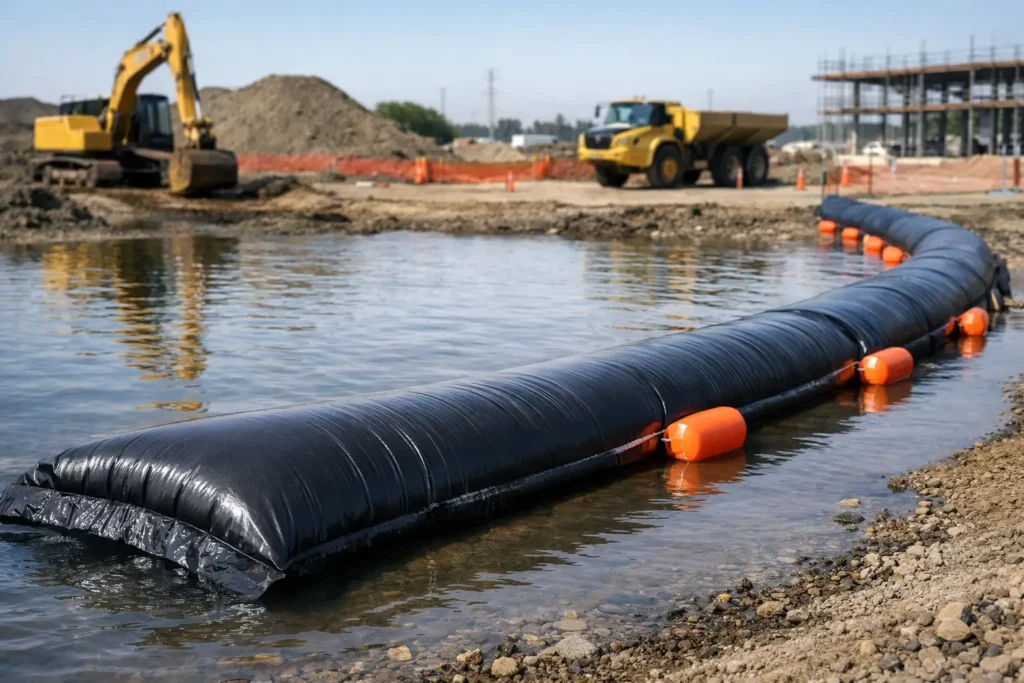
A water-filled flood boom is a flexible, heavy-duty barrier that is laid across a surface and filled with water. As it fills, its weight and shape help it sit firmly against the ground. The boom is generally used to divert or slow shallow, moving water around a building opening, driveway, work area or temporary site boundary.
Unlike loose sandbags, a water-filled barrier can cover a long distance with fewer individual items to carry and position. It is particularly useful where a crew has access to a hose, needs to protect a broad opening, and expects the barrier will only be required for a short period. After the event, it can be drained, cleaned and stored if it remains in serviceable condition.
Its limits matter just as much as its benefits. A water-filled boom is not designed to hold back deep, fast-moving water, manage major creek flooding, or protect a site from water coming through multiple uncontrolled entry points. Water can also pass beneath, around or over the barrier if the ground is uneven, the boom is underfilled, or the water level rises beyond its working height.
Start with the water path, not the product size
Before ordering or deploying any temporary flood barrier, walk the site during dry conditions. Look for the points where runoff naturally gathers after rain. Common problem areas include roller doors, driveway low points, workshop thresholds, loading docks, generator pads, chemical stores and drains beside vehicle parking.
Measure the width you need to cover, then allow extra length to turn the ends uphill or tie them into a higher edge. A boom that finishes exactly at the edge of a roller door can simply allow water to flow around both ends. The aim is to guide water towards a safe, open path, not trap it against the building.
Also check the surface. Smooth concrete and sealed asphalt are generally easier to protect than broken pavement, gravel, expansion joints or heavily crowned driveways. On uneven surfaces, crews may need to use additional measures at visible gaps. Do not assume the weight of the boom will seal every surface condition.
Check where diverted water will go
Diverting water away from the workshop is only useful if it does not create a new problem at the neighbour’s access, footpath, electrical equipment or another part of your own site. Identify the discharge route before deployment. Keep water away from drains if there is any chance it has picked up oil, fuel, sediment or chemicals from the yard.
Where runoff is visibly dirty or a site has active earthworks, a flood barrier may need to work alongside sediment control such as silt socks. Where fuel or oil is already present, switch the response focus to containment and recovery with suitable oil and fuel absorbents. A flood boom directs water. It does not clean contamination out of it.
Choose a setup your crew can deploy quickly
The best configuration depends on the opening, available water supply, storage space and the number of people on shift. A compact barrier may suit a single personnel door or a narrow workshop entrance. Longer connected sections are more practical for wide roller doors, driveways and temporary work compounds.
Choose equipment that is manageable for your crew when empty, but substantial enough to remain stable when filled. Check the filled dimensions and recommended water depth rather than relying on the empty packed size. A barrier that looks large in storage may provide limited height once deployed.
For most workplaces, the decision comes down to three practical questions: how much width needs protection, how quickly can the crew access water, and what depth of water is realistically expected? If the expected water depth is beyond the barrier’s stated capacity, use a different flood strategy rather than overestimating what a temporary boom can do.
Keep hoses, fittings and a clear water source close to the storage point. A boom is of little use if the hose is locked in another shed, the tap fitting does not match, or a vehicle is parked across the access route. Include the setup items in the same pre-storm check as your spill kits, drain covers, pumps and portable lighting.
Deploy the barrier before runoff builds
Water filled boom flood control works best when it is installed ahead of the downpour, while the surface is still clear and safe to work on. Waiting until water is already flowing across a driveway creates slip hazards, makes positioning harder and leaves less time to correct gaps.
Use this straightforward deployment sequence:
- Clear loose rubbish, pallets, hoses and other obstructions from the intended barrier line.
- Lay the empty boom along the planned path, with each end extending towards higher ground or a secure edge.
- Straighten twists and check that joins, caps and fill points are accessible.
- Fill according to the manufacturer’s instructions, keeping watch for movement, bulging or leakage.
- Inspect the full length as water begins to pond behind the barrier and correct obvious bypass points early.
Do not place staff in flowing water to adjust a barrier once conditions deteriorate. If rainfall becomes severe, water depth rises quickly, or electrical hazards are present, move people to a safe area and follow the site’s emergency procedure.
Protect drains before contaminated water reaches them
A flood barrier near a workshop entrance can reduce the volume of water entering the building, but it may also redirect runoff across areas where it can collect contaminants. This is common in service bays, washdown zones, fuel handling areas and hardstands used by trucks and plant.
Keep drain protection ready at the same time. Drain covers can provide a temporary seal over a clean, dry drain where there is a risk of oil, coolant or chemicals travelling with stormwater. Absorbent socks can help contain a minor leak on the surface, while pads and granules help recover the source material. These products have different jobs, so do not substitute an absorbent sock for a flood barrier or expect a water-filled boom to contain a diesel spill.
For fleet yards, inspect parked vehicles before severe weather. A small hydraulic leak, damaged fuel line or overflowing waste container can become a drainage incident once rain starts moving material across the yard. Equip your fleet and workshop with correctly sized spill kits before the wet season, then keep refill stock on hand after each use.
Storage, inspection and reuse
Store an empty water-filled boom where it is protected from sun damage, sharp edges, vehicle traffic and accidental puncture. The location should be known to the after-hours team as well as daytime staff. Mark the storage point clearly and keep access free of stacked stock.
Inspect the boom before the storm season and after every deployment. Look for worn fabric, damaged fill ports, degraded seals, punctures and dirt that could affect closure. Test any connectors and confirm the hose reaches the intended deployment point. If the barrier has been exposed to oily or chemically contaminated water, do not simply drain it onto the ground. Manage the water and cleaning process in line with site procedures and the material involved.
After use, drain the boom safely, rinse it where appropriate, allow it to dry fully and repack it according to the manufacturer’s guidance. Packing a wet barrier away can create mould, odour and premature material damage. Record its condition so the next shift is not relying on damaged equipment.
Build flood readiness into normal site checks
Temporary flood barriers are most useful when they sit inside a broader wet-weather plan. Assign who monitors weather alerts, who has authority to stop vehicle movements, who deploys barriers, and who checks drains and spill equipment. Keep the instructions simple enough for a supervisor to action in a busy afternoon when a storm warning lands.
A short pre-storm inspection can prevent a long cleanup: clear drains and gutters, secure outdoor drums and waste, move vulnerable stock off the floor, inspect plant for leaks, and confirm the flood boom, spill kits and drain protection are ready. For sites with recurring water entry, document where the water travelled and how the barrier performed after each event. That record will show whether a different length, a changed deployment line or a permanent drainage upgrade is needed.
A water-filled boom will not solve every flooding problem, but a prepared barrier can keep a routine storm from becoming a shutdown, contamination event or damaged-stock claim. Put it where your team can reach it, practise the setup while conditions are calm, and act before the first runoff reaches the door.