
Blog
Oil-Only Versus Universal Absorbents Compared
Sep
A diesel sheen heading towards a stormwater drain is not the time to discover your spill pads absorb water as readily as fuel. The decision between oil-only versus universal absorbents determines whether your team contains the release quickly, protects drainage and avoids wasting response stock on the wrong liquid.
For workshops, depots, civil sites, warehouses and fleet operations, the selection is straightforward once you identify the likely spill. Buy absorbents for the liquid you actually handle, then size the stock for the credible worst-case release – not the smallest leak you hope will occur.
The practical difference between oil-only and universal absorbents
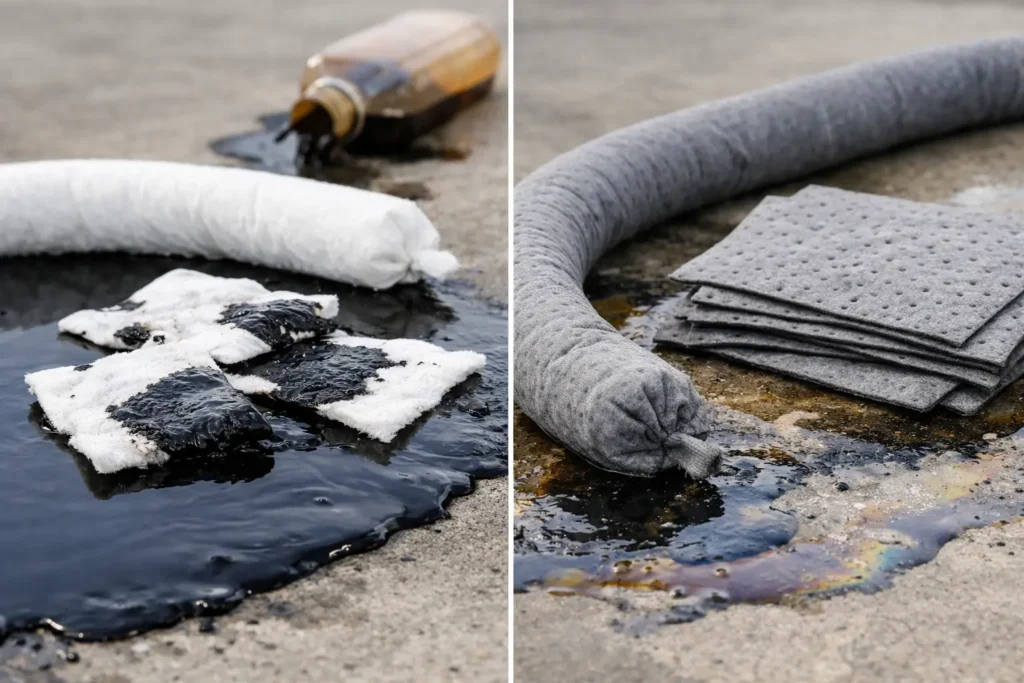
Oil-only absorbents are hydrophobic polypropylene media. They repel water while absorbing hydrocarbons such as diesel, petrol, engine oil, hydraulic oil, lubricants and many fuel-based liquids. Put an oil-only pad or boom onto a wet surface, puddle or waterway and it targets the oil rather than becoming saturated with water.
Universal absorbents, often called general-purpose absorbents, take up a broader range of non-aggressive liquids. They are suited to oils, coolants, water-based fluids, many paints, mild solvents and general workshop liquids. Their versatility makes them a practical first-response option inside a dry workshop, maintenance bay or warehouse.
The trade-off is simple. Universal media can absorb water, which is useful for a coolant leak or rainwater mixed with workshop residue, but costly when used around drains, wash bays or outdoor spills. Oil-only media preserves capacity for the hydrocarbon. Select the wrong material and your crew may use an entire pack before the fuel is contained.
| Spill situation | Best absorbent choice | Why it works |
|---|---|---|
| Diesel or hydraulic oil on wet ground | Oil-only pads and socks | Repels water and captures hydrocarbons |
| Fuel sheen on a pond, drain or wash-bay water | Oil-only booms and pads | Floats on water and concentrates on oil |
| Coolant leak in a workshop | Universal pads or granules | Absorbs water-based coolant effectively |
| Mixed maintenance fluids on a dry concrete floor | Universal absorbents | Covers common non-hazchem workshop spills |
| Acid, caustic or unknown chemical | Chemical absorbents | Do not assume universal media is suitable |
When oil-only absorbents are the right call
Equip fuel-handling areas with oil-only stock. This includes diesel dispensing points, generator compounds, marinas, wash bays, plant yards, transport depots and locations where a spill can reach stormwater. White oil-only pads, socks and booms make it easier for responders to identify the correct media under pressure.
Oil-only socks are particularly valuable at the first minute of a release. Place them around the spill perimeter, across drainage paths and around leaking plant to stop migration. Use pads inside the contained area to lift the liquid from the surface. For larger outdoor incidents, booms help isolate oil on water or at the edge of a drain before it spreads.
A practical fleet example is a hydraulic hose failure on a wet civil site. Universal pads will absorb oil, but they will also drink up rainwater and mud-laden runoff. Oil-only pads retain more capacity for the hydraulic oil, while socks create a fast barrier around the work zone. That means fewer replacement packs, less downtime and a more controlled clean-up.
Oil-only media is not a universal answer to every liquid with the word oil in it. Check the safety data sheet where there is any doubt, especially with additives, solvents or mixed chemical waste. Absorbents contaminated with hydrocarbons must also be bagged, labelled and disposed of through the appropriate waste stream under your site procedure.
When universal absorbents give better value
Universal absorbents earn their place in dry, mixed-use workplaces. A mechanic may encounter engine oil in one bay, coolant in the next and a water-based cleaning solution near the parts counter. Keeping general-purpose pads, rolls and socks accessible gives the team a reliable first response without forcing them to identify every routine liquid before acting.
They are also a sensible choice for mobile maintenance crews and smaller facilities where the spill profile is varied but volumes are modest. A 20L vehicle spill kit can carry universal pads and a sock for everyday workshop and roadside leaks, provided the vehicle is not primarily carrying fuel or hazardous chemicals.
Do not treat universal media as chemical spill protection. Strong acids, alkalis, oxidisers and hazardous substances need compatible chemical absorbents and the correct personal protective equipment. If the label, container or safety data sheet indicates a hazardous chemical, isolate the area and deploy a dedicated chemical or hazchem response kit instead.
Select the format, not just the absorbent type
Material choice is only half the purchase decision. Your crew needs the right format at the point of use. Pads suit pooling liquid and final wipe-down. Rolls cover long work benches, walkways and recurring drips. Socks stop spread around machinery, drums and drain lines. Pillows handle sustained leaks under pumps, valves and plant. Granules can help on rough surfaces, but they are slower to deploy and create more waste than pads for many workshop spills.
For sites with outdoor exposure, protect drains before a spill turns into an environmental incident. Keep drain covers close to loading zones, refuelling areas and chemical stores, then position oil-only socks as a secondary barrier. Where drums, IBCs or leaking equipment are stored, use spill bunding to contain the release before absorbents are required.
Size your stock for a real release
A few loose pads beside a workbench are not a site spill response system. Calculate capacity against the largest reasonably foreseeable container, hose section or plant reservoir in that area. A 205L drum storage point, for example, needs secondary containment and enough compatible absorbent capacity to manage a credible leak while the source is isolated.
- Keep small 20L to 30L kits in utes, service vehicles and forklifts where minor leaks can occur away from the store.
- Position 50L to 100L kits in workshops, maintenance bays and loading areas with routine fluid handling.
- Deploy 120L to 240L wheelie-bin kits at depots, fuel stores, warehouses and high-volume work areas where several responders may be needed.
- Hold refill packs near high-use zones so a used kit is restored immediately, not left depleted for the next incident.
Capacity ratings indicate the total amount the media can take up under controlled conditions. Field performance changes with rain, uneven ground, fluid viscosity and how quickly the team deploys it. Build margin into your order, particularly for outdoor fuel operations and sites with multiple drains.
Oil-only versus universal absorbents in your spill kit
A well-selected kit reflects the hazard profile, not a one-size-fits-all buying habit. Oil and fuel kits should contain oil-only pads, socks and disposal bags for hydrocarbons. General-purpose kits should contain universal media for common workshop fluids. Chemical kits require chemically compatible absorbents and PPE for hazardous liquid response.
Many larger operations need more than one kit type. A transport depot may keep an oil-only kit at the diesel bowser, universal kits in the workshop and a chemical kit near battery handling or cleaning chemicals. That separation removes guesswork when a supervisor sends a crew to respond.
Check each kit after every deployment, audit or relocation. Confirm the contents are dry, accessible and clearly marked; replace used absorbents immediately; and make sure new staff know which kit matches which spill. A sealed but empty kit is a compliance gap disguised as readiness.
Order for fast response, not just shelf stock
Procurement teams need a clear ordering path: match the likely liquid, select the absorbent format, then choose capacity for the area and credible release. Standardise those choices across sites so crews see the same kit colours, labels and contents wherever they work.
For planned replenishment or urgent site replacement, specify your required absorbent type, kit capacity and delivery location on the purchase order. Itemised GST for products and freight supports straightforward commercial and government procurement, while rapid nationwide dispatch helps restore operational readiness without delay.
Put oil-only media where fuel can meet water. Put universal media where mixed, non-hazardous workshop fluids are the routine risk. Then keep both replenished, visible and ready for the person who has to act before the spill reaches the drain.