
Blog
Fleet Hydraulic Leak Response Example for Depots
Sep
A loader returns to the depot with a split hydraulic hose under the boom. Oil is tracking across the hardstand towards a stormwater grate, the operator is due on the next job, and the nearest spill kit is half empty. This fleet hydraulic leak response example shows exactly where downtime, pollution risk and compliance exposure build – and how a properly equipped fleet team stops the spill before it becomes a reportable site incident.
The practical lesson is direct: contain the source, protect the drain, recover the oil, then replenish the equipment immediately. Do not hose hydraulic oil into a drain, spread loose absorbent without controlling the run-off, or send the vehicle back into service before the fault is repaired.
Fleet Hydraulic Leak Response Example Step by Step
Assume a civil contractor operates six excavators, two loaders, three tippers and several utes from a regional depot. During pre-start, a loader operator finds hydraulic oil dripping from a damaged hose fitting. Around 15 litres has already reached the concrete, with a visible path leading towards stormwater drainage.
The supervisor stops the machine, isolates the area and keeps vehicles and pedestrians clear. If the hydraulic system is still pressurised, no one places hands near the leak. High-pressure injection injuries can be serious even where the leak looks minor. The loader is shut down, the attachment is safely lowered where possible, and the maintenance team is called to make the repair.
The first responder then places a drain cover over the nearest grate. This step comes before broad clean-up because once oil enters stormwater infrastructure, the event moves beyond a simple workshop spill. For uneven ground or a damaged drain cover, oil absorbent socks can be shaped around the grate and across the flow path to create a temporary barrier.
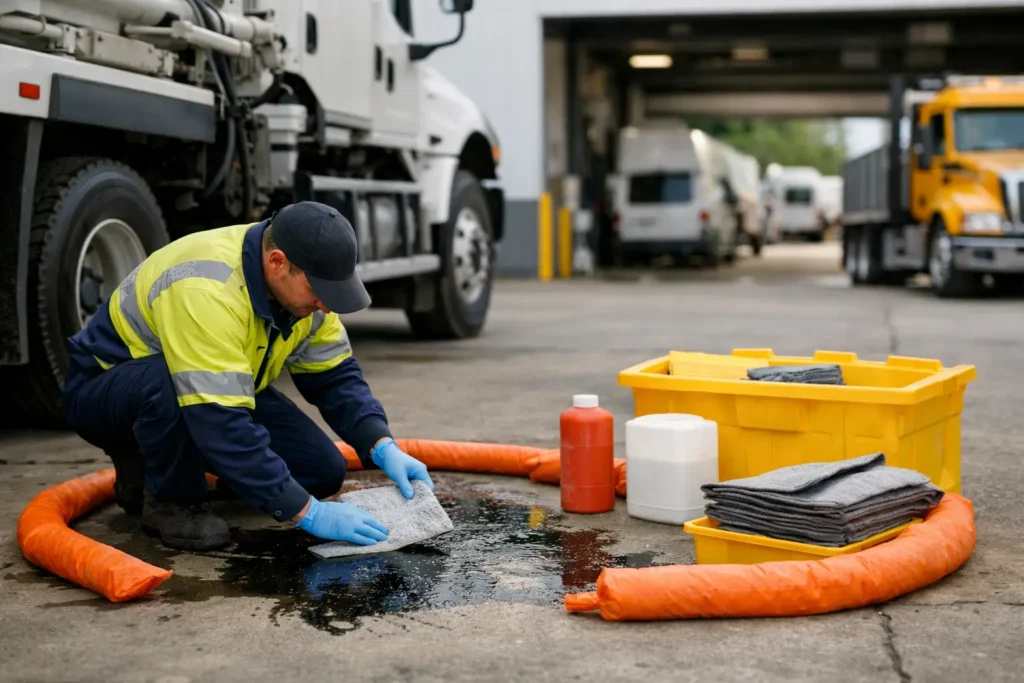
Next, the crew builds a containment ring around the active spill using absorbent socks. They place oil and fuel pads directly over pooled hydraulic oil, working from the outside inward so boots and tyres do not spread contamination. Hydrophobic polypropylene absorbents are the right fit for petroleum-based hydraulic oils because they repel water while taking up oil. A general purpose absorbent may be suitable on a dry workshop floor, but oil-only media gives better control where rainwater or wet ground is involved.
Once free oil is absorbed, the crew wipes the affected surface, checks behind tyres and under the loader, and transfers used materials into the supplied disposal bags or a suitable labelled waste container. The supervisor photographs the area, records the approximate volume, identifies the failed fitting and arranges disposal through the site’s approved waste process. Local authority, client and environmental reporting requirements can vary, so follow the site spill procedure and escalation rules.
The machine stays out of service until the hose or fitting is repaired, the system is checked for further leaks and the affected area is confirmed clean. That is how a 15‑litre leak remains a controlled maintenance event rather than an environmental release and a lost day of work.
Select the Right Hydraulic Spill Equipment
A vehicle bag is useful for immediate first response, but it is not always enough for a depot incident. Match kit capacity to the credible spill volume, the number of machines on site, drain exposure and how quickly a replacement kit can reach the location.
| Operating Situation | Practical Response Equipment | Why It Fits |
|---|---|---|
| Ute, service truck or small plant | 20L–30L vehicle spill kit, pads, socks and disposal bags | Fits behind the driver’s seat or in a service body for fast deployment |
| Excavator, loader or forklift working remotely | 50L–80L oil and fuel spill kit plus drain cover | Handles a hose or fitting leak before it reaches soil or drainage |
| Workshop, transport yard or plant depot | 120L–240L wheelie bin spill kit, drain protection and refill stock | Provides enough absorbent for repeated incidents and multiple responders |
| Fuel, oil and chemical storage area | Spill kit, secondary containment and dedicated chemical media | Controls routine drips and larger storage failures |
For hydraulic oil, equip vehicles and workshop response points with oil and fuel spill kits containing pads, socks, pillows, PPE and waste bags. Pads deal with surface recovery. Socks stop travel. Pillows take down larger pools quickly. Each item has a job, and crews work faster when the kit contains all three.
Drain protection should be stored beside the spill kit, not somewhere across the workshop. A drain cover is only useful if the first person on scene can reach it before oil does. Where machinery is parked or serviced beside drainage, use secondary containment such as portable spill bunds to keep leaks within a controlled area.
Prevent the Second Spill at Your Depot
The initial clean-up is only half the response. A common operational failure is returning an empty kit to its cabinet, vehicle or workshop wall and discovering the shortfall during the next leak. Refill the kit as soon as used absorbents are removed.
Check pads, socks, disposal bags, gloves, goggles, drain covers and instruction sheets. If the crew used a 50L kit on a 15L spill, do not assume it is still ready for another 50L event. Packaging capacity reflects ideal absorbent performance, while real spills involve wet concrete, oil spread, contaminated footwear and extra material needed to protect drains.
Keep a simple inspection record for each fleet vehicle and fixed response point. Monthly checks are often practical for active depots, while high-use workshops may need weekly visual checks. Record whether the kit is sealed, accessible, correctly labelled and fully stocked. Also confirm that staff know the difference between oil-only, chemical and general purpose media. Using the wrong absorbent can delay clean-up and create avoidable disposal issues.
For recurring leaks under parked machinery, move beyond reactive clean-up. Install drip trays or bunded work zones, inspect hose routing and fittings during scheduled maintenance, and position mobile containment beneath known leak points. A collapsible bund can be particularly useful for field servicing or temporary plant maintenance where a permanent bunded bay is not available.
When a Standard Vehicle Kit Is Not Enough
A 20L vehicle kit is a sound minimum for many fleet vehicles, but it cannot replace site-level response equipment. If a hydraulic reservoir ruptures, a hose fails while equipment is working beside a creek, or oil reaches a drain before containment begins, escalate immediately under your emergency procedure.
The response may require additional absorbent, drain isolation, vacuum recovery, environmental advice or notification to the principal contractor and relevant authority. The exact obligation depends on the site, contract conditions, volume, receiving environment and local requirements. Prepare for that scenario before the machine leaves the depot.
Procurement teams should also avoid buying one generic kit for every risk. Oil and fuel kits are for hydrocarbons such as diesel, lubricants and hydraulic oil. Chemical or hazchem kits are for unknown liquids and many hazardous chemicals, subject to the chemical’s safety data sheet. General purpose kits suit mixed non-aggressive workshop liquids but are not the default answer for every chemical release.
Equip Your Fleet Before the Next Hose Fails
Set a minimum equipment standard for every service vehicle, mobile plant unit and depot. Place a compact oil and fuel kit in each ute and truck, position larger wheelie bin kits near workshop exits and drainage lines, and hold refill absorbents where supervisors can access them without waiting for a purchase cycle.
For commercial and government procurement, make the order process work with the way your organisation buys. Confirm kit capacity, absorbent type and delivery requirement before raising the order. Purchase order acceptance, itemised GST for products and freight, and rapid nationwide dispatch help keep fleet readiness from becoming an administrative delay.
A hydraulic hose will eventually fail. Make sure the nearest crew has the right kit, a clear response sequence and enough absorbent to keep the oil out of the drain.