
Blog
Stop Workshop Leaks With Bunding That Works
Sep
A small hydraulic drip beneath a service bay can become a drain contamination incident before the next vehicle rolls in. To stop workshop leaks, you need more than a bag of loose rags near the roller door. You need containment under the source, drain protection at the exit point and the right absorbents ready where your crew works.
For workshops, depots, plant yards and fleet maintenance areas, fluid control is operational control. Oil, diesel, coolant, brake fluid, solvents and chemicals create slip hazards, disrupt service work and can leave your site exposed when rain carries contaminants towards a stormwater drain. Secure the spill before it spreads, then equip the site so the next leak is handled immediately.
Stop Workshop Leaks at the Source
The fastest clean-up is the spill that never reaches the floor. Start by identifying where fluids are stored, transferred and serviced. Common leak points include 205L drums, waste-oil tanks, parts washers, battery areas, fuel bowsers, hydraulic hose work and vehicles parked overnight with active leaks.
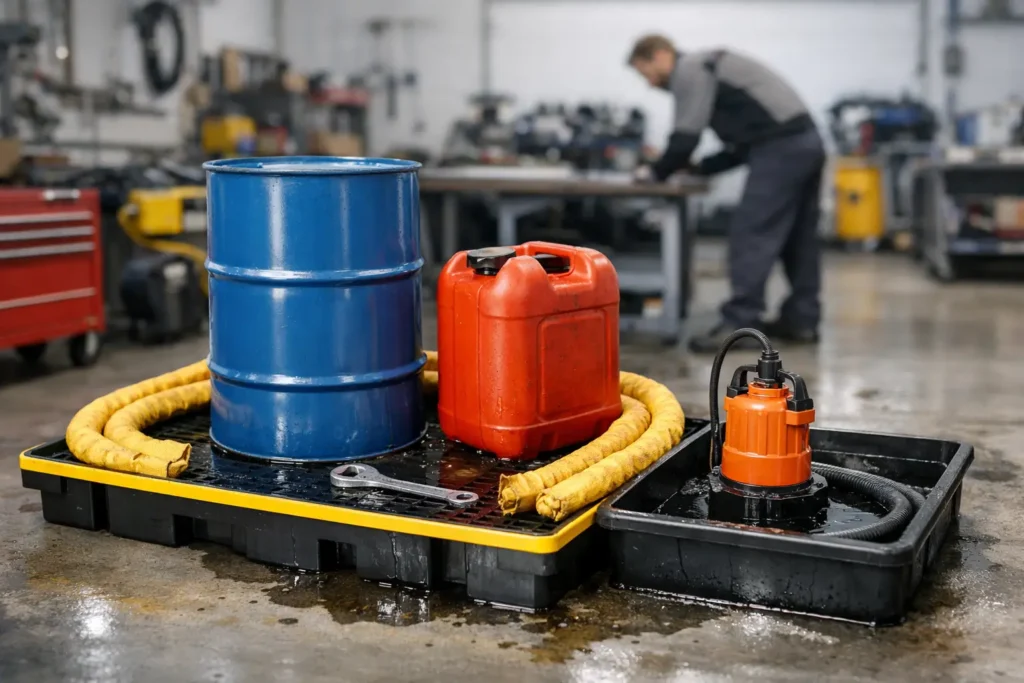
Place secondary containment beneath these risks before an incident occurs. Spill bunds collect leaks and drips at ground level, while drum pallets keep containers raised inside a contained sump. For a workshop with changing layouts or occasional high-risk jobs, collapsible bunds provide a practical contained work zone for machinery servicing, pump repairs and vehicle maintenance.
Sizing matters. A small tray may be suitable for a single container or routine decanting task, but it is not a substitute for a properly sized bund beneath multiple drums. Check the number and capacity of containers being stored, the largest credible leak and the workplace requirements that apply to your operation. AS/NZS standards, environmental licence conditions, landlord requirements and site-specific procedures can all affect what is appropriate.
Do not treat bunding as permanent storage without inspection. Rainwater, accumulated fluids, damaged walls and overloaded pallets reduce effective capacity. Assign a person to inspect containment areas, remove uncontaminated rainwater only under approved site procedures, and arrange disposal of contaminated liquid correctly.
Separate Everyday Drips From Spill Events
Not every workshop leak requires the same response. A few drops under a ute, a split hydraulic hose and an overturned drum are different jobs. Matching equipment to the likely event prevents wasted stock and gives crews a clear response path.
For oil, fuel and hydrocarbon leaks, choose hydrophobic polypropylene absorbents. They repel water while taking up oil-based liquids, making them especially useful outdoors around wash bays, forecourts, loading zones and drains. Pads are effective for wiping and placing beneath minor drips; socks create a barrier around equipment or across a flow path; pillows handle concentrated liquid in tight spaces.
General purpose absorbents suit mixed workshop fluids such as coolants, lubricants and non-aggressive liquids. Chemical or hazchem absorbents are the correct choice where acids, alkalis, solvents or unknown hazardous liquids may be involved. Never assume an oil and fuel kit is suitable for a chemical spill simply because it has spare capacity.
Keep response equipment visible and close to the hazard. A 20L vehicle bag fits behind the driver’s seat or in a ute tray for field technicians. A 120L or 240L wheelie-bin kit suits busy service bays, warehouses and depots where several people may need access. Larger sites often need both: mobile kits for immediate first response and central stock for higher-volume incidents.
Select Equipment by Task
Use a practical site layout rather than one oversized kit in a distant storeroom. Position oil and fuel spill kits near refuelling, fleet parking and waste-oil handling. Put general purpose kits in maintenance bays. Locate chemical spill kits near chemical stores, wash areas and battery servicing where compatible with the substances present.
Your workshop should also carry the equipment needed to isolate a spill fast:
- Drain covers for immediate protection of stormwater inlets and pits.
- Absorbent socks to contain a spreading liquid and direct it away from doorways.
- Pads and pillows for recovery once the spill is controlled.
- Disposal bags, ties, gloves and clear instructions for safe collection.
A drain cover is not a clean-up tool. It buys time by blocking the most serious pathway off site. Train workers to deploy it first when liquid is moving towards stormwater, then contain and absorb the source.
Build a Response Point Your Crew Will Use
A spill kit sealed in a cupboard is not ready equipment. Mount or park kits where staff can reach them without asking for keys, moving stock or crossing a contaminated floor. Mark the location clearly and include it in inductions, toolbox talks and emergency exercises.
Make the response sequence simple: stop the source if safe, protect drains, contain the liquid, absorb it, collect contaminated material and report the incident. Workers do not need a lengthy manual during a live spill. They need the correct kit, clear labels and confidence that they can act without delay.
Refill discipline is where many workshops fail. A used pad, missing drain cover or half-empty disposal bag turns a nominally compliant kit into an incomplete response system. After every use, inspect the kit and replace consumed components immediately. Set a monthly check for high-use areas and record the result with your other safety inspections.
If your operation handles oils, fuels and chemicals across separate areas, avoid mixing refill stock in one unlabelled cabinet. Segregate absorbents by type and label them clearly. This reduces the chance of a technician grabbing an unsuitable product when every minute matters.
Protect Drains Before Rain Does the Damage
A workshop floor often slopes towards a drain for a reason. Unfortunately, that same design can send contaminated liquids into stormwater quickly. The risk increases during wash-down, heavy rain, yard traffic and after-hours leaks when no one is present to intervene.
Map every drain inside and outside the workshop. Identify whether each one connects to stormwater, sewer or a treatment system, then keep the required covers and socks nearby. Do not wait for an incident to discover that the nearest drain protector is stored on the other side of the depot.
For external work, temporary bunding and drain protection need to be chosen for the surface and conditions. Uneven ground, vehicle movements and rainfall all affect performance. A collapsible bund can be highly effective during controlled maintenance, but it must be placed on a suitable surface and protected from traffic damage. For permanent drum and IBC storage, purpose-built bunded pallets usually provide a more reliable solution.
Control Flammable Liquid Risks Separately
Leaks involving petrol, solvents, thinners and other flammable liquids require more than absorbent material. Remove ignition sources where safe, isolate the area and follow your emergency procedures. Storage is equally critical: incompatible or flammable products left on benches, shelves or open work areas increase both spill volume and fire exposure.
Use flammable cabinets for approved storage of flammable liquids and keep containers closed, labelled and protected from damage. The right cabinet capacity depends on the quantity held, the products involved and the applicable site requirements. Check current Australian standards, local regulatory obligations and your workplace risk assessment before setting storage limits.
This is one area where buying the largest available cabinet is not automatically the answer. Larger capacity can help consolidate stock, but it can also create poor stock rotation, more hazardous inventory in one location and access issues for busy crews. Select capacity that supports safe daily work and controlled replenishment.
Make Procurement Fast Enough for Real Operations
When a hose fails or an audit finds depleted spill supplies, your site cannot wait through a complicated buying process. Build a standard equipment list for each location: vehicle bag, workshop kit, drain protection, absorbent refill stock, bunding and disposal consumables. Procurement teams can then order against known requirements rather than restarting the selection process each time.
For multi-site operators, standardise kit sizes and labels wherever practical. A mechanic transferred between depots should recognise the same colour coding, understand the same response sequence and know where to find drain covers. Government and corporate buyers should also request itemised GST details for products and freight, and use purchase orders where required by internal procurement controls.
Spillkits.com.au supports rapid nationwide dispatch for commercial, industrial and government buyers who need to restore site readiness without delay. Select the right kit, replenish what has been used and secure containment before the next delivery, service job or rainfall event tests your workshop.
A clean workshop floor is not proof that the risk is controlled. The real test is whether your crew can contain a leak in the first minute, protect the nearest drain and keep operations moving. Equip that response point now, before a minor drip becomes a reportable incident.