Blog
Mobile Plant Refuelling Guide for Safer Sites
Sep
A mobile plant refuelling guide is not paperwork for the site folder. It is the difference between a contained diesel drip and fuel entering a stormwater drain, stopping work, damaging your environmental record and creating a clean-up bill nobody budgeted for. Excavators, loaders, generators, rollers, pumps and site utes all need fuel. The risk sits in how, where and with what equipment that fuel is transferred.
For depot crews, civil contractors, workshop managers and procurement teams, the priority is clear: establish a refuelling point, contain predictable leaks, and position the right response equipment before the bowser or fuel trailer arrives. Equip the job properly and refuelling remains a routine task rather than a reportable incident.
Set up a controlled mobile plant refuelling area
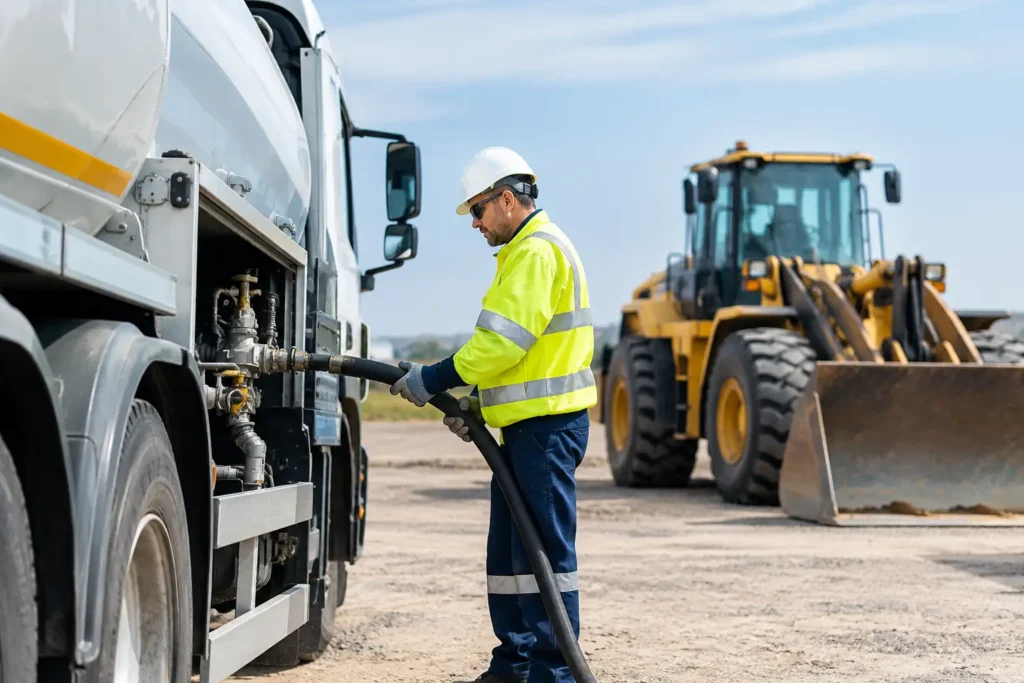
Refuelling should occur on stable, level ground away from drains, waterways, pits and unprotected soil wherever the site layout allows. This is especially important on temporary civil and construction sites, where a small diesel spill can travel quickly after rain. Do not rely on a crew member noticing the flow once fuel has reached a grate.
Start by identifying the likely spill path. Check drainage falls, nearby pits, culverts and the condition of the ground. Position plant so the fill point is accessible without stretching hoses across traffic routes or working beside an open drain. Keep ignition sources away, apply the handbrake, shut down equipment unless the manufacturer requires otherwise, and prohibit smoking in the refuelling zone.
A designated area does not need to be complicated, but it must be defensible. Use portable containment where refuelling is frequent or where mobile plant is serviced from a fuel trailer. Collapsible bunds and portable spill bunds provide a practical secondary barrier under plant, drums or transfer equipment. They are particularly useful when a hardstand refuelling bay is unavailable.
If the operation stores fuel drums, jerry cans or lubricants near the refuelling point, move them onto bunded storage rather than leaving them directly on the ground. Secondary containment gives your team time to respond when a valve leaks, a container is knocked over or a drum tap is left open.
Select spill equipment before refuelling starts
The right kit depends on the fuel type, expected volume and distance from a controlled store. A 20L vehicle bag may suit a service ute or small generator crew. It will not provide adequate coverage for a fuel trailer servicing multiple machines across a workday. For active workshops, depots and refuelling points, larger 120L to 240L wheelie-bin spill kits put more absorbent capacity and disposal bags within reach.
For diesel, petrol, hydraulic oil and other hydrocarbons, select oil and fuel absorbents. Polypropylene, hydrophobic media repels water while absorbing oil-based liquids, making it the practical choice around wet ground, wash bays and stormwater risks. General purpose absorbents are useful for mixed workshop spills, but they may absorb water as well as oil and are not always the most efficient choice outdoors.
A fit-for-purpose fuel response setup should include more than loose pads. Keep enough absorbent socks to surround the spill, pads for recovery, disposal bags for contaminated material and gloves for the response team. Drain covers should be immediately accessible where stormwater grates are nearby. The first operational move is to stop fuel reaching drainage, then contain and recover the liquid.
For most plant refuelling zones, confirm these four controls are in place:
- An oil and fuel spill kit sized for the credible spill, not the smallest possible purchase.
- Absorbent socks and pads positioned beside the transfer point, not locked in a distant store.
- Drain protection ready to deploy over nearby stormwater entry points.
- Bunding beneath fuel containers, pumps and routine transfer activities where practical.
Keep chemical spill equipment separate if the site also handles acids, coolants, solvents or hazardous chemicals. An oil and fuel kit is designed for hydrocarbons. It is not a substitute for a chemical or hazchem kit where the liquid type is unknown or corrosive.
Match kit capacity to the actual fuel risk
Sizing is where many sites fall short. A spill kit should reflect the amount that can realistically escape before the source is stopped, plus the surface area required to control spread. Do not size only for a minor drip if your team transfers fuel from 205L drums, bulk tanks or mobile fuel trailers.
A small mobile crew may need a 20L or 30L vehicle kit behind the driver’s seat, with additional oil-only pads and socks in the service compartment. A workshop or plant compound often requires a 120L kit as a minimum practical response point. Larger depots, transport yards and high-volume refuelling areas should consider 240L wheelie-bin capacity, supplemented by drain covers and dedicated bunding.
Capacity alone is not the whole answer. Access matters. A 240L kit is of limited value if it is stored behind pallets or on the other side of a gate. Place equipment where refuelling occurs, clearly label it, and make sure every operator knows its location. Check the stock after each incident and replenish immediately. An empty spill kit is a compliance gap disguised as a container.
Run a refuelling process crews can follow
A clear process reduces rushed decisions when plant is queued for work. Before transfer, inspect hoses, couplings, pumps, nozzles and fuel containers for damage. Confirm the correct fuel, position absorbent socks near the likely leak point and protect nearby drains if the location presents a credible pathway.
During refuelling, remain at the nozzle. Do not leave an unattended transfer running while an operator checks another machine or takes a mobile call. Avoid overfilling, and use drip trays under smaller containers or awkward connections. When the task is complete, check the ground, hose connections and plant fill point before returning equipment to service.
If a spill occurs, act in order: stop the source where safe, protect drains, contain the spread, recover the fuel with compatible absorbents, then bag and label contaminated waste for disposal through your approved process. Report the event according to site procedures. Fast action matters, but so does safe action. Do not send untrained workers into a spill involving unknown chemicals, fire risk or a volume beyond the site’s response capability.
Keep compliance practical, not theoretical
Australian sites may be subject to environmental duties, workplace safety obligations, client requirements and local authority conditions. The exact controls depend on the state, site activity, fuel volume, storage arrangements and proximity to sensitive land or water. That is why a generic spill plan copied across every project is rarely enough.
Make refuelling controls part of pre-start checks, site inductions and routine inspections. Record kit inspections, verify that absorbents are dry and usable, and replace missing drain covers, gloves and disposal bags. For long-running projects, review the setup when fuel volumes increase, the refuelling location moves or wet weather changes drainage conditions.
Procurement teams can remove delays by standardising approved kit sizes for vehicle fleets, workshops and major plant compounds. Keep itemised GST records for products and freight, and use purchase orders where your organisation requires them. Rapid nationwide dispatch supports urgent replenishment, but ordering before stock is depleted keeps crews protected without waiting on a delivery.
Mobile plant refuelling guide: common purchasing mistakes
The cheapest kit is often the most expensive choice when it lacks the absorbent capacity or media type required for the job. Another common mistake is buying a large kit but omitting the containment controls that stop fuel travelling – particularly drain covers, socks and portable bunding.
Do not treat spill response as a one-off purchase. Absorbents are consumables. Pads used for routine wipe-downs, socks deployed during rain and bags taken from kits all need replacing. Maintain refill stock at the depot so the response point can be restored immediately after use.
For plant fleets operating across changing locations, standardise a vehicle kit for every service ute and a larger oil and fuel kit for every active refuelling point. Add drain protection and portable containment where the site layout demands it. This approach gives frontline operators clear equipment, gives supervisors a repeatable inspection standard, and gives procurement a faster path to order the correct gear.
Treat the next refuelling shift as a live test. Walk the route fuel would take from the plant to the nearest drain, then place containment and response equipment where it will stop that path fast.
Related equipment: Collapsible Bund 2m x 2m and 120L Oil & Fuel Mobile Spill Kit.