Blog
How to Use Spill Pillows on Industrial Sites
Sep
A leaking 205L drum can spread beneath racking, into traffic lanes or towards a drain before a full spill kit is even opened. Knowing how to use spill pillows gives your crew a fast first line of containment: place high-capacity absorbent material directly at the source, stop migration, then complete the clean-up safely.
Spill pillows are not a substitute for a properly sized spill kit, bund or drain protection plan. They are the rapid-response component that buys your site time, reduces slip hazards and helps prevent a manageable leak becoming an environmental incident. Keep the right type within reach of drum stores, workshops, loading bays, plant rooms and fleet vehicles.
What spill pillows do best
Spill pillows are compact, flexible absorbent units designed to sit under, around or against a leak. Their high-volume fill makes them particularly effective for drips from taps, cracked containers, loose fittings, hydraulic lines and leaking machinery. Unlike flat pads, a pillow holds its shape and concentrates absorbency where the liquid is pooling.
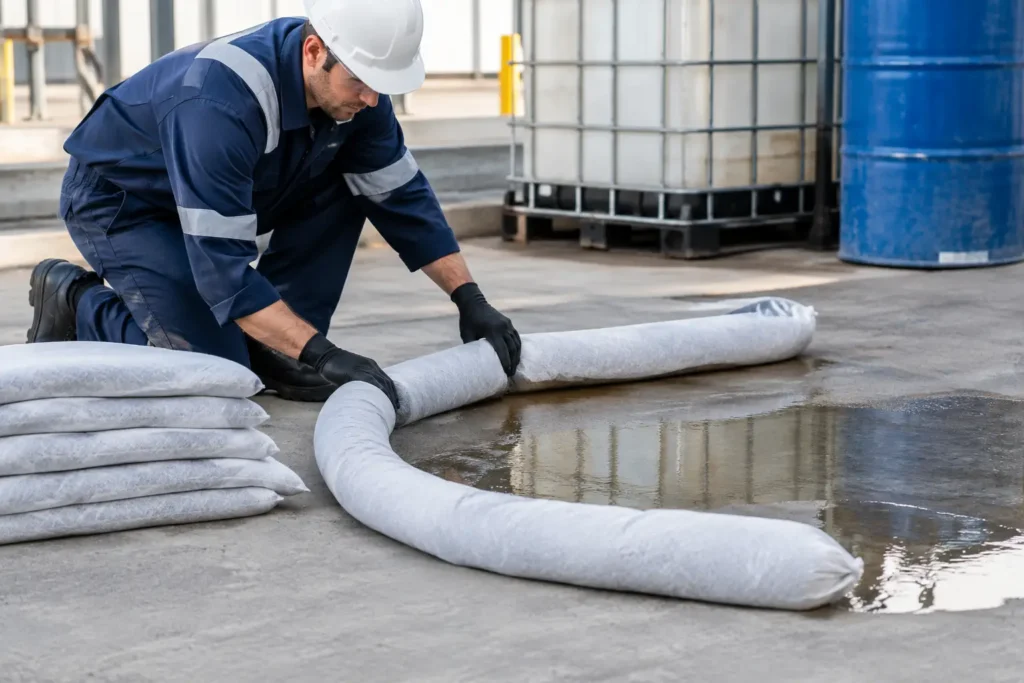
Use them where a spill is localised and the priority is immediate containment. A pillow can sit beneath a leaking drum bung, at the base of a forklift hydraulic leak, or beside a pump connection while the source is isolated. For spreading liquid, pair pillows with absorbent socks to create a boundary and use pads for the final surface clean-up.
The key decision is compatibility. Oil and fuel pillows suit hydrocarbons such as diesel, petrol, lubricants and hydraulic oil. General-purpose pillows handle common workshop liquids including coolants, water-based fluids and oils. Chemical or hazchem pillows are selected for aggressive or unknown chemicals, subject to the product compatibility information and your site procedures.
How to use spill pillows safely
Do not throw an absorbent pillow into a spill without first checking what has leaked. Read the container label, consult the safety data sheet and ensure responders are wearing suitable PPE. If the material is flammable, corrosive, toxic, reacting, or releasing strong fumes, isolate the area and escalate according to your emergency response plan.
Once the spill is safe for trained personnel to manage, follow this practical sequence.
- Stop the source first. Close the valve, upright the container if safe, plug the leak or move undamaged stock away from the affected area. Absorbents control released liquid, but they cannot solve an active leak on their own.
- Protect drains and low points. Place a drain cover or use absorbent socks to block the likely travel path before focusing on the pool.
- Position the pillow at the heaviest flow. Place it directly beneath the drip point, against the leaking fitting, or in the deepest part of the pooled liquid.
- Add pillows instead of overloading one. A saturated pillow will stop taking up liquid efficiently. Deploy additional units as the spill grows.
- Use pads to finish the surface. Once the bulk liquid is under control, lay compatible absorbent pads over the remaining sheen.
- Bag, label and dispose of used material correctly. Saturated pillows carry the same hazard profile as the absorbed liquid. Dispose according to SDS and local requirements.
A spill pillow works best when it makes firm contact with the liquid. On uneven concrete or beneath machinery, gently shape it into the space rather than leaving it perched on top of the pool. Never stand on a pillow to force absorption.
Use the right media for the liquid
Selecting the wrong absorbent creates avoidable risk. Hydrophobic oil and fuel absorbents repel water and preferentially take up hydrocarbons, making them useful around wash bays, outdoor equipment and wet areas. They are not the right response for acids, caustics or solvent spills.
General-purpose polypropylene absorbents are often the practical choice for mixed workshop environments, but they should only be used where the liquid is known to be compatible. Chemical spill pillows are intended for hazardous substances and generally offer high-visibility identification for quick recognition.
| Spill scenario | Suitable pillow type | Add alongside it |
|---|---|---|
| Diesel or hydraulic oil leak | Oil and fuel, hydrophobic | Oil socks, pads and drain cover |
| Coolant or mixed workshop fluid | General purpose | General-purpose pads and socks |
| Acid, caustic or unknown chemical | Chemical or hazchem | Chemical socks, PPE and disposal bags |
| Persistent drip beneath plant | Media matched to liquid | Drip tray, bunding and repair controls |
Place spill pillows where leaks start
A sealed carton of absorbents in a remote storeroom does not protect a drain during the first two minutes of a spill. Position spill pillows at known risk points and make them visible to every shift: chemical decanting stations, drum storage areas, fuel bowsers, maintenance bays, generator compounds, wash-down areas and loading docks.
For vehicle and field crews, keep a small, compatible spill response supply behind the driver’s seat or in a secured ute compartment. A 20L vehicle spill kit is useful for minor leaks, but may not provide enough capacity for a ruptured container or sustained hydraulic failure. Match kit capacity to the credible spill volume.
At fixed sites, place pillows within a larger response system. Drum bunding captures leaks at the storage point, while spill pillows control drips during handling or when a container has been moved outside its bund. Drain covers stop escape routes. A correctly sized site spill kit provides socks, pads, PPE and waste bags for the complete response.
Avoid the mistakes that drain your spill capacity
The most common failure is using pillows after the liquid has already travelled. Train crews to protect drains first, then contain the source. Another mistake is relying on a single pillow beneath a continuing leak. If product is still flowing, isolate the source and add containment immediately.
Do not mix used absorbents from incompatible chemicals into the same waste bag or bin. Keep responders away from unknown spills until the material is identified. Inspect supplies after every deployment. A spill kit with missing pillows, depleted socks or no disposal bags is not compliance-ready.
Routine checks should confirm that absorbents are dry, accessible and matched to the hazards in that location. Replace contaminated or damaged stock promptly. If a workshop has expanded or new chemicals are introduced, reassess absorbent type and secondary containment capacity.
Set up fast, accountable replenishment
Make spill pillows a controlled consumable, not an emergency purchase made after an incident. Record pillow type, quantity and location in your inspection register. Give a supervisor authority to reorder immediately after use, and hold refill stock where high-risk work is continuous.
For procurement teams, standardising absorbent types across depots reduces selection errors and simplifies replenishment. Specify the liquid hazard, required capacity, storage location and supporting controls when ordering.
Spillkits.com.au supports commercial and government purchasing with rapid nationwide dispatch, purchase order acceptance and itemised GST for products and freight. Equip your fleet, replenish site response points and keep the right pillows beside the hazards they are designed to contain.
The best time to position a spill pillow is before the next drum starts dripping. Put compatible absorbents at the source, protect the drain path and give every crew a clear, practised response.
Related equipment: Heavy Duty Oil & Fuel Absorbent Pads.