
Blog
Hazardous Liquid Storage Guide for Worksites
Aug
A leaking 20L drum beside a workshop drain can stop a job, expose staff and turn a routine delivery into a cleanup problem. This hazardous liquid storage guide gives site supervisors, depot managers and workshop operators a practical way to store liquids safely, contain leaks early and keep the right response gear within reach.
The aim is not to create a complicated system. It is to make sure every container has a suitable home, every likely spill has a nearby response kit and your crew can act before liquid reaches a drain, traffic area or soil.
Start by identifying what you are storing
Do not treat all liquids as the same just because they arrive in drums, jerry cans or IBCs. Storage decisions start with the product label and Safety Data Sheet (SDS). Check the liquid’s hazard class, whether it is flammable, corrosive, toxic or environmentally hazardous, and whether it reacts with water, oxidisers, acids or alkalis.
For everyday operations, separate your stock into practical groups. Oils, diesel, hydraulic fluid and coolant need different absorbents and storage controls from acids, solvents, degreasers and agricultural chemicals. General-purpose liquids such as water-based washdown products may be lower risk, but they can still create slip hazards or carry contaminants into stormwater.
A simple rule helps: store only compatible products together. Keep acids away from alkalis, oxidisers away from fuels and organic materials, and flammable liquids away from ignition sources. If you are unsure, check the SDS and your applicable dangerous goods and WHS requirements before putting products in the same cabinet, bay or bund.
Choose storage that contains the first leak
The container is only the first line of defence. Caps crack, taps get knocked and drums can be damaged by forklifts. Secondary containment catches a leak before it spreads, buying your crew time to respond properly.
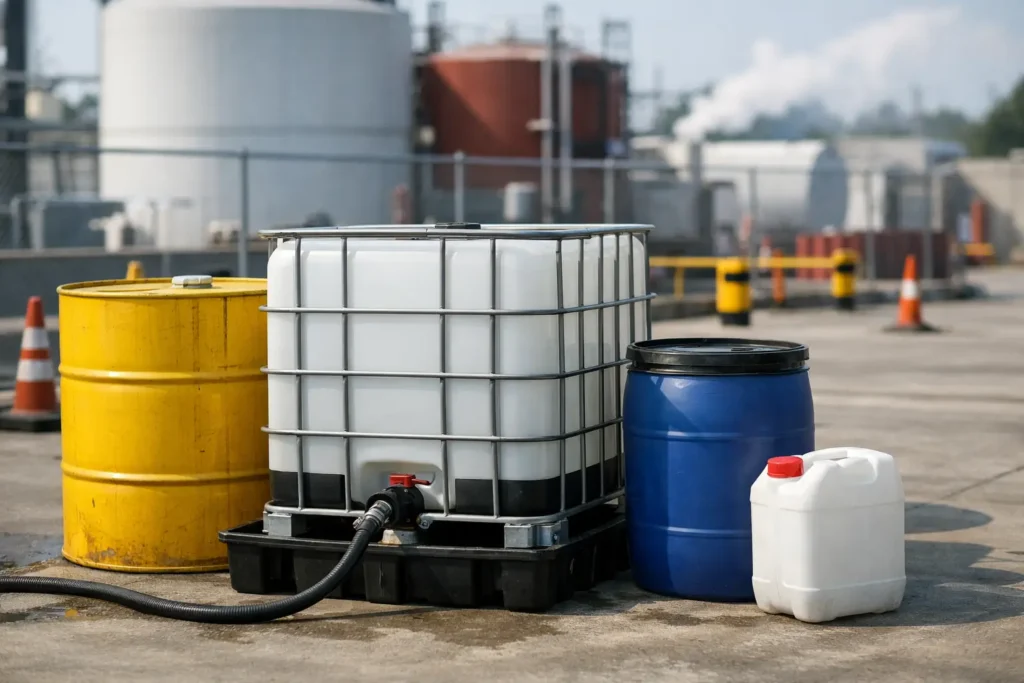
Use a bunded pallet, bunded floor area, cabinet or drip tray sized for the containers and liquid volume being stored. The right option depends on the package size and how the area operates. A small bench tray may suit a few bottles used by maintenance staff. A bunded pallet suits 205L drums. IBCs and bulk chemical storage need purpose-built containment with adequate capacity and access for inspection.
Keep containers upright, clearly labelled and closed when not in use. Do not store damaged drums in a corner to deal with later. Move them into safe secondary containment, assess the leak and arrange a compatible overpack or replacement container.
Storage layout matters as much as capacity. Leave enough room to read labels, inspect drum bases and reach a spill kit without stepping through the affected area. Avoid placing liquid stores near doorways, pits, stormwater grates and busy forklift routes wherever possible.
Keep rainwater and drains out of the equation
Outdoor storage is common at depots, civil sites and fuel-related operations, but it requires more attention. Rain can fill an open bund, cause overflow and turn a contained leak into contaminated runoff. Use weatherproof covers where appropriate, inspect bunds after rain and manage accumulated water in line with site procedures.
Map the closest drains before a spill happens. Keep drain covers or drain protection equipment near loading zones, wash bays, workshops and chemical stores. If a spill is moving towards a drain, protect the drain first where it is safe to do so, then stop the source and contain the liquid.
Match absorbents to the liquid
The wrong absorbent can slow your response. Match your stock to the liquids your team actually handles.
Oil and fuel absorbents are hydrophobic, meaning they repel water while absorbing hydrocarbons. They are the practical choice for diesel, petrol, oils and hydraulic leaks, including spills on wet ground or water. Chemical or hazchem absorbents are designed for a wider range of aggressive liquids, including acids, bases and solvents. General-purpose absorbents suit many non-aggressive workshop liquids, coolants and water-based spills, but they are not a substitute for chemical absorbents when hazardous chemicals are involved.
For most sites, pads handle puddles and final wipe-up, while socks or booms form a fast barrier around leaking equipment, drums and drains. Granular absorbent can help on rough ground, but it is slower to deploy and creates more waste to collect. A well-stocked kit with pads, socks, PPE and disposal bags is usually the faster first response.
Size spill kits for the likely incident
Do not size a kit around the smallest leak you have seen. Size it around the credible spill your crew must control before external help or further supplies arrive. Consider the largest portable container in routine use, the transfer points where mistakes happen and how quickly a spill could reach a drain or leave the site boundary.
| Work area | Practical starting point | Why it works |
|---|---|---|
| Service ute or field vehicle | 20L to 30L vehicle spill kit | Handles small fuel, oil or fluid leaks without taking up valuable cabin or tray space. |
| Maintenance van or mobile crew | 30L to 50L kit | Provides more pads, socks and PPE for call-outs or routine servicing. |
| Small workshop or plant room | 50L to 80L kit | Suits common drum decants, hydraulic leaks and maintenance incidents. |
| Busy workshop, loading bay or depot | 120L to 240L wheelie-bin kit | Gives multiple staff enough absorbent for larger leaks and fast access across a wider area. |
These are starting points, not a replacement for a site-specific assessment. If you decant from 205L drums, handle chemicals beside drainage or operate multiple shifts, increase your capacity and position more than one kit. A single large kit at one end of a warehouse is not much use when the spill is at the opposite loading dock.
Set up a storage and response zone
Keep response equipment visible, labelled and close to the risk. A kit hidden in a locked store room may look good on an inventory sheet, but it will not help a technician facing a spreading leak.
At a minimum, place spill kits near liquid storage, workshop service bays, fuel handling points, loading areas and fleet vehicles carrying oils, fuel or chemicals. Keep a clear path to each kit. Put drain protection where it can be deployed in seconds, not in a distant office cupboard.
Your kit should include compatible absorbents, containment socks or booms, gloves and other suitable PPE, disposal bags and clear instructions. For higher-risk chemical areas, make sure PPE selection reflects the SDS and the likely exposure. A pair of general gloves is not automatically suitable for every corrosive or solvent.
Mark each kit with its intended use. A crew member should be able to tell at a glance whether it is for oil and fuel, chemical spills or general-purpose cleanup. This avoids a common delay: staff opening a kit, then realising it contains the wrong media for the liquid on the floor.
Give staff a simple spill sequence
Frontline teams do not need a long manual during an active spill. Give them a clear sequence and practise it during toolbox talks: stop the source if safe, protect people and drains, contain the spread, use compatible absorbents, collect waste and report the incident.
For a leaking drum, that may mean upright the container if it can be done safely, place a sock around the leak path, cover the nearest drain and use pads to recover the liquid. For a chemical release with fumes, fire risk or an unknown substance, keep people clear, isolate the area and follow your emergency procedure rather than attempting a rushed cleanup.
Never wash a spill into a drain or hose it across the yard. Spill waste, used pads, contaminated PPE and damaged containers may require controlled disposal. Follow the SDS, site waste procedure and local environmental requirements.
Inspect, restock and keep records current
A spill kit is only ready if it is complete. Check kits monthly and after every use. Count pads and socks, inspect PPE, replace used disposal bags and make sure instructions remain readable. Refills are not optional extras – a kit that has handled one minor hydraulic leak can be underprepared for the next incident.
Inspect storage areas at the same time. Look for rusting drums, swollen containers, loose bungs, staining beneath pallets, blocked access and damaged bunding. Record issues and fix them promptly. Small leaks are usually easier and cheaper to control before they become a cleanup, environmental or downtime event.
Equip your fleet, protect the drains near your highest-risk areas and keep compatible refills on hand. When liquid storage and spill response are set up together, your crew can move quickly when a container fails instead of losing time searching for gear.