
Blog
Industrial Spill Containment Guide for Sites
Sep
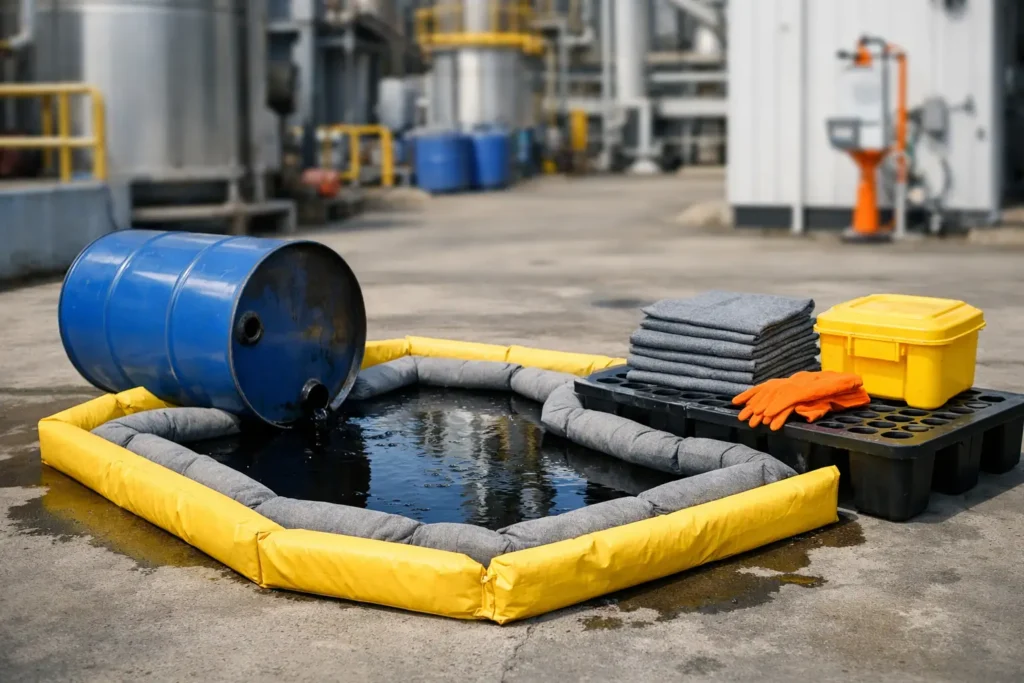
A leaking 205L drum can turn a clear workshop aisle into a slip hazard, drain contamination risk and expensive shutdown in minutes. This industrial spill containment guide gives Australian site managers, procurement teams and frontline crews a faster way to select the containment equipment that matches their liquids, storage volumes and response risks.
Do not wait for an incident to expose an empty spill kit, undersized pallet bund or missing drain cover. Secure the right equipment before deliveries arrive, drums are decanted or fleet vehicles leave the depot.
Start with the liquid, then size the containment
The wrong absorbent can waste precious response time. The wrong bund capacity can leave a site exposed when a drum, IBC valve or forklift impact causes a full release. Start by identifying what is actually handled on site: oils and fuels, acids and alkalis, solvents, coolants, paints, detergents or mixed workshop liquids.
Check the current safety data sheet for each product, including incompatibilities, personal protective equipment requirements and environmental hazards. Then separate your requirement into two jobs: immediate spill response and secondary containment during storage or transfer.
Spill response equipment controls a release once it happens. Bunding, drip trays and drain protection reduce the chance that a release reaches the ground, stormwater system or adjacent work area. Most busy sites need both.
Match absorbents to the spill
Oil and fuel absorbents use hydrophobic polypropylene media. They repel water while drawing in hydrocarbons, making them practical around wash bays, outdoor plant, marine edges and wet workshops. Use them for diesel, petrol, hydraulic oil and lubricants, but do not assume they are suitable for aggressive chemicals.
General purpose absorbents suit everyday maintenance releases, including coolants, water-based fluids and many non-aggressive liquids. They are a sensible choice where the likely spill is mixed but known to be low hazard.
Chemical and hazchem absorbents are the safer selection for acids, caustics, solvents and unknown liquids. When the substance is uncertain, isolate the area, consult the SDS and select chemical-rated response equipment rather than gambling with a general purpose pad.
For a reliable site response, stock the following components together rather than scattering them across a warehouse:
- Absorbent pads for flat-surface cleanup and final wipe-down
- Absorbent socks to stop flow and build a quick perimeter
- Pillows for leaks beneath valves, machinery and damaged containers
- Disposal bags, ties, PPE and a clear response instruction card
Select spill kit capacity for the actual exposure
A spill kit is not just a compliance prop. It must have enough capacity to control the most credible release before it reaches a drain, doorway, loading dock or neighbouring tenancy. Capacity is normally expressed in litres absorbed, but your selection must account for the liquid, surface, slope and likely source.
A 20L vehicle bag is useful for a ute, service van or passenger vehicle carrying small quantities of oils and fluids. It fits behind a driver’s seat or in a boot and gives mobile crews an immediate first response. It is not a substitute for depot-level equipment when vehicles refuel, decant chemicals or park over stormwater grates.
For workshops and small plant rooms, a 50L to 120L kit often suits localised leaks from machinery, drums and maintenance work. A 120L to 240L wheelie-bin kit provides more practical coverage for loading areas, warehouses, transport depots and larger workshops. The wheeled format matters when a responder needs to move pads, socks and disposal materials across a site quickly.
| Site situation | Practical starting point | Key addition |
|---|---|---|
| Service vehicle or field crew | 20L vehicle spill kit | Drain cover and disposal bags |
| Small workshop or plant room | 50L–120L spill kit | Socks for doorways and floor edges |
| Depot, warehouse or loading dock | 120L–240L wheelie-bin kit | Multiple drain covers and spare refills |
| Chemical store or laboratory area | Chemical-rated kit sized to credible release | Compatible PPE and chemical absorbents |
Do not size purely by floor area. A compact chemical store with one 205L drum can carry more consequence than a large warehouse with sealed, low-risk stock. Consider the largest container handled, the likelihood of a complete failure, how quickly help can reach the area and whether a spill can migrate to drains or soil.
Build secondary containment around storage and transfer
Secondary containment prevents routine drips and major failures from becoming an environmental event. Use drum bunds beneath 205L drums, IBC bunding beneath intermediate bulk containers, and portable containment where plant is serviced or liquids are transferred in temporary locations.
For fixed storage, choose bunding with enough capacity for the relevant container volume and the applicable site, product and regulatory requirements. Australian standards, environmental rules, lease conditions and insurer requirements can differ by material and location. For flammable liquids, assess storage and containment against the current requirements that apply to your operation, including AS 1940 where relevant. Confirm the final arrangement with your safety adviser, regulator or insurer when the risk is high.
A two-drum pallet may suit a maintenance bay with modest throughput. A four-drum bund makes more sense when stock is routinely rotated. If an IBC is stored outdoors, factor in rainwater management, UV exposure, forklift access and whether the bund needs a cover or a protected drainage arrangement.
Collapsible bunds are a practical option for mobile maintenance crews, civil contractors and transport operators. Deploy one beneath a leaking machine, tanker connection or drum transfer point, then pack it away when the work is complete. Check wall height, footprint, vehicle weight rating and chemical compatibility before ordering. A cheap containment mat that cannot handle the vehicle or fluid involved creates a false sense of security.
Protect drains before the spill spreads
A drain is the most critical point on many sites. Once oil, solvent or chemical reaches stormwater, the response becomes more complicated, more visible and potentially much more costly.
Keep drain covers where people can reach them immediately: beside loading docks, wash bays, fuel points, chemical stores and workshop exits. Flexible polyurethane covers can create a temporary seal over clean, smooth drain surfaces. Magnetic covers suit compatible metal grates, while inflatable or mechanical devices may be better for certain drain configurations.
Test your approach before an emergency. Confirm where every drain runs, who has authority to isolate it, and whether a cover will sit flat despite uneven concrete, debris or grates. Pair drain protection with absorbent socks so the team can block flow while another worker deploys the cover.
Keep flammables contained and separated
Flammable liquids need more than a spill kit beside the door. Store containers in purpose-built flammable cabinets where required by your risk assessment and storage obligations. The cabinet must suit the liquid class, container sizes and intended location, while allowing safe access for staff who use the products daily.
Avoid treating a cabinet as unlimited storage. Overloading shelves, mixing incompatible chemicals or placing damaged containers inside turns controlled storage into a hidden incident. Maintain labels, inspect containers, manage ignition sources and keep compatible absorbents nearby for small leaks during use.
Put equipment where workers can use it in seconds
The best equipment is useless if it is locked in a store room or buried behind pallets. Position spill kits at the point of risk, with clear signs and enough access space for a wheelie bin or responder. Vehicle kits should be checked during fleet inspections. Warehouse and workshop kits should be inspected on a scheduled basis, especially after an incident, contractor work or a major delivery.
Use a simple readiness check:
- The kit is visible, accessible and sealed or clearly organised
- Pads, socks, PPE and disposal bags are present and dry
- The absorbent type matches the liquids currently on site
- Drain covers and bunds are clean, undamaged and ready to deploy
- Used components have been replaced immediately
Refills are not optional. A kit that has absorbed one hydraulic leak may look mostly full, but missing socks, PPE or disposal bags can stop a safe response. Keep a reorder trigger for depleted items and assign ownership to a named role, not a vague instruction on a noticeboard.
Make purchasing fast without sacrificing fit
Procurement speed matters when a site audit, new contract, fleet expansion or incident has exposed a gap. Build standard equipment lists for common areas: vehicle, workshop, warehouse, chemical store, refuelling point and loading dock. This gives site teams a clear ordering path while allowing procurement staff to control approved specifications.
Spillkits.com.au supports commercial and government purchasing with rapid nationwide dispatch, purchase order acceptance and itemised GST across products and freight. Select the right kit, add the containment equipment that protects your drains and storage areas, and order refills before stock levels become a safety problem.
Treat every drum delivery, vehicle service and chemical transfer as a test of site readiness. Equip the point of risk now, so your crew can contain the spill before it controls the day.