
Blog
Spill Kit Refill Absorbent Pads for Ready Kits
Aug
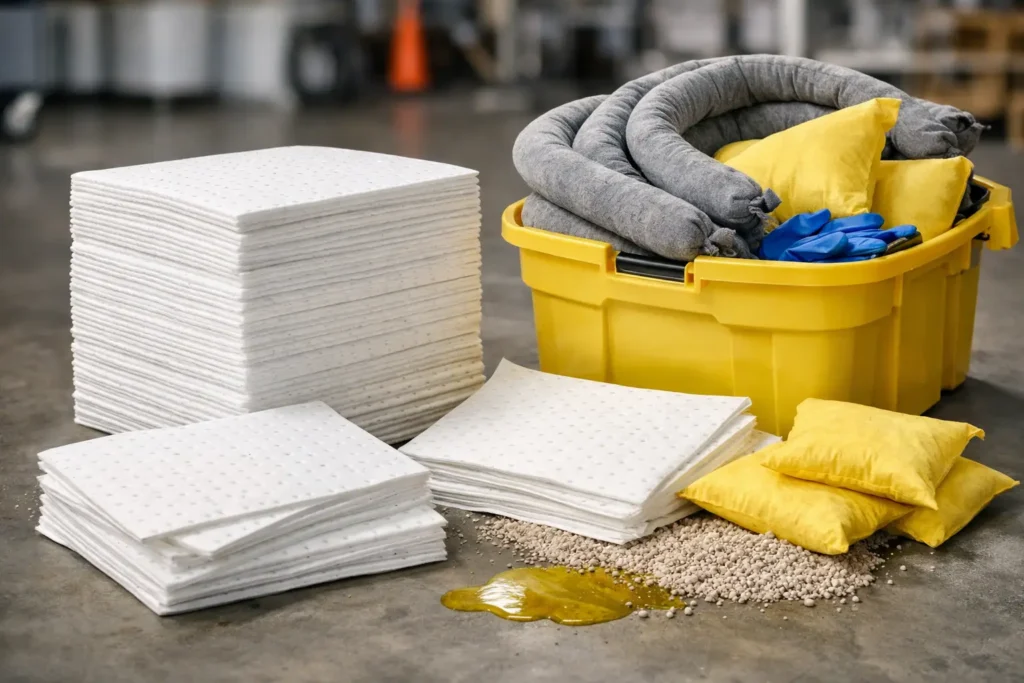
A spill kit that has been used once is not ready for the next leak unless it is refilled. Spill kit refill absorbent pads are the fastest way to restore response capacity after a small oil drip, hydraulic hose failure, coolant leak or workshop knock-over. For fleet, workshop and site managers, keeping the right pads on hand means crews can contain a spill immediately instead of searching stores while liquid spreads across the floor.
Pads are often the first component used and the first component to run out. They are easy to deploy, suit tight spaces around equipment and can be layered to increase capacity. The right refill is not simply the biggest pack available. It needs to match the liquid risk, the pad type already in the kit and the realistic spill volumes your team handles.
Why absorbent pad refills run out first
In most workplaces, pads handle the everyday jobs: a diesel drip beneath a truck, oil around a service bay, a small chemical splash at a drum decanting point or a leaking container in a warehouse. Staff can place a pad under the source straight away, then use additional pads to wipe down the affected area after the leak is stopped.
That convenience is exactly why pad stock disappears. A minor spill may use only a few pads, but repeated maintenance leaks and housekeeping jobs can quietly empty a kit. A kit can still look complete from the outside while offering far less absorbency than its label suggests.
Check used kits as soon as the incident is closed out. Remove contaminated materials, count the remaining pads, socks and disposal bags, then replenish what was used. Do not wait for a formal monthly inspection if the kit has been opened. A refill ordered on the day of use is usually far easier to manage than an urgent order during the next spill.
Choosing spill kit refill absorbent pads
Start with the liquid, not the location. Absorbent pads are commonly supplied as oil and fuel, general purpose, or chemical and hazchem media. They may look similar at a glance, but using the wrong type can reduce performance or create an unsafe response.
Oil and fuel pads for hydrocarbons
Oil and fuel absorbent pads are designed for hydrocarbons such as diesel, petrol, lubricants, hydraulic oil and many fuels. These polypropylene pads are hydrophobic, meaning they repel water while absorbing oils. That makes them the practical choice for transport yards, marine-adjacent work, wash bays, fuel storage areas and outdoor leaks where rainwater is present.
Use oil and fuel pads for a diesel leak on hardstand, oil drips under plant or a hydraulic line failure on a ute tray. They are not the all-purpose answer for acids, solvents or unknown chemicals. If there is any uncertainty around the liquid, isolate the area and refer to the product safety information before selecting media.
General purpose pads for mixed workshop liquids
General purpose pads are suited to common non-aggressive workshop and site liquids, including oils, coolants, water-based fluids and many maintenance spills. They are a sensible everyday refill for mechanical workshops, warehouses, factories and maintenance teams where the spill risk is varied but not highly corrosive.
Their trade-off is straightforward: they absorb water as well as oil. That is useful inside a workshop, but less efficient for an outdoor fuel spill in wet conditions. If your team regularly works in rain or near drains, keep dedicated oil and fuel media available as well.
Chemical and hazchem pads for aggressive liquids
Chemical and hazchem pads are used where acids, alkalis, solvents and other hazardous chemicals may be involved. These pads are generally colour-coded for quick identification and should be kept with chemical spill kits, decanting stations and chemical storage areas.
Do not substitute general purpose pads because they are already in the store cupboard. Chemical compatibility matters. A few dollars saved on a refill is not worth exposing staff to a material that is unsuitable for the substance on the floor.
Match pad quantity to the way your team works
Pad packs are best selected by replacing the capacity used, then adding a sensible operating buffer. If a 20L vehicle kit originally carried 20 pads and 10 were used, replace the 10 immediately. In practice, ordering a full pack can be more efficient when several vehicles carry the same kit or when usage is frequent.
For a fixed workshop kit, look at the last three to six months of usage. If your team uses pads for routine leak control every week, hold a dedicated refill pack in the spill response cabinet rather than drawing from the active kit. This prevents a common failure point: staff using emergency supplies for daily housekeeping and leaving the kit short.
Use this quick guide when planning replenishment:
| Work area | Typical pad approach | Practical refill position |
|---|---|---|
| Service van or ute | Oil and fuel pads for vehicle fluids | Keep a small sealed spare pack behind the driver’s seat or in the toolbox |
| Mechanical workshop | General purpose pads plus oil and fuel media | Maintain a refill pack for every active spill kit |
| Fuel storage or transport depot | Oil and fuel pads, socks and drain protection | Hold extra stock near the response point, protected from weather |
| Chemical store or decanting area | Chemical and hazchem pads | Refill with the same compatible media used in the original kit |
| Warehouse or facility | General purpose pads for routine leaks | Keep pads near maintenance areas, not only at the site entrance |
The stated absorbency of a pad is a guide, not a promise that every spill will behave the same way. Surface condition, liquid viscosity, rainwater and whether the spill has reached cracks or drains all affect how much media is required. Build in spare capacity for your higher-risk areas.
Pads alone do not restore a complete spill kit
A refill pack of pads is essential, but it may not be enough. Pads soak up liquid on the surface. Socks contain and direct it, while pillows handle deeper pools or persistent leaks. Disposal bags, ties, gloves and instructions help staff complete the response safely and keep contaminated waste contained.
After each use, inspect the whole kit rather than replacing the obvious missing item. Check whether the following components are still ready:
- absorbent pads, socks and pillows are dry, clean and sealed where required
- nitrile gloves and other personal protective equipment are intact and correctly sized
- disposal bags and ties are available for contaminated absorbents
- the kit label remains visible and matches the media inside
- drain covers or other drain protection have been returned after cleaning and inspection
If a spill reached a stormwater drain, a pad refill is not the only requirement. The response plan may need drain protection, containment equipment and site-specific escalation procedures. Keep drain protection close to likely entry points rather than locked away in a distant store.
Set a simple refill trigger for every kit
The easiest system is a visible trigger: refill the kit after any deployment, or when one-quarter of its absorbent media has been used. This is more reliable than expecting crews to remember stock levels during a busy shift.
For fleets, add a spill kit check to scheduled vehicle inspections. The driver or supervisor can confirm the bag or case is present, accessible and dry, then record whether pads have been used. A kit buried beneath loose tools or freight is not ready for immediate deployment.
For workshops and depots, nominate one person to check kits at a regular interval and after incidents. Store refills in a labelled, dry location close to the relevant kit. Polypropylene pads are light and compact, but they need protection from moisture, dust and unauthorised use.
Order for the spill risk you actually have
Avoid buying one pad type for every task just to simplify purchasing. A workshop with oil changes, coolant handling and a chemical parts washer has more than one spill risk. The practical approach is to standardise where it makes sense, then maintain separate media for fuels and oils, general workshop liquids and hazardous chemicals.
Also consider the kit format. A compact vehicle bag needs thin, flexible pads that fit alongside other response items. A 120L or 240L site kit can carry larger pad quantities, pillows and socks for a bigger release. The refill should restore the original response design rather than forcing a site kit to rely on whatever spare media happens to be available.
Keep a record of the pad type, pack size and kit location in your stores list. It makes repeat ordering faster, supports routine checks and helps a relief supervisor select the correct replacement without guessing.
A spill response only works when the equipment is present, suitable and ready to use. Refill pads as soon as they are used, keep the correct media beside each risk area and give crews a kit they can deploy without delay.