Blog
How to Secure Leaking Containers on Site
Sep
A dripping 20L drum can become a drain contamination incident before the next toolbox talk. Knowing how to secure leaking containers gives your crew a clear first response: stop access, contain the liquid, protect drains, and move the container into compliant secondary containment. Do not wait for a minor leak to become a reportable spill, damaged stock event or lost shift.
Make the area safe before handling the container
Your first priority is people and runoff, not saving the container. Stop forklifts, pedestrians and vehicles entering the affected area. If the substance is unknown, corrosive, flammable or producing fumes, keep personnel clear and check the safety data sheet before anyone attempts a transfer or repair.
Put on PPE suited to the product involved. That may mean chemical-resistant gloves, splash goggles, protective clothing and respiratory protection where the SDS requires it. For fuel or oil, remove ignition sources immediately. For chemicals, never assume that general-purpose pads are compatible just because they are close at hand.
Protect every nearby drain straight away. A drain cover, putty or weighted drain protector is usually faster than trying to build a barrier after liquid has already reached the grate. If there is a risk of the spill escaping the work area, escalate according to your site emergency procedure and contact the relevant environmental authority where required.
How to secure leaking containers without spreading the spill
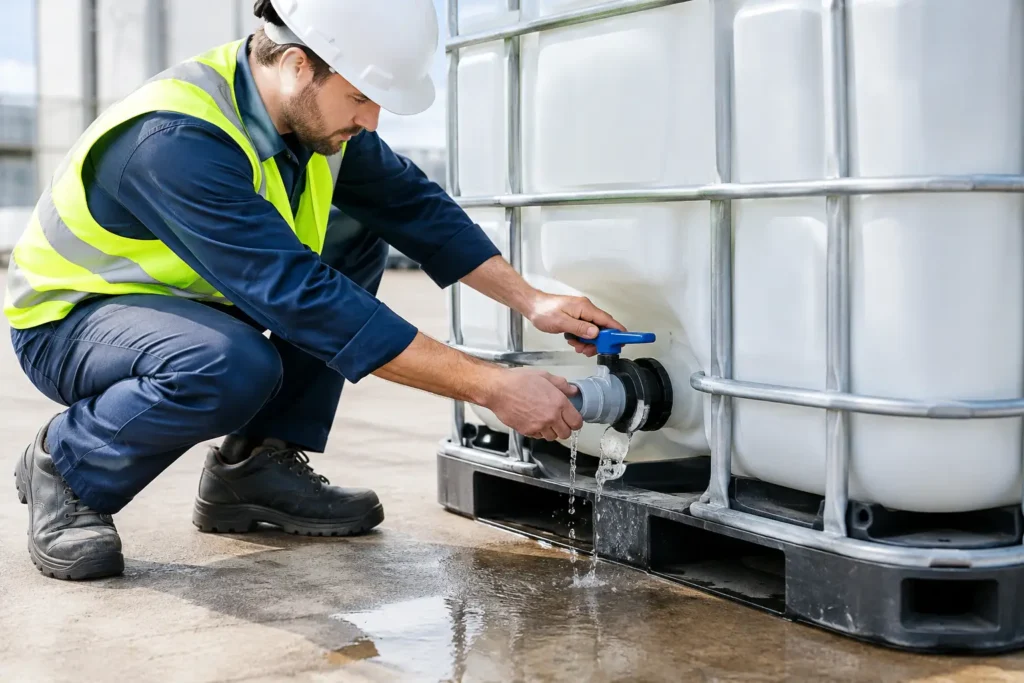
Once the area is controlled, identify where the leak is coming from. A loose bung, split seam, damaged tap, puncture, cracked lid or failed IBC valve each need a different response. Keep the container upright where possible. Tilting or rolling a damaged drum to inspect it can push liquid through a weak point and turn a manageable leak into a larger release.
If a bung or cap is loose and can be tightened safely, use the correct tool and avoid over-tightening plastic threads. Do not attempt to tape over an actively leaking pressure container, severely corroded drum or damaged chemical package. Temporary patches can fail under load, heat or chemical attack.
For a sound container with a small external leak, position it in an overpack drum, spill pallet or bund before dealing with residue. Place absorbent socks around the immediate leak path, then use the right pads or particulate absorbent to collect pooled liquid. Start at the outer edge and work inward so the spill does not spread under boots, trolley wheels or forklift tyres.
If the primary container cannot be safely sealed, transfer the product only when you have a compatible, labelled receiving container and trained operators. For many sites, the faster and safer option is to place the damaged package inside an appropriately sized salvage overpack and arrange controlled disposal or decanting in a designated area.
Match absorbents to the liquid
Selecting the wrong absorbent wastes response time and can create a compatibility problem. Keep spill response equipment separated by application so crews can act without guessing.
Oil and fuel spills need hydrophobic polypropylene absorbents. They repel water while taking up hydrocarbons, making them the practical choice around wash bays, marine areas, stormwater and wet workshop floors. Use oil-only pads, socks and boom for diesel, petrol, hydraulic oil and lubricants.
Chemical spills require chemical-rated absorbents and PPE matched to the SDS. Hazchem pads and socks are intended for a broad range of aggressive liquids, but no absorbent replaces a compatibility check. Acids, alkalis, oxidisers and solvents may also need neutralisers or specialist handling controls.
General workshop leaks from coolants, water-based fluids or non-aggressive liquids can be managed with general-purpose absorbents. These are useful for day-to-day maintenance, but they are not the default choice for unknown chemicals or fuel near water.
Keep enough stock to build containment around the largest credible leak, not just the smallest bottle in the storeroom. A 20L vehicle bag is useful behind the driver’s seat or in a ute tray. A 120L or 240L wheelie bin spill kit gives workshops, depots and loading zones far more capability when a drum, battery bank or hydraulic line fails.
Use secondary containment that fits the container
Absorbents clean up a release. Bunding prevents the release from travelling in the first place. Every drum, IBC or decanting point with a credible leak risk should have a containment plan before stock arrives.
For 205L drums, use drum bunding with enough capacity for the stored volume and the relevant site requirements. For IBCs, select an IBC bund or pallet designed for the full 1,000L container weight and expected containment capacity. Check load ratings, chemical compatibility, forklift access and whether rainwater can accumulate in outdoor locations.
Collapsible bunds are a strong option for mobile plant, civil works, emergency maintenance and remote refuelling. Set them up on stable ground, keep sharp objects away from the liner, and ensure vehicles or containers sit fully inside the bund wall. A bund that is too small is not partial protection – it simply shifts the spill beyond its boundary.
Do not store leaking containers directly on bare concrete, timber pallets or racking. Liquid can migrate underneath, reach drains, damage coatings and remain hidden until the next inspection. Move the package into containment, label the hazard, and quarantine it from serviceable inventory.
Select the right equipment for the response
A secure response point needs more than a few loose pads. Build your equipment around the container types, liquids and locations on your site.
- Small containers and vehicle leaks: 20L to 50L spill kits, drain protection, disposable bags, gloves and compatible pads.
- Workshop and warehouse drum leaks: 120L to 240L spill kits, absorbent socks, overpack drums, drum bunding and clear waste labels.
- IBCs and bulk liquid areas: IBC bunds, larger chemical or oil-only kits, drain covers, transfer equipment and a defined quarantine zone.
- Transport and field crews: compact vehicle kits secured in the cab storage, side box or ute tray, with enough absorbent for a first-response release.
Check kits after every use and on a scheduled inspection cycle. Replace used pads, contaminated socks, gloves, disposal bags and drain covers immediately. An empty spill kit cabinet creates false confidence and leaves supervisors exposed when the next incident occurs.
Secure the package for transport and disposal
A container that has leaked once should not be returned to normal handling without inspection. Cap or close it where safe, place it in secondary containment, and keep it upright during internal transport. Use a drum trolley, pallet jack or forklift only if the container is stable and the handling method suits the load.
Label the damaged package and its overpack with the contents, hazard information and date. Segregate incompatible materials. Do not mix collected waste from oils, solvents, acids and unknown liquids into one drum simply to save space. Disposal requirements depend on the substance and your state or territory rules, so retain the SDS and waste documentation.
If the leak occurred from poor stacking, UV degradation, corrosion, impact damage or an unsuitable tap, fix that underlying issue before replacing stock. Review receiving checks, storage layout, bund capacity and inspection frequency. This is where a single incident becomes a practical improvement rather than a repeat event.
Keep procurement ready before the next leak
Fast response depends on having the right equipment on site, not on an urgent search after liquid reaches the floor. Standardise the kits and bunding used across workshops, fleets and depots so crews recognise the contents immediately. Keep refill components close to high-risk work zones and set minimum stock levels for pads, socks, drain protection and waste bags.
Spillkits.com.au supports busy commercial and government buyers with rapid nationwide dispatch, purchase order acceptance and itemised GST for products and freight. Select the right kit, size bunding for the containers you actually store, and equip your fleet before the next damaged drum puts people, drains and operations at risk.
A leaking container is a time-critical test of site readiness. Give your crew compatible absorbents, reliable secondary containment and a simple response procedure, then keep those supplies ready to deploy.
Relevant products: Explore 2 Drum Spill Pallet Bund and Contaminated Waste Bags to select equipment suitable for your site and the liquids involved.