Blog
How to Deploy Drain Mats Before a Spill Reaches Drains
Sep
A spill only needs seconds to reach an unprotected stormwater grate. Once oil, coolant, chemicals or wash-down water enter the drain, a routine workshop incident can become an environmental response, a clean-up cost and a compliance problem. Knowing how to deploy drain mats gives your crew an immediate barrier while the source is stopped and the spill is contained.
Drain mats are not a substitute for controlling the leak. They are the first line of defence between a spill and the drainage system. Keep them accessible at loading docks, wash bays, refuelling areas, maintenance workshops, chemical stores and any hardstand where rain can carry contaminants to a drain.
Act Before the Spill Reaches the Grate
When a spill occurs, protect people first. Isolate the area, assess the material and stop the source if it is safe to do so. Do not hose product towards a drain and do not allow staff to sweep contaminated material into grates. Deploy the drain mat immediately, then build containment around the spill with absorbent socks, pads or loose absorbent suitable for the liquid involved.
For fuel, oil and hydraulic-fluid incidents, hydrophobic polypropylene absorbents are usually the right response media because they repel water while absorbing hydrocarbons. For unknown liquids, acids, solvents or other hazardous chemicals, use compatible chemical absorbents and confirm the material against the product safety data sheet. Keep appropriately selected heavy-duty spill kits close to every high-risk work area so crews are not searching for equipment while runoff spreads.
A drain mat works best when the surface is reasonably clean, flat and dry. If rainwater is already flowing across the grate, use upstream absorbent socks or a temporary bund to slow the flow, then seat the mat firmly over the drain.
How to Deploy Drain Mats in 6 Steps
1. Identify the drain and the liquid
Confirm whether the drain connects to stormwater, trade waste or another system. Treat every outdoor grate as stormwater unless site plans confirm otherwise. The liquid matters too. A drain mat creates a physical seal, but the surrounding response equipment must match the spill type.
If the substance is unknown, use the site emergency procedure, wear suitable PPE and prevent entry to the drain first. Escalate immediately where the spill presents a fire, vapour, toxicity or environmental risk.
2. Select a mat larger than the opening
The mat must extend beyond all sides of the grate or drain opening. A small mat placed directly over a large grate can lift at the edges and allow contaminated water underneath. Measure your common drain sizes before ordering and keep the appropriate mat size at each response point.
Allow extra coverage for uneven concrete, damaged grates and drains located on a slope. A flexible, tacky drain mat is generally better for irregular surfaces because it conforms around the grate. For channels, long trench drains or wide pits, you may need multiple mats with overlap, or a larger drain cover and bunding arrangement.
3. Clear loose debris without spreading contamination
Remove leaves, gravel and dry debris from the immediate sealing area where safe. The underside of the mat needs contact with the ground to form an effective barrier. Do not lift a contaminated grate or disturb pooled liquid just to make the area look tidy.
If product is already sitting on the drain, approach from the clean side. Place absorbent socks around the area first to limit further movement, then cover the drain with the mat.
4. Place the mat from the centre out
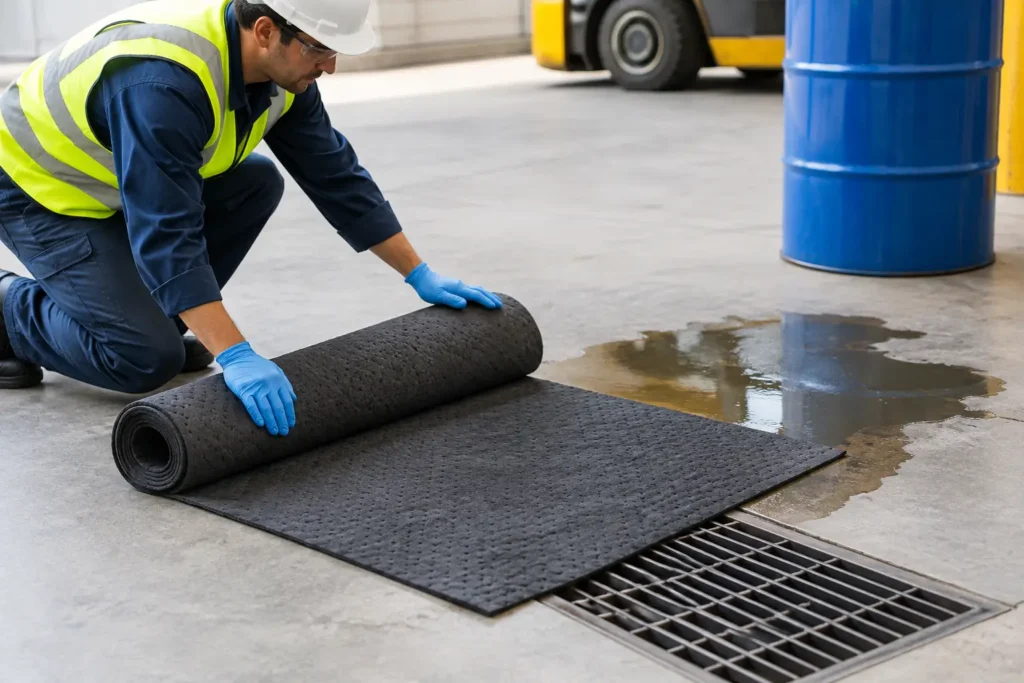
Carry the mat flat where possible. Position it over the centre of the grate, then lower it steadily from one edge across to the other. Avoid dropping it onto the surface, as this can trap debris or splash liquid.
Press the mat down across its full surface, working from the centre towards the edges. Use gloved hands or firm foot pressure where site procedures allow. Check that all edges are in contact with the ground and that no wrinkles, stones or raised grate corners are creating a path underneath.
5. Build secondary containment around it
The mat seals the drain, but it does not contain the entire spill. Use absorbent socks to form a perimeter around the affected area and place pads directly on pooled liquid. For a larger leak from a drum, IBC, plant item or vehicle, add portable spill bunds to hold the product while recovery takes place.
Keep the drain mat in position until the spill is fully absorbed, recovered or transferred into a suitable salvage container. Removing it too early can release residual product into the drainage system.
6. Inspect, recover and restock
Once the incident is controlled, carefully lift the mat from a clean edge. Inspect both the mat and the ground beneath it for contamination. Reusable mats should be cleaned only in accordance with the manufacturer instructions and your waste procedures. Disposable, damaged or heavily contaminated mats must be managed as contaminated waste.
Record the incident, identify why the spill occurred and replace every used absorbent, sock and drain-protection item immediately. A depleted spill station creates the same exposure as having no response equipment at all.
Choose the Right Drain Mat for the Site
Drain mat selection comes down to drain dimensions, surface condition, likely spill volume and where the equipment will be stored. Do not buy one small universal mat and assume it will protect every drain across a depot or facility.
| Site Condition | Practical Drain Protection Approach |
|---|---|
| Standard outdoor stormwater grate | Flexible mat that extends well beyond all grate edges |
| Trench drain or wash-bay channel | Long-format cover, overlapping mats or channel-specific containment |
| Uneven concrete or pavers | Flexible mat with additional socks to control bypass risk |
| High-flow loading dock or refuelling area | Drain mat stored with absorbent socks, pads and a larger spill kit |
| Large drum or IBC storage zone | Drain protection supported by bunding and compatible absorbents |
For workshops and fleet yards, place drain mats in clearly marked spill-response points near service bays and external drains. For civil crews and transport operators, include a compact mat in vehicle response equipment where roadside or remote work exposes crews to unfamiliar drainage layouts. A 20L vehicle kit may manage a small leak, but a busy maintenance area generally needs larger site-based capacity and dedicated drain protection.
Common Drain Mat Deployment Failures
The most common failure is deploying the mat after the spill has already travelled through the grate. Train crews to identify nearby drains before work begins, especially when decanting fluids, refuelling plant or handling damaged containers.
Other failures are just as avoidable:
- Using a mat that is too small to cover the drain and surrounding seal area.
- Placing the mat over dirt, stones or uneven debris that prevents contact.
- Leaving the spill source active while focusing only on the drain.
- Using incorrect absorbents for corrosive chemicals or unknown liquids.
- Failing to replace used equipment after an incident or training exercise.
Outdoor sites need additional planning. Heavy rain can create fast surface flow and can overwhelm a small response if workers wait for approval or equipment. Stage drain mats and absorbents at the point of risk, not in a distant storeroom. At fuel islands, wash bays and loading areas, assess drainage before each shift and make sure the response station is not blocked by stock, vehicles or locked access.
Make Drain Protection Part of Everyday Readiness
Drain mats are most effective when they are part of a complete containment plan. Review your site layout, map every stormwater inlet and position equipment according to the most likely spill path. Use spill bunds beneath drums and IBCs to prevent leaks reaching the hardstand in the first place, and keep drain mats ready for transfer areas, vehicle movements and emergency overflow protection.
For procurement teams, standardise drain-mat sizes across similar sites and add replacement units to your routine consumables order. Check that purchase orders can be accepted, GST is itemised for products and freight, and stock can be dispatched quickly to regional depots as well as metro facilities. Fast nationwide dispatch matters when a compliance gap has been identified and the next wet-weather event is approaching.
Train staff with the actual equipment they will use. A two-minute practical demonstration — identify the drain, place the mat, build a sock perimeter and notify the supervisor — is more useful than a folder of procedures nobody can find during a spill. Equip your crew before the next leak tests your site response.
Related equipment: 600mm Drain Warden Filter.