Blog
Drain Mats Versus Inflatable Plugs for Spill Control
Oct
A hose bursts beside a grated drain, diesel begins tracking across the concrete, and the first minute decides whether you have a contained spill or a reportable environmental incident. When comparing drain mats versus inflatable plugs, the right choice comes down to one question: are you stopping contamination at the surface, or isolating the drainage pipe itself?
For workshops, depots, warehouses, civil sites and fleet yards, both products have a place in a practical spill response plan. Select the wrong one, however, and runoff can reach stormwater before your team has deployed absorbents. Secure your drain protection before the next transfer, washdown or vehicle leak puts your operation under pressure.
Drain mats versus inflatable plugs: the operational difference
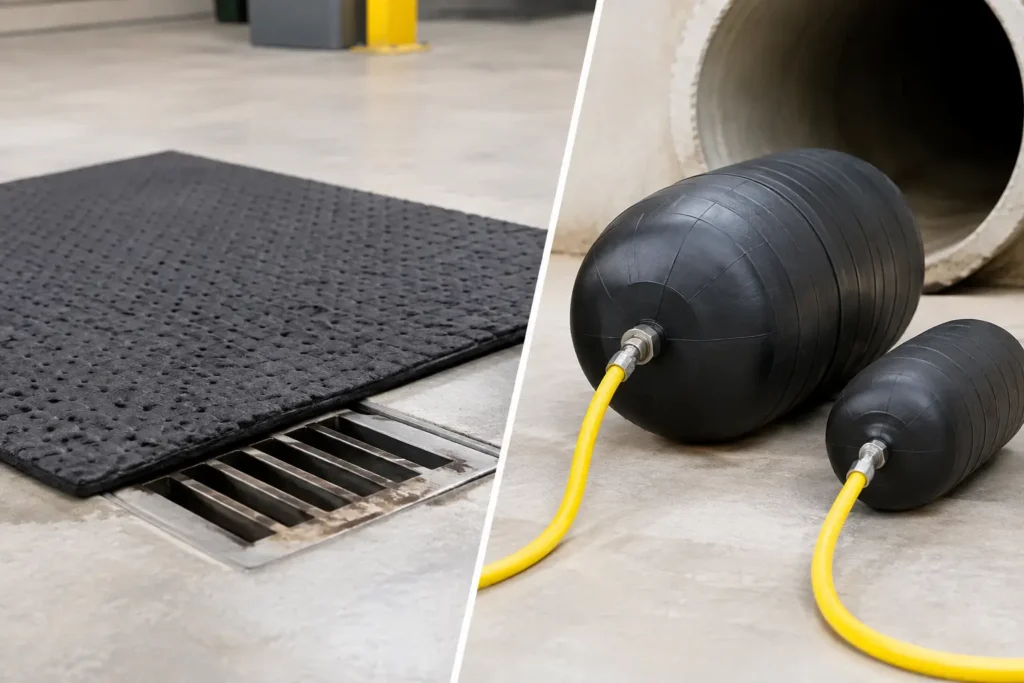
A drain mat is a flexible cover placed directly over a drain grate or opening. Most are made from chemical-resistant polyurethane and use their own weight and tacky underside to form a temporary seal against a smooth, clean surface. It is the fast, visible option for surface spills where liquid is moving towards a nearby drain.
An inflatable drain plug is inserted into a pipe, culvert or drain opening, then inflated to block the internal flow path. Rather than covering the grate from above, it creates a seal inside the drain line. This makes it suited to incidents where surface access is poor, the grate has been removed, or contaminated liquid has already entered a pit or pipe.
The distinction matters during an emergency. A drain mat can be deployed in seconds by a crew member wearing suitable PPE. An inflatable plug requires the correct diameter, insertion depth, inflation equipment and a clear understanding of potential backflow. It is a more specialised control, but it can provide a stronger isolation point where a surface cover is not enough.
| Factor | Drain mat | Inflatable plug |
|---|---|---|
| Primary use | Covers a drain from the surface | Seals a pipe or drain internally |
| Deployment speed | Very fast | Fast with trained staff and correct equipment |
| Best for | Grated drains and immediate runoff control | Pipes, culverts, pits and internal drain isolation |
| Sizing | Must exceed the drain opening | Must match the internal pipe diameter |
| Main limitation | Needs a clean, reasonably flat sealing surface | Can create upstream liquid build-up and pressure |
Choose a drain mat when speed is the priority
Drain mats are the frontline control for exposed stormwater grates around loading areas, vehicle wash bays, chemical stores and fuel handling zones. Keep them rolled or stored flat near the risk point, not locked in a distant storeroom. If a spill occurs, place the mat over the drain first, then contain and recover the liquid with compatible absorbents.
They work particularly well where your team needs a simple instruction: cover the drain, stop the spread, notify the supervisor. A correctly sized mat should extend beyond every edge of the drain opening. A small mat over a large grate leaves a direct pathway for contamination, especially when liquid is flowing quickly across sloped concrete.
Drain mats are not designed to solve every drainage problem. Rough asphalt, broken concrete, uneven grates, heavy debris and standing water can compromise the seal. If your yard has irregular surfaces, conduct a practical fit check before an incident. Place the mat on the actual drain, confirm the coverage, and make sure the response crew knows where it is stored.
For oil and fuel releases, pair drain protection with hydrophobic polypropylene absorbents. These materials repel water while absorbing hydrocarbons, helping crews recover diesel, petrol, lubricants and hydraulic oil without filling every pad with rainwater. For unknown liquids, acids, coolants or solvents, select compatible general purpose or chemical absorbents and review your site procedures before deployment.
Select inflatable plugs for internal isolation
Inflatable plugs are a stronger option when the drain itself must be isolated. They are often used in larger drainage lines, culverts, pits or maintenance situations where a mat cannot form a reliable surface seal. They can also be valuable where a spill has passed the grate and you need to stop contaminated water moving further through the system.
Sizing is critical. Measure the internal diameter of the pipe, not the visible drain grate. Plug ranges typically cover a stated minimum and maximum pipe diameter, and forcing an incorrectly sized plug into a line can damage equipment or fail to seal. Record drain dimensions on your site plan so procurement is not trying to measure pipes during an emergency.
Inflation must be controlled. Once an internal drain is blocked, water, washdown fluid or spilled product can build up behind the plug. That creates a backflow risk at pits, floor drains and low points. Your response plan should identify where liquid will collect, how it will be pumped or recovered, and who has authority to isolate the area.
Do not treat an inflatable plug as a fit-and-forget device. Inspect it before use, follow the manufacturer’s pressure limits, use suitable inflation equipment, and keep personnel clear of potential release points. For complex drainage networks or significant hazardous materials incidents, escalate immediately through your emergency response process.
Match the control to the site risk
A busy transport depot may need both. Drain mats provide immediate coverage for exposed yard grates during refuelling and vehicle servicing. Inflatable plugs provide a second line of defence for larger pipe runs or downstream isolation. This layered approach gives crews a simple first action while supervisors manage recovery and containment.
Consider the type of liquid, drain layout, surface condition and likely spill volume. A 20-litre hydraulic leak near a workshop drain needs fast surface protection and absorbent pads. A failed 205L drum transfer beside a stormwater pit may require drain coverage, absorbent socks to divert the flow, and additional bunding to prevent migration. A major release entering a culvert may demand internal isolation, pumping and specialist incident support.
Your equipment selection should also reflect weather. Outdoor drain mats can be deployed quickly in rain, but flowing water may carry contaminants around an undersized or poorly seated cover. In wet-weather operations, position absorbent socks or temporary barriers uphill of critical drains where practical. Reduce the amount of liquid reaching the protection point in the first place.
Build a drain response station that crews can use
Drain protection only works if it is accessible, sized correctly and included in site drills. Store drain mats close to high-risk areas in protective packaging that keeps them clean and ready. Keep inflatable plugs with the relevant inflation accessories, pipe-size records and operating instructions.
A capable response station generally needs more than one item. Stock drain covers, absorbent pads, absorbent socks, disposal bags, PPE and clear temporary signage together. For sites handling fuels, oils or hydraulic fluids, maintain dedicated oil and fuel spill kit capacity. Where chemicals are stored or transferred, select chemical spill response equipment that is suitable for the substances on site.
Check stock after every incident and during routine inspections. A missing drain mat, depleted absorbent bin or damaged plug turns a minor leak into unnecessary downtime. Refill components early and keep enough capacity for the credible worst-case spill, not just the smallest routine drip.
Procurement checks before you order
Buyers should confirm four details before selecting drain controls: drain grate dimensions, internal pipe diameters, surface condition and the liquids handled nearby. These details remove guesswork and make it easier to standardise equipment across multiple facilities.
For multi-site operators, create a simple drain register showing each location, drain type and assigned protection method. Standardising the same mat sizes and plug ranges across similar depots reduces training time and prevents incompatible emergency stock turning up on site.
Spillkits.com.au supports commercial, government and industrial procurement with rapid nationwide dispatch, purchase order acceptance and itemised GST for products and freight. Equip your fleet, workshop or depot with drain protection before a spill tests your response plan.
The best drain control is the one your crew can reach, fit and deploy without hesitation. Put surface mats where runoff starts, reserve inflatable plugs for the lines that need internal isolation, and keep the recovery equipment beside them.
Relevant products: Explore 600mm Drain Warden Catch Basin Filter and 900mm Drain Warden Catch Basin Filter to select equipment suitable for your site and the liquids involved.