Blog
Spill Berm Versus Bund: Which One Fits Your Site?
Oct
A spill berm versus bund decision is not a terminology exercise. It determines whether a leaking drum, IBC valve failure or plant refuelling incident stays contained or reaches a drain, hardstand edge or soil. Select the wrong system and your crew may lose valuable response time while your site faces clean-up costs, downtime and possible compliance action.
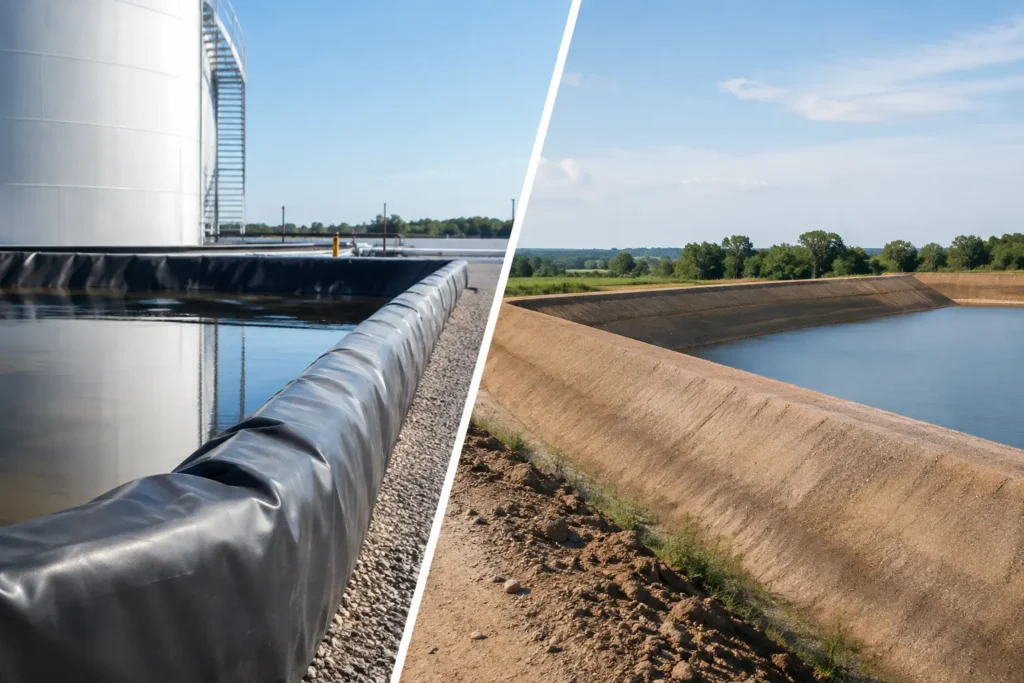
For busy workshops, depots, warehouses and civil sites, the practical distinction is simple: a berm is usually a portable, low-profile containment area, while a bund is generally a fixed or rigid secondary containment structure. Both have a place. The right choice depends on what you store, where the work occurs, the volume at risk and whether vehicles must cross the containment boundary.
Spill Berm Versus Bund: The Working Difference
A spill berm is a temporary or relocatable containment solution. It commonly uses heavy-duty PVC, polyurethane or similar chemical-resistant fabric with raised sidewalls. Some have foam walls that spring back into shape after a vehicle drives over them. Others use removable brackets, wall supports or drive-through ramps.
Use a spill berm where the work moves. A wash bay setup, mobile maintenance crew, temporary chemical transfer point, plant refuelling zone or emergency isolation area can all benefit from fast-deploy containment. It folds down when the job is complete, making it practical for contractors, fleet teams and sites with limited permanent space.
A bund is a more permanent containment barrier around stored liquids. It may be a moulded polyethylene spill pallet, a steel bunded store, a concrete bunded area or a rigid containment platform for drums and IBCs. Its purpose is to capture leaks from containers during routine storage, dispensing and handling.
The key difference is operational intent. Berms manage changing work locations and intermittent activities. Bunds control the ongoing risk created by stored hazardous substances. Do not treat them as interchangeable simply because both hold liquid.
Choose a Spill Berm When Work Moves
A spill berm is usually the faster answer when equipment, vehicles or temporary tasks create the spill risk. It establishes a defined containment zone without construction work or a permanent footprint.
For example, a fleet workshop may use a drive-through berm for servicing trucks with known hydraulic leaks. A civil contractor can deploy one beneath a diesel-powered pump during a remote project. A warehouse can position a portable berm around a damaged pallet while the stock is isolated and transferred.
The benefits are speed and flexibility, but there are trade-offs. Fabric berms can be punctured by sharp debris, dragged by tyres if incorrectly positioned, or overloaded if the expected spill volume has not been calculated. They also need a clean, reasonably level surface. A berm placed across cracked asphalt or rough rubble may allow liquid to escape underneath.
Select a model with enough internal capacity for the credible spill, not just the container size. Allow for rainwater where the berm will sit outdoors, and confirm that its wall design suits vehicle movements. Foam-wall berms make access easy but may not suit every chemical or high-volume containment task.
If the purpose is first response rather than ongoing capture, position compatible absorbents and drain protection beside the berm. Oil and fuel incidents need hydrophobic polypropylene absorbents that repel water and lift hydrocarbons. Chemical incidents need suitable hazchem absorbents and personnel who understand the substance’s safety data sheet.
Choose a Bund for Routine Storage
For drums, IBCs and decanted chemicals that remain on site, install a bunded storage solution. This is the dependable choice for controlling slow leaks, split bungs, failed taps and dispensing drips before they migrate across your floor.
A two-drum spill pallet, four-drum bund or IBC bund keeps containers elevated above the captured liquid. That protects the container from sitting in spilled product and gives staff a clear visual signal that maintenance is required. For corrosives, fuels, oils and other hazardous liquids, material compatibility matters as much as capacity. Polyethylene is widely used because it resists many common chemicals, while steel may be selected for particular industrial applications.
When you are sizing a bund, start with the largest vessel and the total stored volume. Australian requirements vary by substance, storage arrangement, site type, relevant Australian Standards, environmental authority rules and insurer expectations. A common design approach is to provide containment for at least 110 per cent of the largest container or 25 per cent of the aggregate volume, whichever is greater. Confirm the requirement that applies to your material and premises before ordering.
Do not forget practical details. A bund that is technically large enough but blocks forklift access, creates an awkward decanting height or lacks a safe drainage strategy will be bypassed by staff. Choose low-profile bunds for hand-trolley access, ramps where required, and covered storage where rain could consume available containment capacity.
Match Containment to the Actual Spill Risk
The fastest way to select between a berm and a bund is to assess the operation rather than the product label. Ask four direct questions:
- Is the liquid stored in one location every day, or used at changing work points?
- What is the largest credible release, including hose contents and connected equipment?
- Will forklifts, utes, trucks or plant need to cross the containment area?
- Could spilled liquid reach stormwater, soil, a doorway, neighbouring tenancy or public drainage?
A fixed drum store with 205 L drums calls for a bunded pallet or purpose-built bunded cabinet area. A maintenance team servicing machinery at different client sites needs a portable spill berm plus an appropriately sized vehicle spill kit. A chemical transfer bay may need both: a permanent bund beneath the storage containers and a deployable berm around a temporary transfer operation.
That combined approach is often the most defensible. Secondary containment prevents an incident from spreading, while response equipment stops the released liquid from remaining on the floor. Equip the area with absorbent socks to contain flow, pads for recovery, disposal bags and a drain cover where water entry is possible.
Capacity Is Only Useful if It Is Available
Containment capacity disappears when a bund is full of rainwater, old absorbents, loose packaging or unremoved residue. This is a common site failure because the equipment was purchased correctly but not maintained as part of normal operations.
Inspect bunds and berms on a planned schedule. Check for cracks, punctures, UV damage, collapsed walls, compromised seams and blocked access. Remove accumulated liquid only after identifying it. Treat unknown fluid in a bund as potentially contaminated, not as clean water suitable for discharge.
For portable berms, inspect before every deployment. Clear stones, screws and sharp metal from the setup area. Set the berm level, unfold walls fully and position absorbents before any transfer or maintenance work begins. If it is outdoors, monitor weather conditions and do not assume the stated capacity remains available after rainfall.
Avoid These Procurement Mistakes
Buying on footprint alone is risky. A compact bund may fit neatly under containers but have insufficient sump capacity. Conversely, a large berm may be difficult to deploy quickly if it is too heavy for one person or requires wall supports that are rarely kept with the unit.
Avoid using a general-purpose tarp as a containment system. It has no engineered sidewalls, controlled capacity or reliable vehicle access. Also avoid relying on a spill kit as your only containment measure for bulk storage. Absorbents are essential response equipment, but they are not a substitute for correctly sized secondary containment.
Keep product compatibility front of mind. Diesel, lubricants, acids, solvents, coolants and agricultural chemicals can require different containment materials and absorbent types. Where flammable liquids are stored, separate containment planning from fire-risk controls and use suitable flammable storage equipment where required.
Order for Site Readiness, Not the Next Audit
Build a containment setup that your team can use at 2 pm during a rushed delivery, not one that only looks compliant on a spreadsheet. Put bunds under routine liquid storage. Deploy spill berms where temporary work, mobile plant or vehicle servicing creates a shifting risk. Keep replacement absorbents, drain covers and disposal supplies close enough to reach immediately.
For procurement teams, specify the liquid type, largest container volume, number of containers, available footprint, vehicle access and outdoor exposure in the purchase request. This prevents costly reorders and gives site supervisors equipment that fits the task on arrival. Purchase orders, itemised GST documentation and rapid nationwide dispatch help keep urgent compliance purchases moving without administrative delays.
Secure containment before the next delivery, maintenance job or wet-weather event turns a minor leak into a reportable incident. Select the system your crew will actually deploy, inspect it regularly and keep the response gear beside it.
Relevant products: Explore Collapsible Bund 2m x 2m and 2 Drum Spill Pallet Bund to select equipment suitable for your site and the liquids involved.