Blog
Oil Sorbents Comparison for Faster Spill Response
Sep
A leaking hydraulic hose beside a wash bay can turn a small maintenance issue into an environmental incident within minutes. This oil sorbents comparison gives site teams a fast way to match absorbent media to the spill, the surface and the response time available. Select the wrong product and crews waste capacity soaking up water, leave sheen behind, or run short before the area is safe to reopen.
For workshops, depots, civil sites, marinas and transport fleets, the priority is clear: isolate the source, protect drains and deploy oil-only sorbents that keep working around water. Stock the right format before the leak happens, not after your site has lost time and control.
Start with what oil sorbents are designed to handle
Oil-only sorbents are hydrophobic and oleophilic. In practical terms, they repel water while attracting and retaining petroleum-based liquids. They are built for diesel, petrol, engine oil, hydraulic oil, lubricants, kerosene and many other hydrocarbon spills.
That makes them the right operational choice for outdoor hardstands, loading areas, stormwater-adjacent work zones, boat ramps and wash bays. If rainwater, puddles or surface water are present, oil-only media directs its absorption capacity to the contaminant rather than becoming saturated with water.
Do not use oil-only absorbents as a catch-all for every liquid. Coolant, detergents, acids, solvents and unknown chemicals may require general-purpose or chemical absorbents instead. Check the product safety data sheet, identify the liquid, and equip the response team with suitable PPE before cleanup begins.
Oil sorbents comparison by format
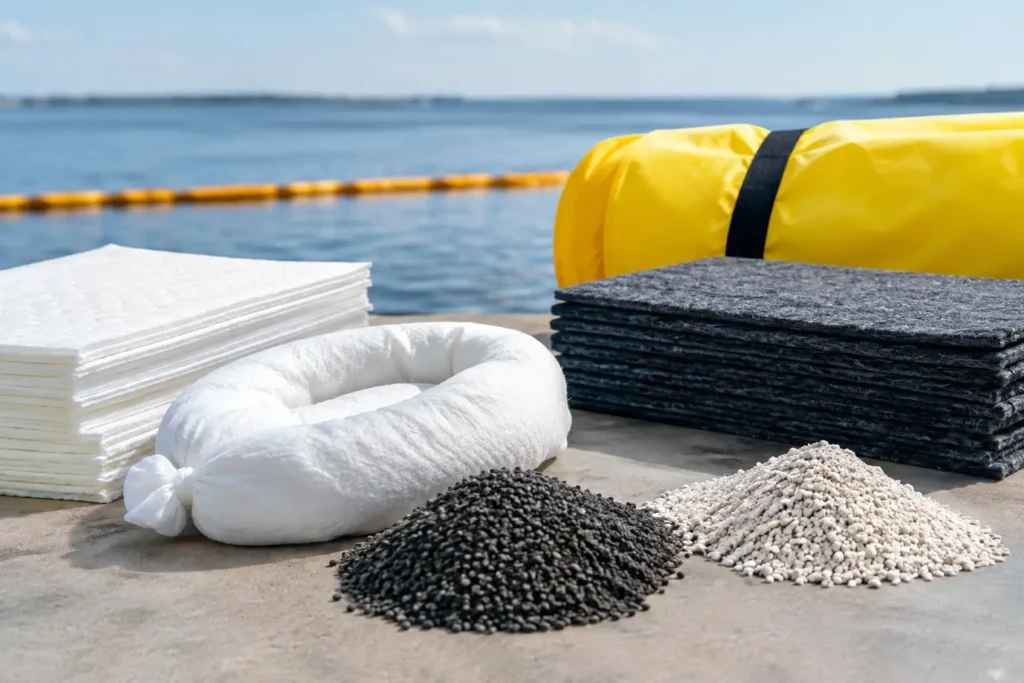
The best format depends on where a spill starts and how it can travel. Pads remove liquid from flat surfaces. Socks stop flow. Pillows hold concentrated leaks. Rolls cover broad work areas. Booms control oil on water or at drainage edges.
| Sorbent format | Best use | Operational advantage | Key limitation |
|---|---|---|---|
| Pads | Workshop floors, benches, under machinery | Fast, precise pickup for drips and small spills | Slower for large pooling spills |
| Rolls | Long work zones, walkways and preventative coverage | Cut to size and cover wide areas quickly | Needs secure storage to stay clean and dry |
| Socks | Around equipment, drains and spill edges | Creates a barrier to contain spread | Does not replace drain protection or bunding |
| Pillows | Under leaking drums, pumps and valves | High capacity in a compact footprint | Not ideal for sweeping a broad surface |
| Booms | Water, pits and drainage approaches | Helps contain and recover floating hydrocarbons | Requires correct deployment and anchoring |
Pads: the everyday workshop essential
Oil absorbent pads are the fastest option for routine drips, hose failures and small vehicle leaks. Keep packs beside service bays, fuel storage areas and plant maintenance zones so crews can act before oil reaches a drain or footpath.
Choose heavier-weight pads where oil pools beneath machinery or vehicles. Lighter pads suit preventative placement beneath small fittings and oil filters during servicing. The trade-off is straightforward: heavier pads generally offer greater durability and capacity, while lighter pads are more economical for frequent low-volume use.
Rolls: cover more ground with less handling
Oil sorbent rolls suit large workshops, warehouse dispatch areas and maintenance lines where leaks are recurring rather than isolated. A roll can be cut to length and laid under forklifts, generators, plant or drum decanting points.
They also help reduce slip risk while work continues around minor seepage. Do not treat a roll as a substitute for fixing the source. Use it to stabilise the area, then isolate the leak and organise repair.
Socks and pillows: contain first, absorb second
Socks are a first-response control for preventing migration. Position them around a spill perimeter, across a doorway, along a kerb line or in front of a drain approach. Place pillows at the source, such as beneath a leaking 205L drum tap, hose coupling or hydraulic connection.
This pairing is highly effective for a fast-moving spill: socks contain the footprint while pillows and pads remove the pooled liquid. For a drain at immediate risk, deploy a drain cover first, then use socks as a secondary barrier. Absorbents alone cannot guarantee stormwater protection.
Booms: select them for water and drainage risk
Oil-only booms are purpose-built for containing hydrocarbons on water. They are relevant at marinas, ports, construction sites near waterways, wash-down areas and sites with open pits. Their value is in controlling spread and allowing recovery before contamination moves beyond the site boundary.
Booms need room to work. Strong flow, wind, waves and poorly secured ends can allow oil to escape. For sites with credible water exposure, include boom deployment in the spill response plan and train the people expected to use it.
Select capacity based on credible spill volume
Do not size oil sorbents around the smallest drip your team has seen. Size them around the largest credible loss before isolation: a split hose, a ruptured filter, a damaged jerry can, a drum tap left open, or a vehicle sump failure.
A 20L vehicle spill kit suits a ute, light truck or mobile technician carrying small volumes of oils and fuels. It fits behind the driver’s seat or in the tray and gives drivers an immediate response option. A 50L to 120L kit is more suitable for workshops, mobile plant crews and localised fuel handling. For depot fuel areas, large maintenance facilities and active loading zones, a 240L wheelie-bin kit provides more absorption capacity, better visibility and easier movement to the incident.
Absorption ratings are useful, but do not buy on headline litres alone. Real-world performance changes with liquid viscosity, surface texture, rainwater, wind and how quickly the spill is contained. Build a margin into your kit and keep refill stock close to high-risk operations.
Match oil-only media with containment controls
Sorbents clean up a release. Containment systems reduce the chance of a release reaching soil, stormwater or work areas in the first place. Both are needed for practical site control.
Store drums, containers and decanting equipment in correctly sized spill bunds. Use drip trays beneath small plant and fluid transfer points. Protect exposed drains with covers where a spill could enter stormwater. Keep oil and fuel spill kits at the point of risk, rather than locked in a distant store room.
This layered setup gives crews clear actions under pressure: stop the leak if safe, cover the drain, contain the spread, absorb the liquid, collect contaminated material and arrange disposal according to the waste stream and local requirements. It also makes site inspections easier because controls are visible, accessible and ready for use.
Avoid the common procurement mistakes
The first mistake is ordering general-purpose absorbents for an outdoor oil risk. General-purpose media can absorb water, reducing the capacity available for hydrocarbons. Where rain, wash-down water or standing water are likely, oil-only media is usually the more efficient purchase.
The second is buying only pads. Pads are essential, but a spill can travel before a crew starts recovery. Add socks, drain protection and pillows so the kit can contain and absorb.
The third is leaving kits uninspected. A sealed cabinet or wheelie bin is not automatically response-ready. Check stock after every incident, replace used items immediately and confirm gloves, disposal bags and PPE remain available. Depleted refills create a compliance gap at the exact moment the site needs protection.
Finally, make procurement easy for the people responsible for readiness. Standardise kit sizes across similar vehicles and work zones, list replacement absorbents in your purchasing system, and order refills before critical stock is exhausted. For commercial and government buyers, purchase order acceptance, itemised GST for products and freight, and rapid nationwide dispatch reduce delays when replenishment cannot wait.
Equip the response point, not just the store room
An effective oil sorbent setup is positioned where oil can escape: beside service bays, near generators, at fuel transfer points, in mobile plant, and close to drainage risks. Label the kit clearly and make sure crews know which media is oil-only, general-purpose or chemical response equipment.
Choose pads for pickup, socks for control, pillows for concentrated leaks and booms where water is exposed. Then hold enough capacity for the credible spill, protect the drain and replace every used component without delay. That is how a spill response kit becomes operational protection rather than a box checked during an audit.