Blog
Which Absorbent Suits Diesel Spills on Site?
Oct
A diesel splash beside a bowser, a leaking 205L drum or a ruptured fuel line can turn into a drain contamination event within minutes. If you are asking which absorbent suits diesel spills, the direct answer is oil-only, hydrophobic polypropylene absorbent. It is designed to take up diesel and other hydrocarbons while repelling water, making it the practical choice for workshops, depots, transport yards and outdoor work areas.
Select the wrong media and crews lose time, stock is wasted and the spill can spread further than it should. Equip the spill point with the right oil and fuel response gear before the next delivery, service job or fleet incident.
Which absorbent suits diesel spills?
Use oil-only absorbents for diesel. These are commonly white polypropylene pads, rolls, socks, pillows and particulate loose absorbent formulated for oils and fuels. Their hydrophobic fibres attract hydrocarbons and resist water uptake, so they continue to perform around rainwater, puddles, wash-down areas and stormwater drains.
That water-repelling property matters. A general-purpose grey absorbent will usually pick up diesel, but it also absorbs water. On an outdoor spill, it can become saturated with rainwater or surface water before it has captured enough fuel. That means more material used, more waste to manage and less effective control at the source.
For most sites, build diesel response around oil-only pads for recovery, oil-only socks for containment and drain protection to stop fuel entering stormwater. Keep a suitably sized oil and fuel spill kit where diesel is stored, transferred, parked or serviced.
Match the absorbent format to the spill
The material type is only half the decision. Choose the format that matches how diesel is likely to escape and where it can travel.
Pads and rolls for flat, hard surfaces
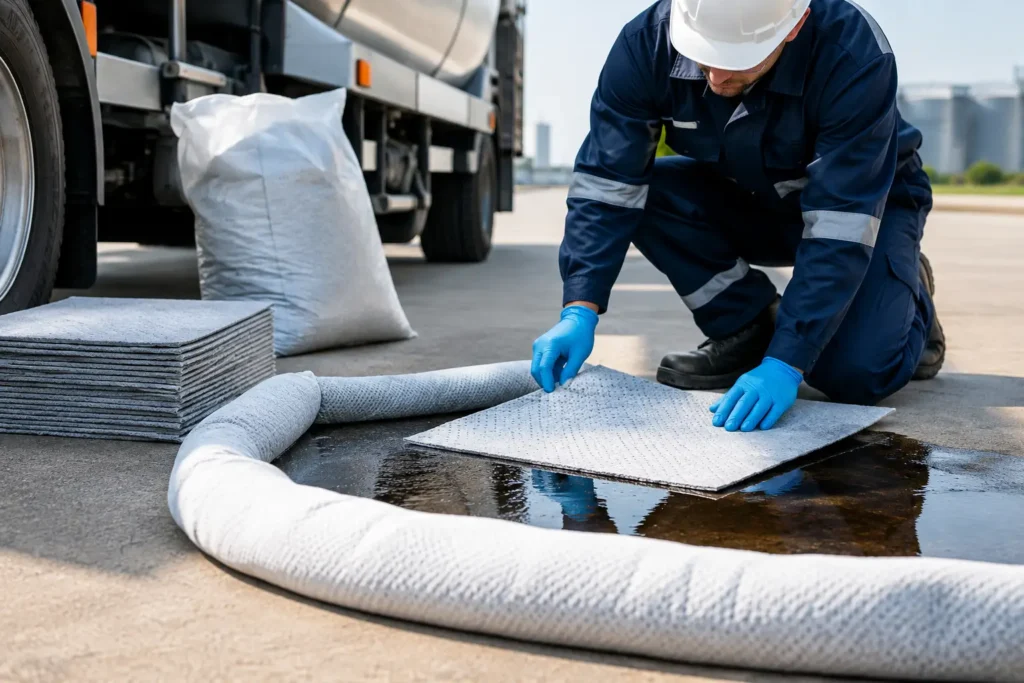
Oil-only pads are the first-choice recovery media for drips, small leaks and pooled diesel on concrete, sealed hardstand or workshop floors. Lay pads from the outside edge towards the centre so the spill is not pushed outward by foot traffic or vehicle movement. Use Oil & Fuel Perforated Absorbent Rolls when the affected area is broad or irregular, such as beneath a leaking plant item or along a fuel transfer zone.
For diesel recovery, see our Heavy Duty Oil & Fuel Absorbent Pads. Pads are fast to deploy and easy to count when checking refill stock. They are also the sensible choice for placing beneath hose connections, filters and drum taps as a preventative measure.
Socks for stopping the spread
Oil-only absorbent socks create a physical barrier around the spill. Position them downhill, around the outer edge of the liquid and across likely flow paths. A sock will not replace bunding, but it buys your crew time and keeps diesel concentrated for recovery.
Use socks around drains, loading areas, workshop pits and the perimeter of a leaking drum. For larger risks, such as refuelling zones or bulk storage, consider a 1.2m Oil & Fuel Absorbent Boom alongside suitable fixed secondary containment. Do not rely on loose pads alone where diesel can reach a drain or leave the work area.
Pillows for persistent leaks and tight spaces
Oil-only pillows hold more liquid than a standard pad and stay in place under slow leaks. Put them beneath a damaged hydraulic fitting, under a diesel tank outlet, inside a bunded work area or below a leaking vehicle. They are especially useful where a pad would need frequent replacement.
A pillow is a response tool, not permission to defer repairs. Isolate the source, arrange repair or decanting, then replace saturated material before diesel escapes the containment area.
Loose absorbent for uneven ground
Loose absorbent can be useful on rough concrete, pavers, gravel and uneven outdoor surfaces where pads cannot make full contact. For diesel, choose an oil-only particulate product where available. Apply it carefully, allow time for uptake, then collect it with tools that will not spread contaminated residue.
Loose media is not the best first choice beside drains or in windy areas. Socks, pads and drain covers provide more controlled placement and faster containment.
Do not confuse oil-only with general-purpose or chemical media
A stocked spill cupboard often contains several colours and formats. Make the choice clear for every shift.
Oil-only absorbents suit diesel, petrol, lubricating oil, hydraulic oil and many other hydrocarbons. General-purpose absorbents can handle a range of non-aggressive industrial liquids, including water-based fluids, coolants and some oils. They are useful for mixed workshop housekeeping, but are less efficient for a diesel spill exposed to water.
Chemical or hazchem absorbents are selected for acids, caustics and unknown hazardous liquids. They should not be your standard diesel response media unless the release includes another chemical hazard. If the liquid is unknown, stop, isolate the area and identify it before directing staff to clean it up.
Colour coding helps, but labels matter more. Mark cabinets, spill kit locations and refill shelves with the liquids they are intended to manage. This removes hesitation when an operator is standing beside a spreading fuel leak.
Control the spill before you absorb it
Absorbent is most effective after the source and travel path are controlled. Train crews to act in a simple order: stop the flow if safe, protect drains, contain the perimeter, recover the diesel, then report and dispose of used material correctly.
Shut valves, upright damaged containers or place a temporary catch container beneath the leak where safe to do so. Keep ignition sources away. Diesel has a higher flash point than petrol, but it remains a combustible fuel and a slip hazard. Restrict vehicle movement through the area and prevent tyres from tracking contamination across the site.
Drain protection needs to be within reach, not stored in a distant warehouse. A drain cover can provide immediate temporary sealing over a clean, smooth drain surface. Follow it with socks around the cover if diesel is already moving across the ground. For sites handling frequent fuel deliveries, install or maintain appropriate containment rather than treating every delivery as a spill-kit-only risk.
Size your diesel spill kit to the credible risk
A small vehicle bag such as the 15L Oil & Fuel Grab N Go Spill Kit is useful for minor leaks in a ute, service van or light plant crew, but it is not enough for a depot transfer point or workshop with multiple diesel-powered vehicles. Select capacity based on the credible spill volume, not the smallest kit that fits in a cupboard.
A 20L vehicle kit suits minor roadside drips and small service leaks. A 50L or 80L portable kit is a practical baseline for workshops and mobile maintenance teams. A 120L, 240L or larger wheelie-bin kit suits fuel storage zones, loading areas, larger workshops and fleet depots where a failed hose, drum or filter could release more volume.
Consider the number of locations too. One large kit at the gate does not protect a wash bay, a diesel tank, a maintenance shed and a remote parking area. Position response equipment where the risk occurs. Equip Your Fleet with vehicle kits, then support fixed locations with larger oil and fuel kits and dedicated refill stock.
Secure containment for drums, tanks and transfers
Absorbents manage the incident. Secondary containment reduces the chance of an incident escaping in the first place. Store diesel drums on suitable bunded pallets or spill bunds, and use portable containment where equipment is serviced or fuel is decanted away from fixed infrastructure.
Check the capacity of the container being stored, the number of containers in the area and the potential for rainwater accumulation outdoors. A 205L drum requires more than a tray placed underneath as an afterthought. The containment system must remain serviceable, accessible and free of unnecessary stored items.
During transfers, keep absorbent pads, socks and drain protection at arm’s reach. Inspect hoses, couplings and taps before starting. This is faster than stopping a job, isolating an area and organising an emergency delivery after a preventable release.
Replace used stock immediately
A spill kit is only compliant in practice when it is complete, accessible and ready to deploy. After any response, replace used pads, socks, PPE bags and disposal bags straight away. Check that instruction sheets remain legible and that staff know who has authority to arrange hazardous waste collection.
Dispose of diesel-contaminated absorbents according to the waste requirements that apply to your site and location. Do not place contaminated material in ordinary rubbish or wash residues into drains. Keep records required by your environmental procedures, especially after a significant spill or any release that reaches soil, water or drainage infrastructure.
For procurement teams, standardise the absorbent types and kit capacities across comparable sites. It simplifies inductions, reduces ordering errors and makes refill control far easier. Spillkits.com.au supports purchase orders, itemised GST for products and freight, and rapid nationwide dispatch so depleted response equipment does not stay depleted.
The best time to select diesel absorbent is before a driver notices a wet patch under the tank. Stock oil-only media at the point of risk, keep drains protected and give your crew equipment they can deploy without waiting for instructions.