Blog
Stormwater Inlet Protection Guide Australia
Oct
A stormwater inlet is the last point of control before sediment, hydrocarbons, wash-down water or chemicals leave your site. This stormwater inlet protection guide Australia gives depot teams, civil crews, workshop managers and procurement officers a direct selection path: identify the pollutant, protect the inlet, then stage spill response equipment where it can be deployed without delay.
A drain full of contaminated water is not a minor housekeeping issue. It can trigger clean-up costs, halt work, complicate environmental reporting and expose the business to regulatory action. Secure the inlet before the rain arrives, before the wash bay is used and before a vehicle leak becomes runoff.
Start with the inlet, not the clean-up
Stormwater protection works best when it is planned around how water moves across the site. Walk the hardstand, loading area, workshop apron, wash bay and waste storage zone after rain if possible. Identify every grated pit, kerb opening, trench drain and low point that receives runoff.
Then assess what could reach each inlet. A civil site may be managing loose soil, concrete slurry and sediment. A transport yard may face diesel, oil and coolant leaks. A warehouse or maintenance workshop may need to control hydraulic fluid, battery electrolyte, detergents or chemical residues. The right control depends on the contaminant and the flow conditions. A lightweight drain cover may be ideal for an emergency spill on a dry concrete floor, but it is not a substitute for sediment control during prolonged rain or active earthworks.
For fixed high-risk areas, combine inlet protection with source control. Store drums on secondary containment, keep waste containers closed, repair leaks promptly and position absorbents at transfer points. Inlets should be the final barrier, not the only barrier.
Stormwater inlet protection guide Australia: choose by hazard
Select equipment for the job your team actually performs. Do not buy a one-size-fits-all solution and assume it will cover every weather event, spill type and work area.
| Site condition | Primary risk | Practical inlet protection | Response equipment to stage nearby |
|---|---|---|---|
| Workshop, service bay or fleet depot | Oil, fuel, coolant and hydraulic fluid | Flexible drain cover or weighted drain seal for immediate isolation | Oil and fuel spill kit, absorbent pads and socks |
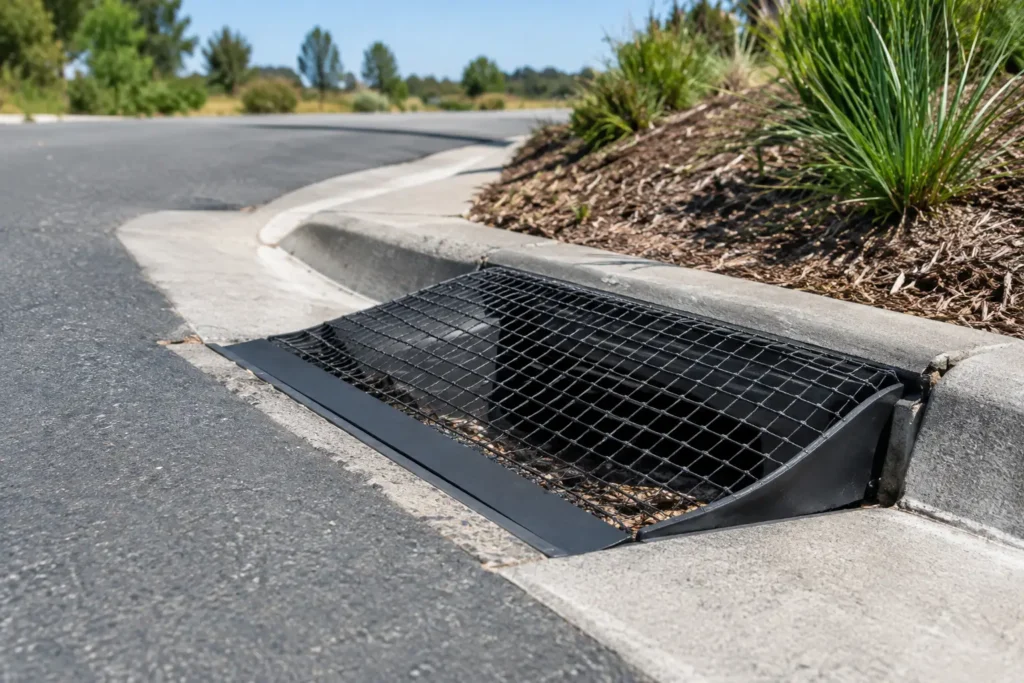
| Civil works or construction access | Sediment, silt, slurry and litter | Geotextile inlet filter, sediment trap or filter sock system | Broom, shovel, sediment bags and general-purpose absorbents |
| Chemical store or process area | Acids, alkalis, solvents or unknown liquids | Chemical-resistant drain cover and controlled isolation procedure | Chemical spill kit with compatible PPE and disposal bags |
| Loading dock and outdoor transfer point | Leaking drums, IBCs and rain-driven runoff | Drain cover plus bunded transfer area | General-purpose or chemical absorbents, drain seal and overpack |
| Wash-down bay | Detergent, oils and dirty wash water | Isolate stormwater inlet and direct water to approved treatment | Absorbent socks, pads and wash-water management controls |
For fuel and oil, use hydrophobic polypropylene absorbents. They repel water while taking up hydrocarbons, which makes them especially useful around wet outdoor areas and puddles. For mixed maintenance fluids where the liquid is known to be non-aggressive, general-purpose absorbents can be a practical choice. For acids, caustics and unknown chemicals, select chemical-rated absorbents and confirm compatibility before deployment.
Match the protection method to the weather
A clean, dry inlet gives you more options. A reusable rubber or polyurethane drain cover can be placed directly over the grate or opening to create a temporary seal during a spill. The cover must be large enough to extend past the perimeter of the inlet onto clean, reasonably smooth ground. Measure the full grate, including its frame, rather than guessing from the opening alone.
Heavy rainfall changes the decision. Fully sealing a drain can cause ponding, vehicle hazards or water entry into buildings if there is nowhere for stormwater to go. In these conditions, a sediment-control system that allows filtered water to pass may be the better choice. Civil contractors should specify controls based on the site erosion and sediment plan, local authority requirements and the expected rain event.
Do not use absorbent socks as a permanent drain filter. Socks are effective for diverting small spills and forming temporary barriers, but they can become saturated, displaced or overloaded in fast-moving water. Use them as part of an immediate response, then install the correct engineered or site-approved control.
Build a ready-to-deploy inlet protection station
The biggest failure is not choosing the wrong product. It is storing the right product too far from the hazard. A drain cover in a locked storeroom is of little value when diesel is moving across a hardstand after hours.
Position inlet protection equipment at workshop exits, fuel islands, loading docks, wash bays, chemical stores and outdoor maintenance areas. Each station should be visible, protected from weather where practical and inspected as part of normal site checks. Label it clearly so contractors and new starters can act without searching for instructions.
For most industrial sites, keep the following equipment together:
- A correctly sized reusable drain cover or drain seal for each nearby inlet type.
- Absorbent socks to surround the spill and prevent it reaching additional drains.
- Pads or rolls suited to the likely liquid, including oil-only media for hydrocarbon risks.
- A spill kit with PPE, disposal bags, plugs or temporary repair items where relevant.
- A simple response card with emergency contacts, isolation steps and waste disposal instructions.
Size the spill kit for the credible release, not the smallest leak you have seen. A 20L vehicle kit may suit a ute or service van, while a 120L or 240L wheelie-bin kit is more realistic for a busy workshop, transport depot or chemical handling zone. If a 205L drum or IBC is handled outdoors, review the maximum credible loss and ensure your containment and recovery capacity reflects that exposure.
Control the source before sealing the drain
When a spill occurs, protect people first. Stop work, isolate ignition sources for flammable liquids, use the correct PPE and keep unauthorised personnel out of the area. Then stop the source if it is safe to do so: upright a container, close a valve, shut down a pump or place a temporary plug over a leak.
Next, protect the stormwater system. Place the drain cover before the liquid reaches the inlet, then use absorbent socks to contain and redirect the flow. Apply pads, loose absorbent or rolls from the outside of the spill inward. This keeps workers out of the contaminated area and reduces the chance of spreading liquid under boots, tyres or equipment.
Escalate where the release is beyond site capability, enters the stormwater network, involves dangerous goods, reaches soil or waterways, or presents a fire, vapour or health hazard. Your site emergency plan and applicable regulator notification duties should determine the next step. Record the incident, restock immediately and investigate why the release occurred.
Procurement checks that prevent the wrong order
Before placing an order, give procurement a short, usable specification. Confirm inlet dimensions, surface type, expected contaminant, outdoor exposure, likely spill volume and whether water must keep flowing during rain. Also check whether the product needs to resist chemicals, suit uneven grates or be carried by mobile crews.
For mobile response, equip every service vehicle and fuel delivery support unit with a compact kit, drain cover and a small supply of socks and pads. For fixed locations, select larger spill kits, replacement absorbents and dedicated drain protection stations. Keep refill stock on hand. An empty spill kit cabinet or depleted wheelie bin creates the same operational gap as having no kit at all.
Spillkits.com.au supports commercial and government purchasing with purchase order acceptance, itemised GST for products and freight, and rapid nationwide dispatch. Specify what your team needs, order to the actual risk and avoid losing days to emergency sourcing after a spill.
Inspect after rain, traffic and every spill
Drain protection is not install-and-forget equipment. Check covers for tears, distortion and chemical damage. Remove sediment before it blocks intended drainage or escapes around the control. Replace saturated socks and used pads promptly, and dispose of contaminated materials according to the substance collected and your waste contractor’s requirements.
Make stormwater checks part of routine site inspections. Look for stained concrete, damaged drums, unsecured waste, overflowing bins, blocked grates and evidence that runoff is bypassing controls. These small observations often prevent the incident that stops a shift, damages a client relationship or puts a site under scrutiny.
Equip the inlet before the next storm or spill tests your response. The right drain protection, correctly sized absorbents and accessible spill kit turn a high-risk runoff path into a controlled, defensible action.
Related products: 600mm Drain Warden Filter (sediment inlet protection), Geotextile Silt Sock, Heavy-Duty Oil & Fuel Absorbent Pads and 15L Chemical Spill Kit.